Drywall and finish carpentry are what most people notice first in a room, so clean, level work makes a disproportionate difference in how finished a space feels. Whether you're planning a single repair or a full project, this guide covers what drywall & carpentry work typically costs, how the process works from first call to final walkthrough, and how to hire a contractor you can trust with the job.
We've put together 61 in-depth guides covering specific drywall & carpentry topics. Cost breakdowns, step-by-step DIY instructions, hiring checklists, and more. Linked below. This overview page pulls together the big picture: what to budget, what to expect, and the questions worth asking before you sign a contract.
What This Typically Costs
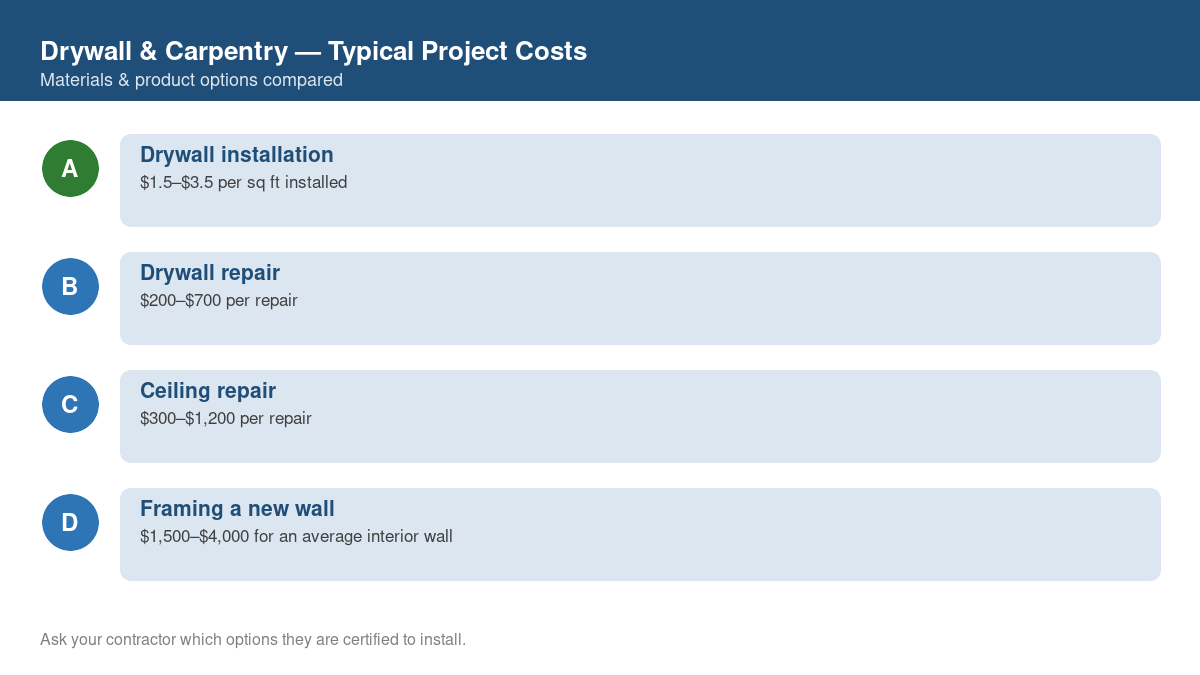
Pricing across drywall & carpentry projects varies widely depending on scope. A small repair costs far less than a full replacement or installation. Here's a snapshot of typical national-average pricing across the most common drywall & carpentry projects homeowners search for:
Typical Pricing by Project
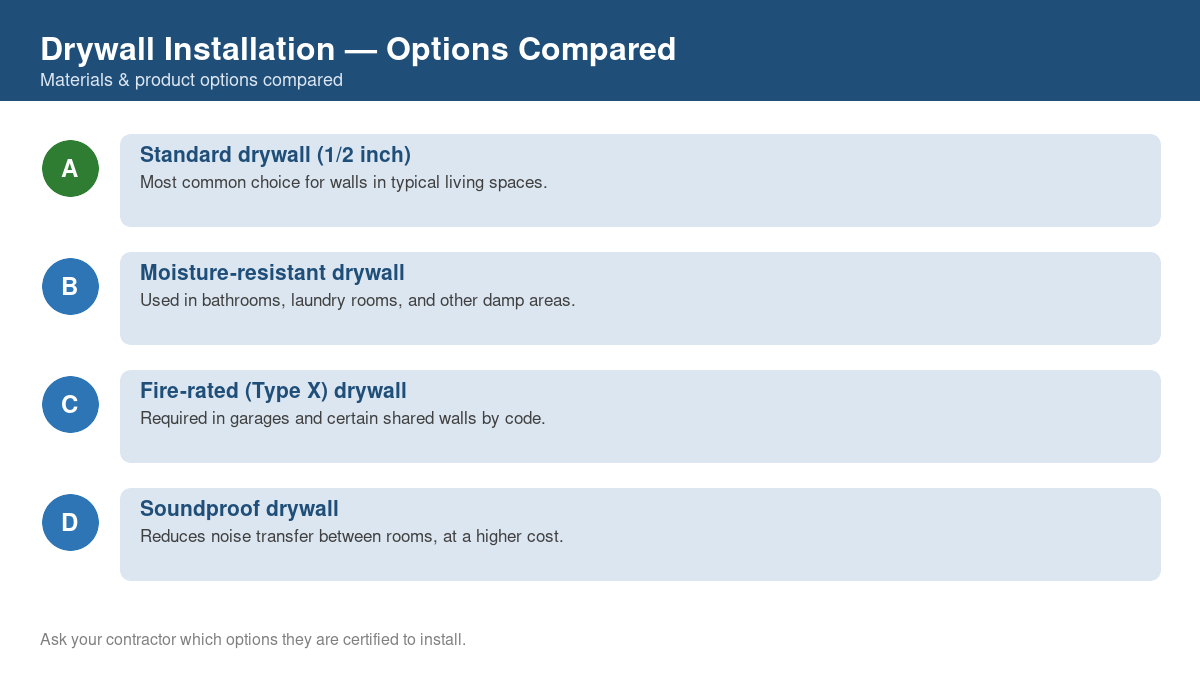
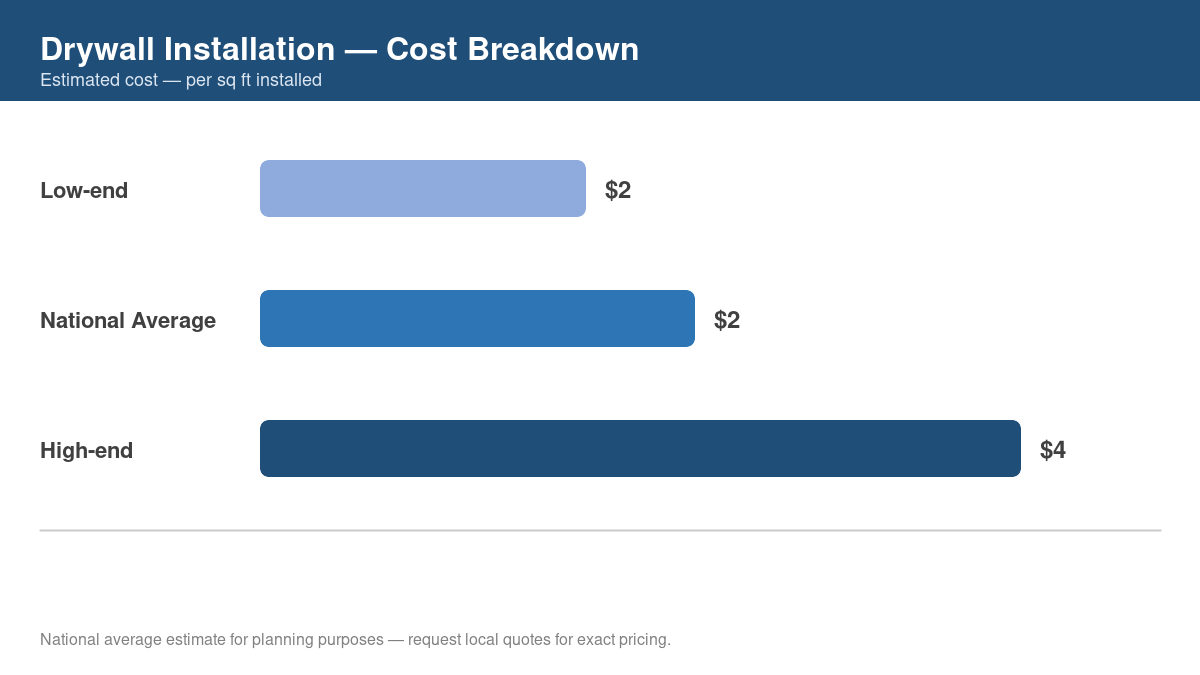
- Drywall installation: $1.5–$3.5 per sq ft installed.
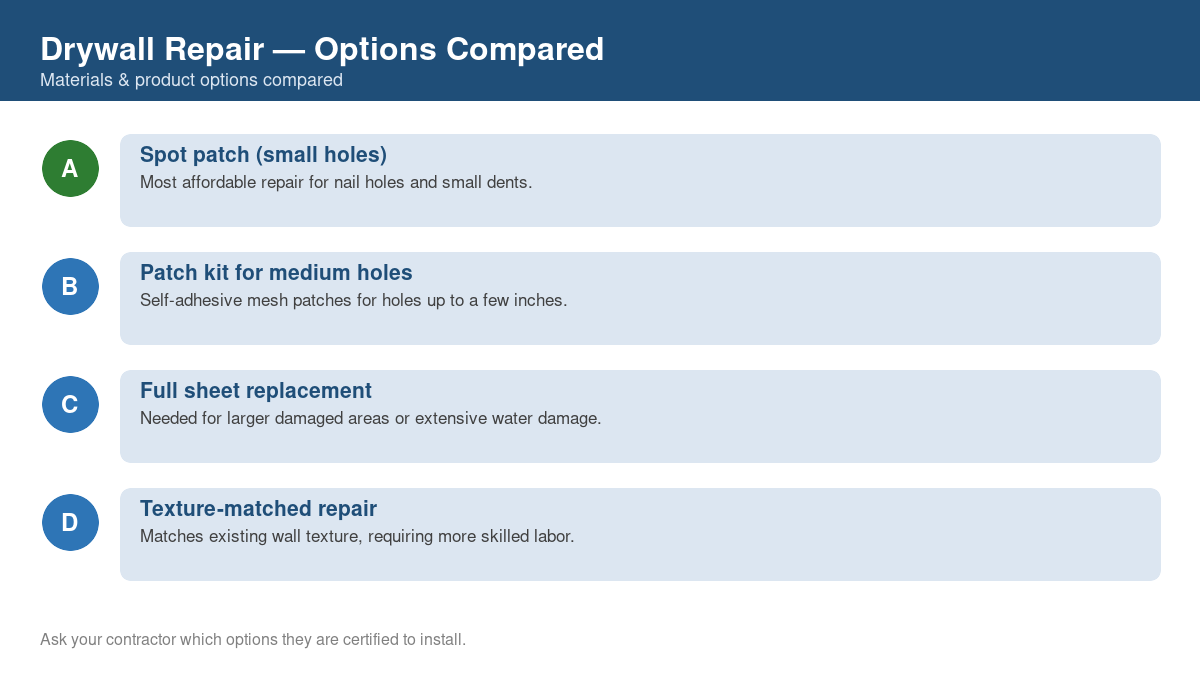
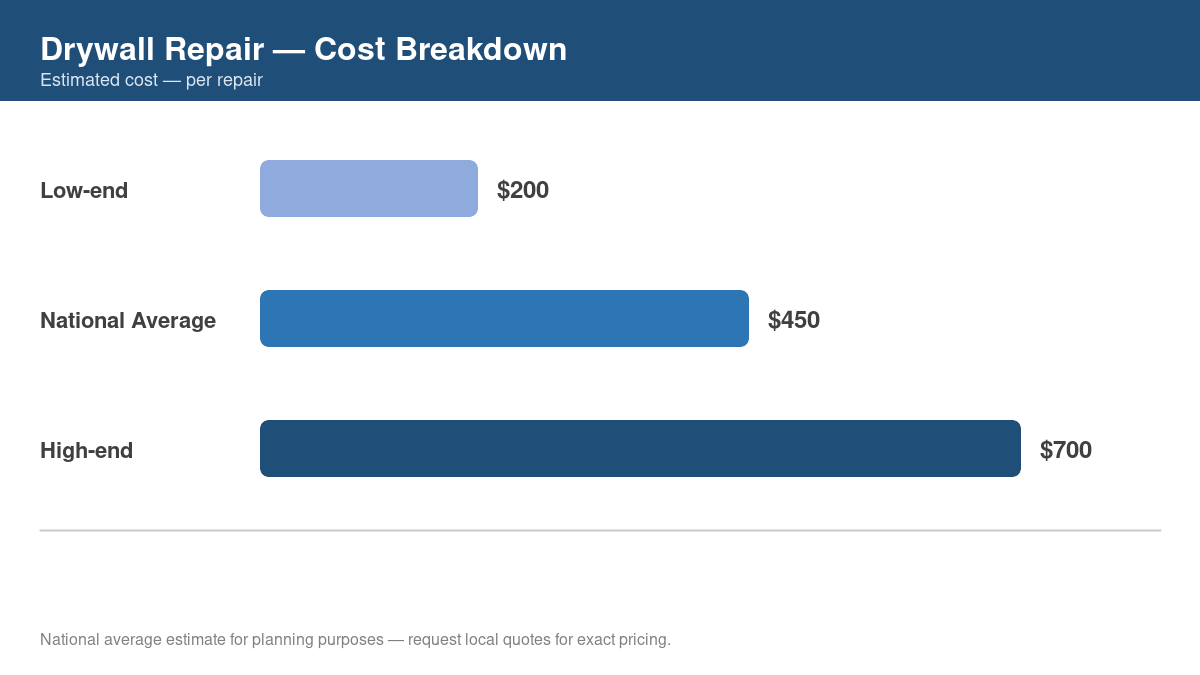
- Drywall repair: $200–$700 per repair.
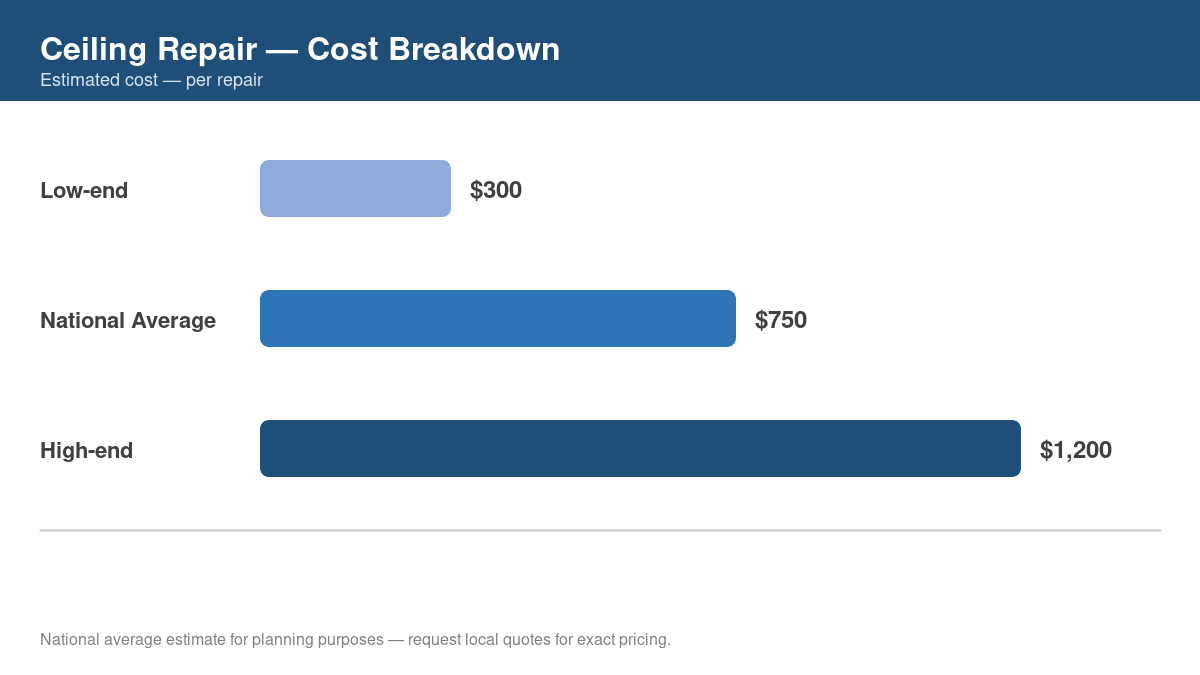
- Ceiling repair: $300–$1,200 per repair.
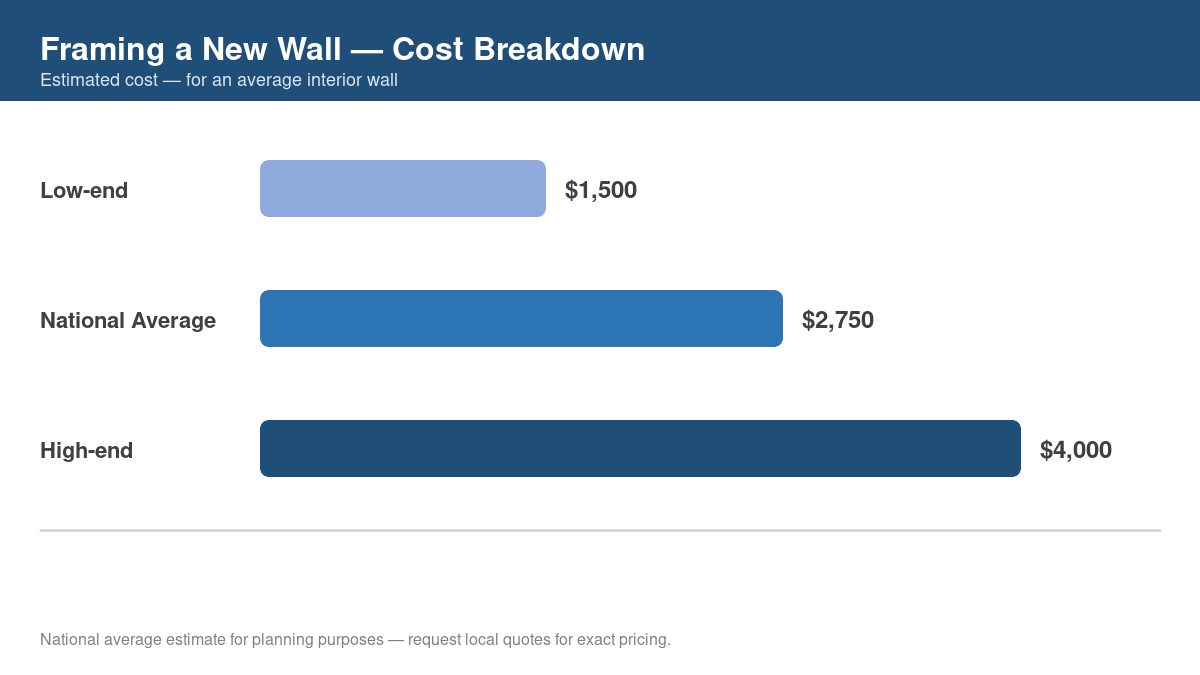
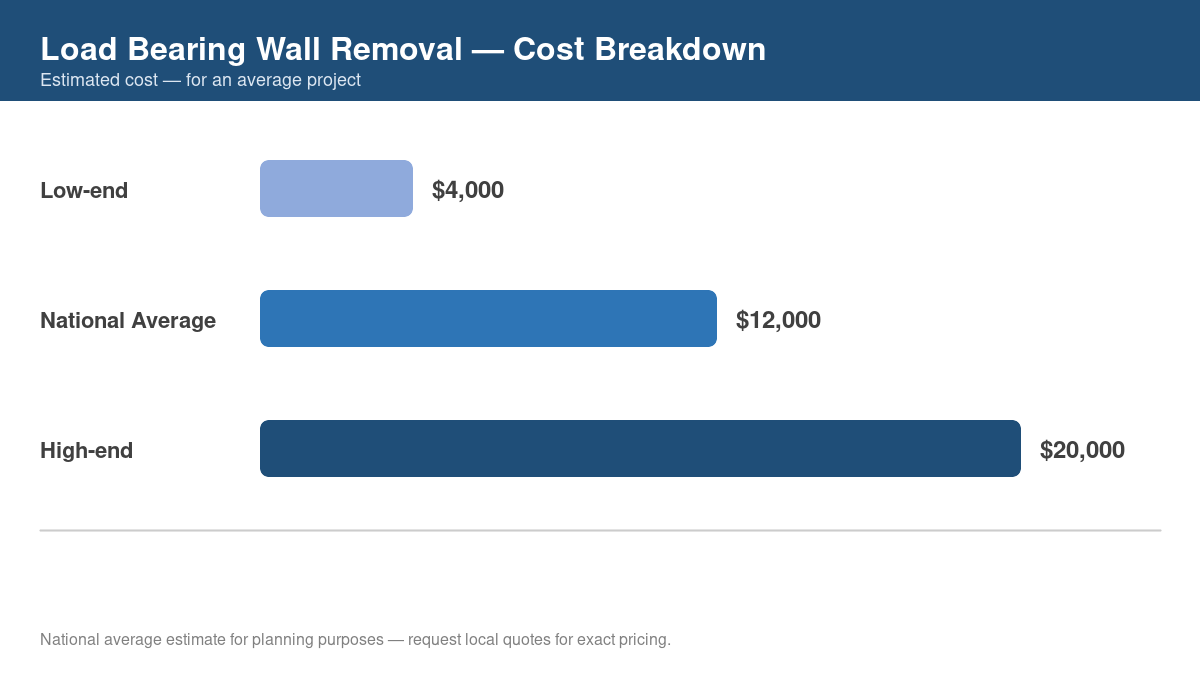
- Framing a new wall: $1,500–$4,000 for an average interior wall.
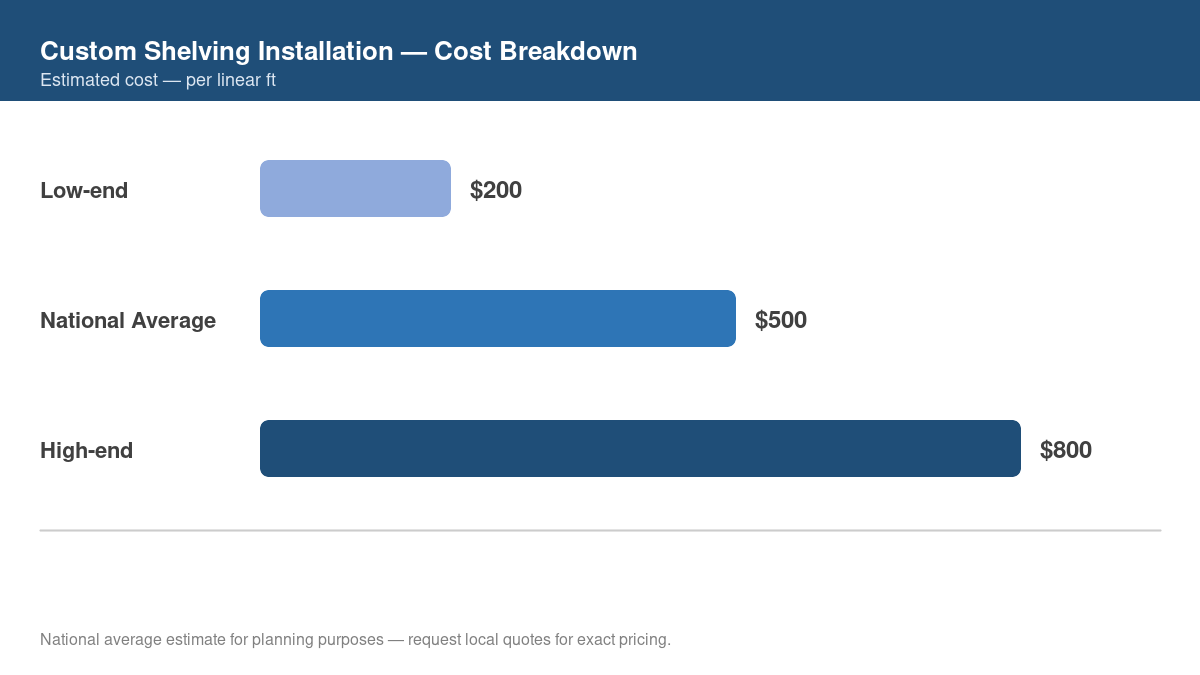
- Custom shelving installation: $200–$800 per linear ft.
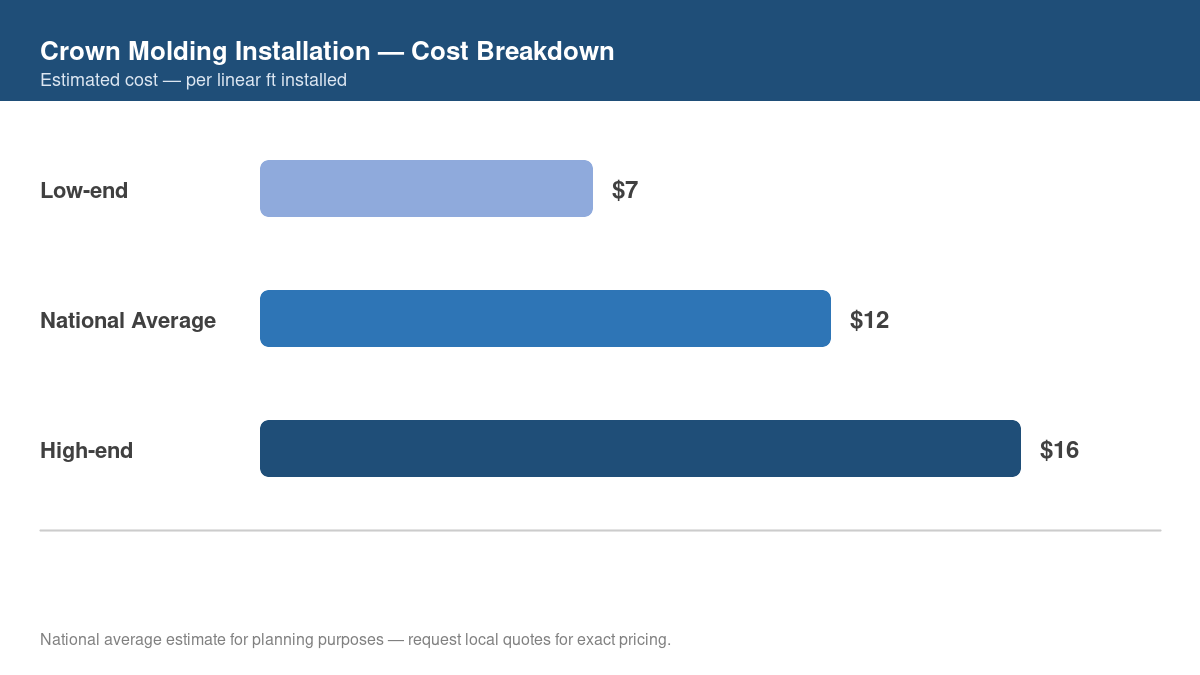
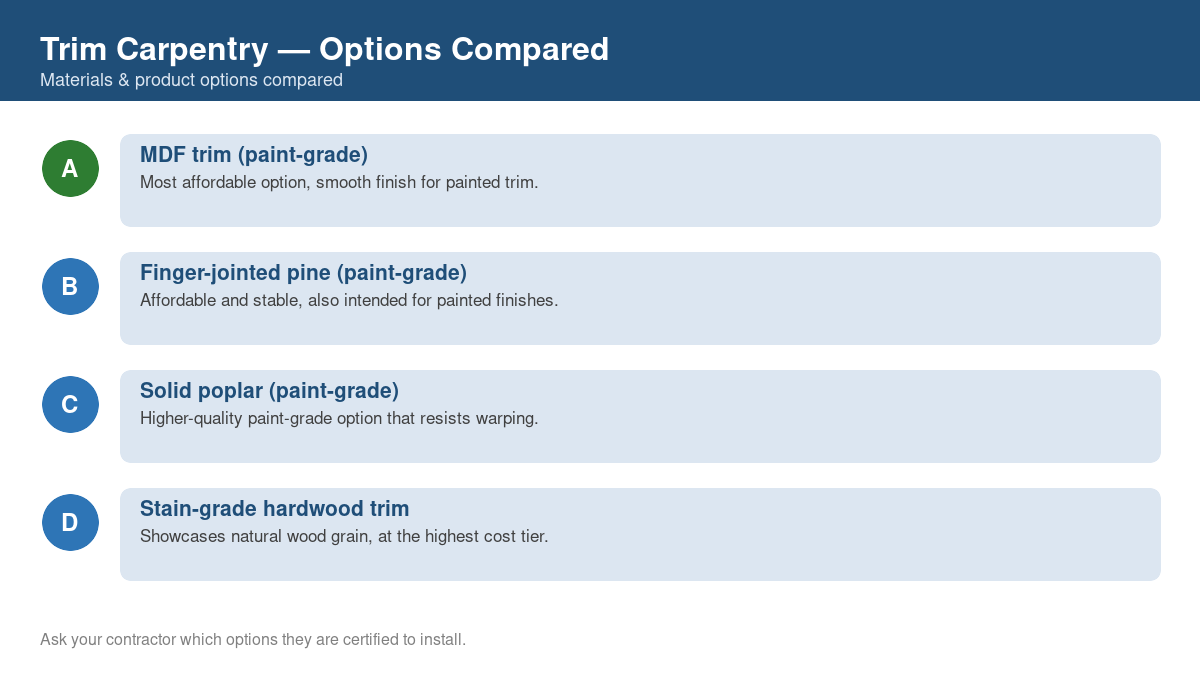
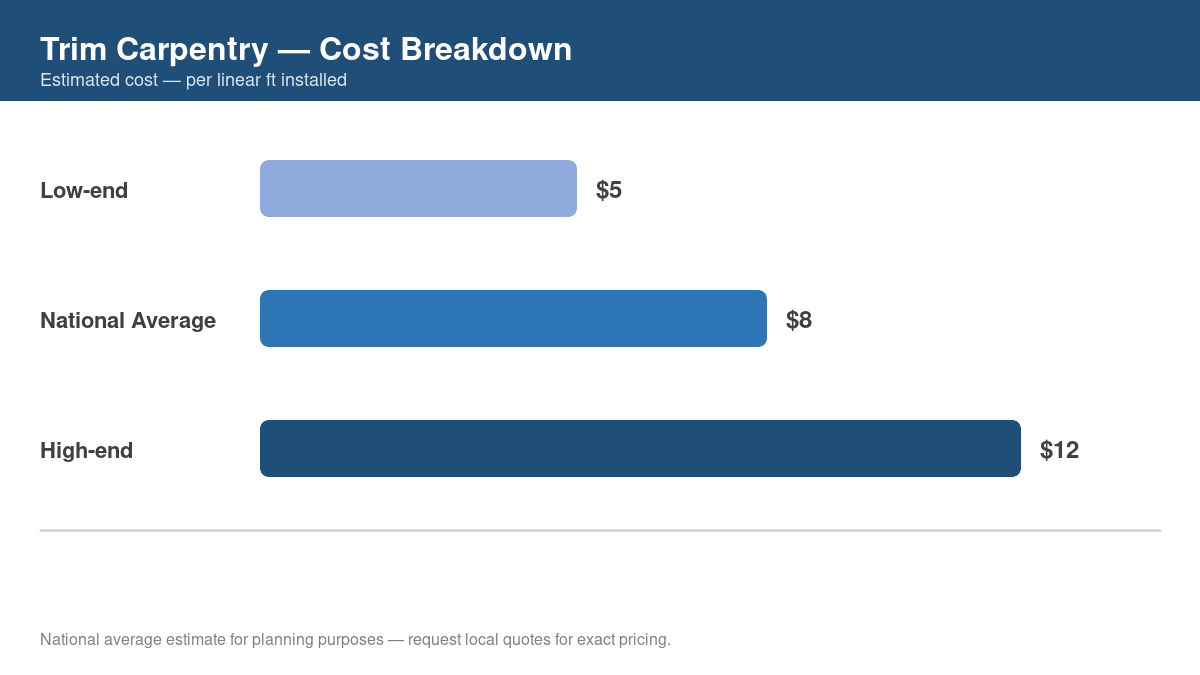
- Crown molding installation: $7–$16 per linear ft installed.
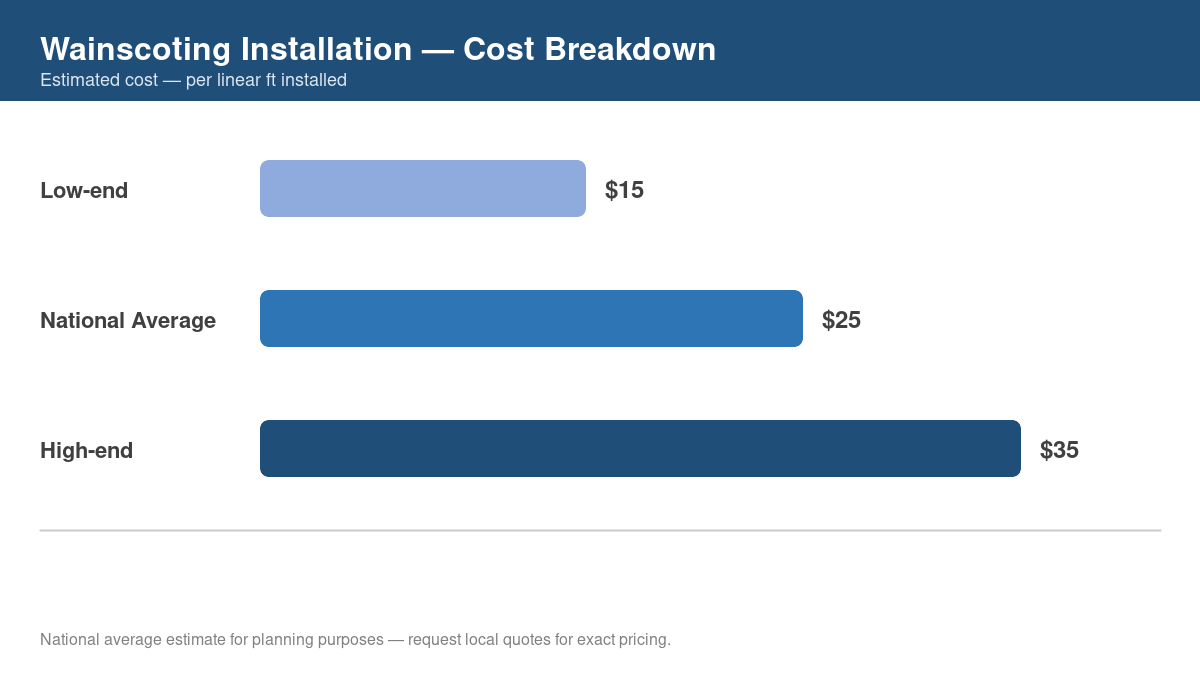
- Wainscoting installation: $15–$35 per linear ft installed.
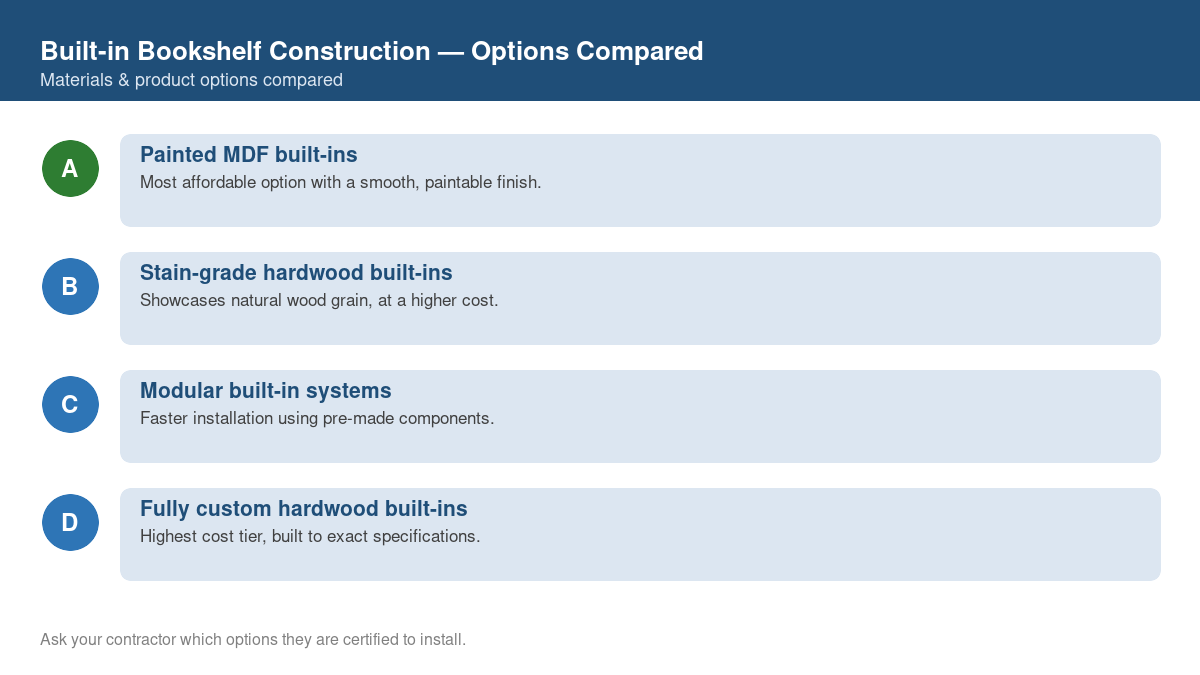
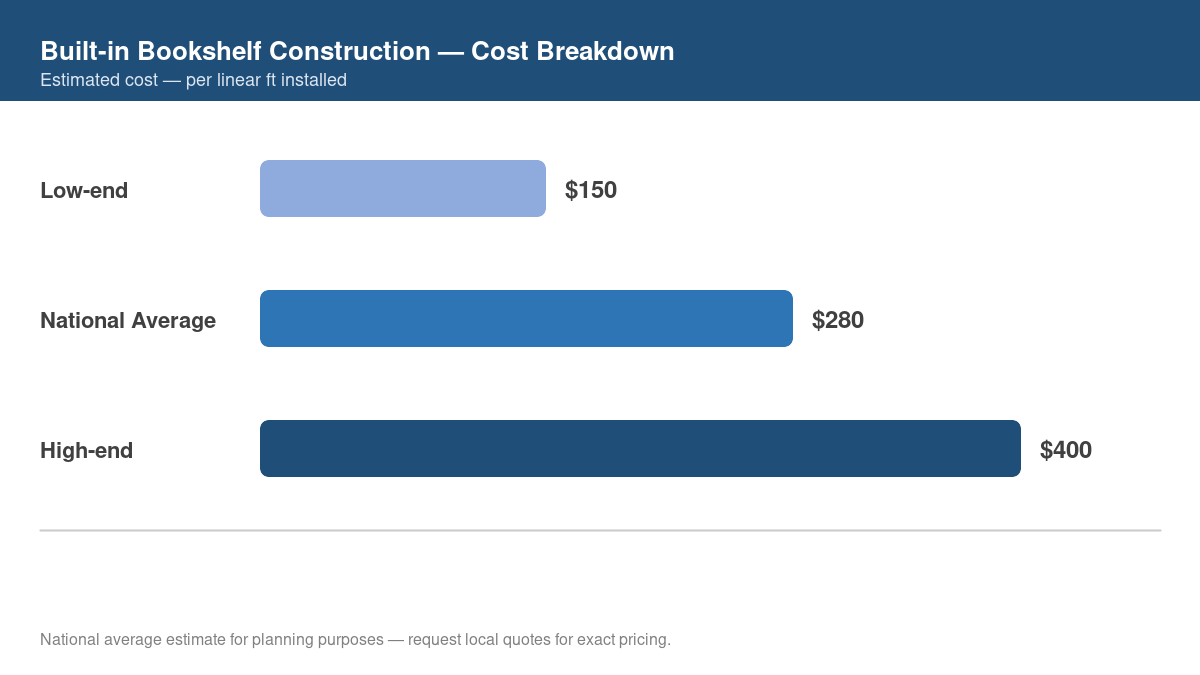
- Built-in bookshelf construction: $150–$400 per linear ft installed.
Cost Notes
These are planning benchmarks, not quotes. Your actual price depends on your home, your local labor market, and the specific contractor you hire. Drywall projects typically take three to seven days including drying time between coats, while custom carpentry projects vary widely by scope. Always get at least two or three written, itemized quotes before committing to any drywall & carpentry project.
What Affects the Price
- Square footage or linear footage of the project. Larger areas require more material and labor, though small patch jobs can have higher costs per square foot due to setup time.
- Complexity (flat walls vs. ceilings, corners, or custom built-ins). Ceilings, corners, and custom built-ins require more skilled labor than flat, open wall sections.
- Material chosen (standard drywall, moisture-resistant, or specialty wood for carpentry). Moisture-resistant drywall and specialty hardwoods cost more than standard materials.
- Finish level required (basic vs. Level 5 smooth finish for drywall). Higher finish levels require additional coats of mud and sanding for a smoother final surface.
- Whether framing changes are involved. Adding or modifying framing requires more structural work before finish work can begin.
- Local labor rates and project accessibility. Local labor rates and site accessibility both affect the total labor cost.
How the Process Works
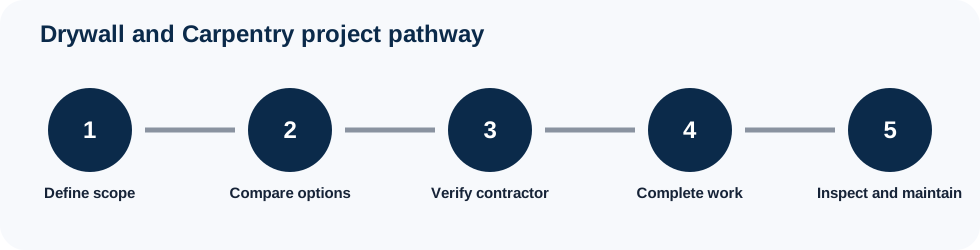
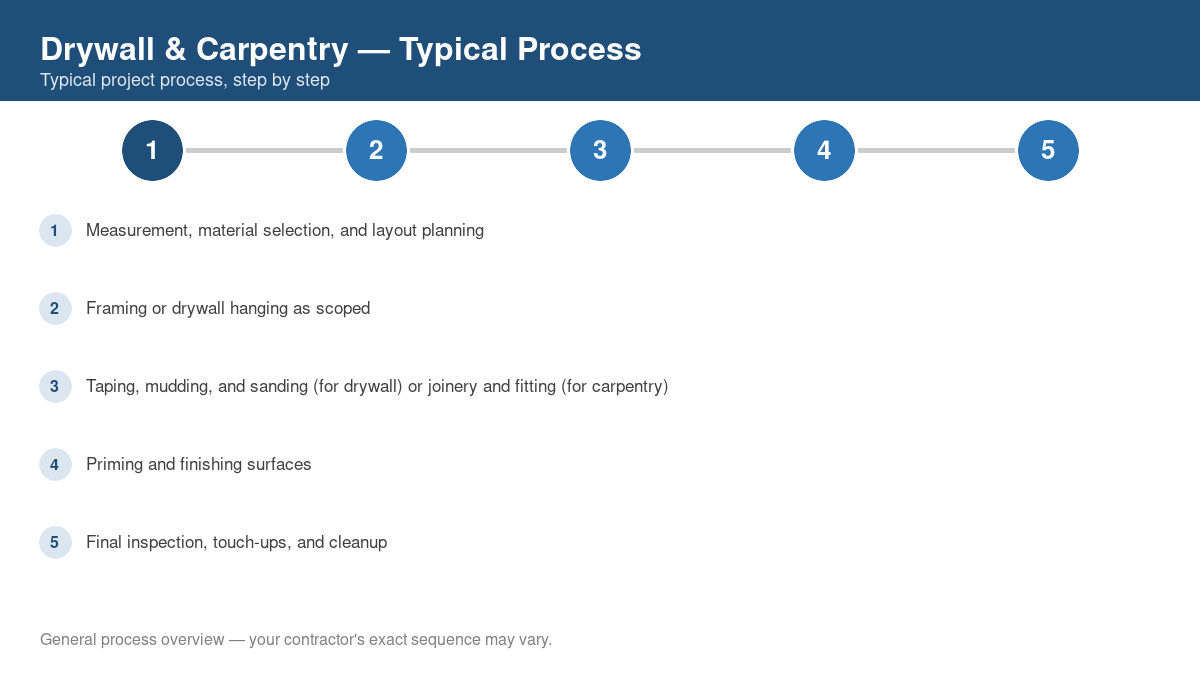
- Measurement, material selection, and layout planning.
- Framing or drywall hanging as scoped.
- Taping, mudding, and sanding (for drywall) or joinery and fitting (for carpentry).
- Priming and finishing surfaces.
- Final inspection, touch-ups, and cleanup.
How to Hire the Right Contractor
Hiring the right contractor matters as much as the work itself for drywall & carpentry projects. Start by confirming licensing and insurance. Ask for proof directly, a verbal assurance. From there, request at least two or three written, itemized quotes so you're comparing scope and materials apples-to-apples, a bottom-line number.
Hiring Checklist
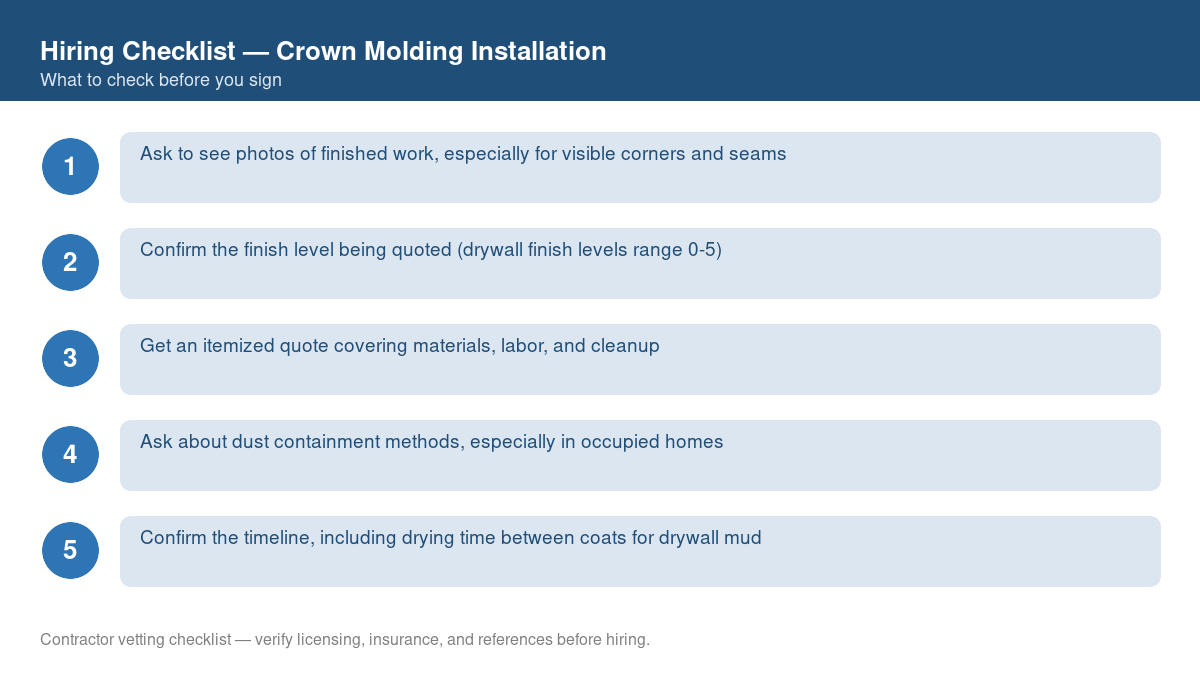
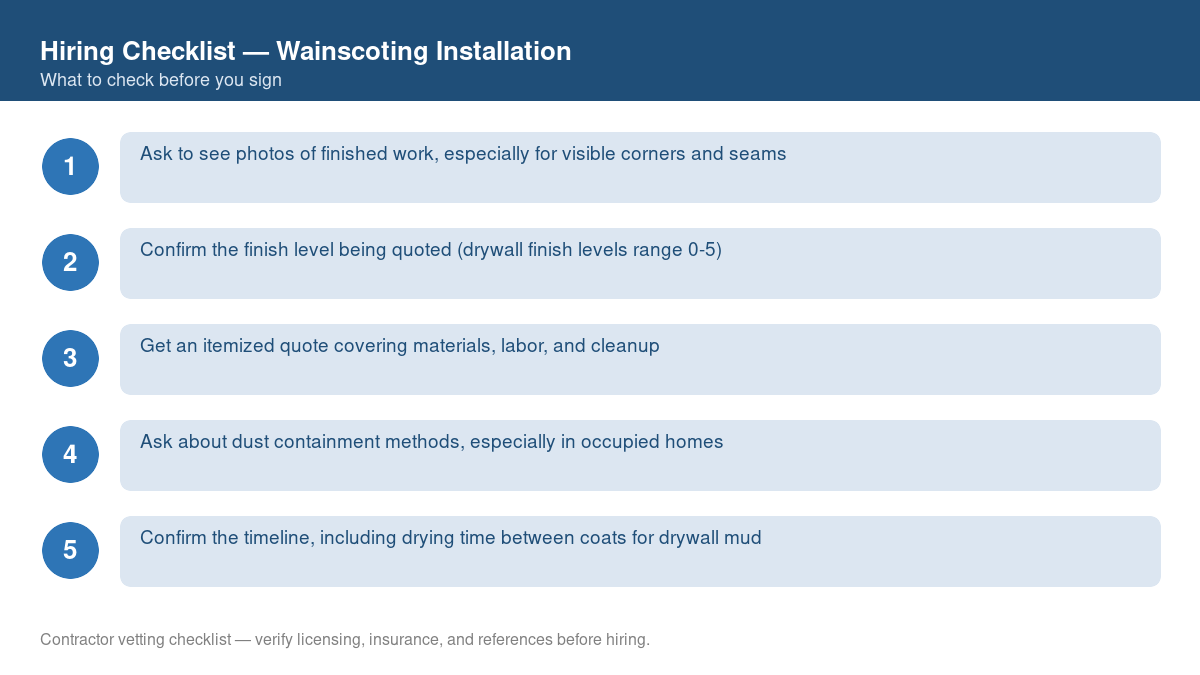
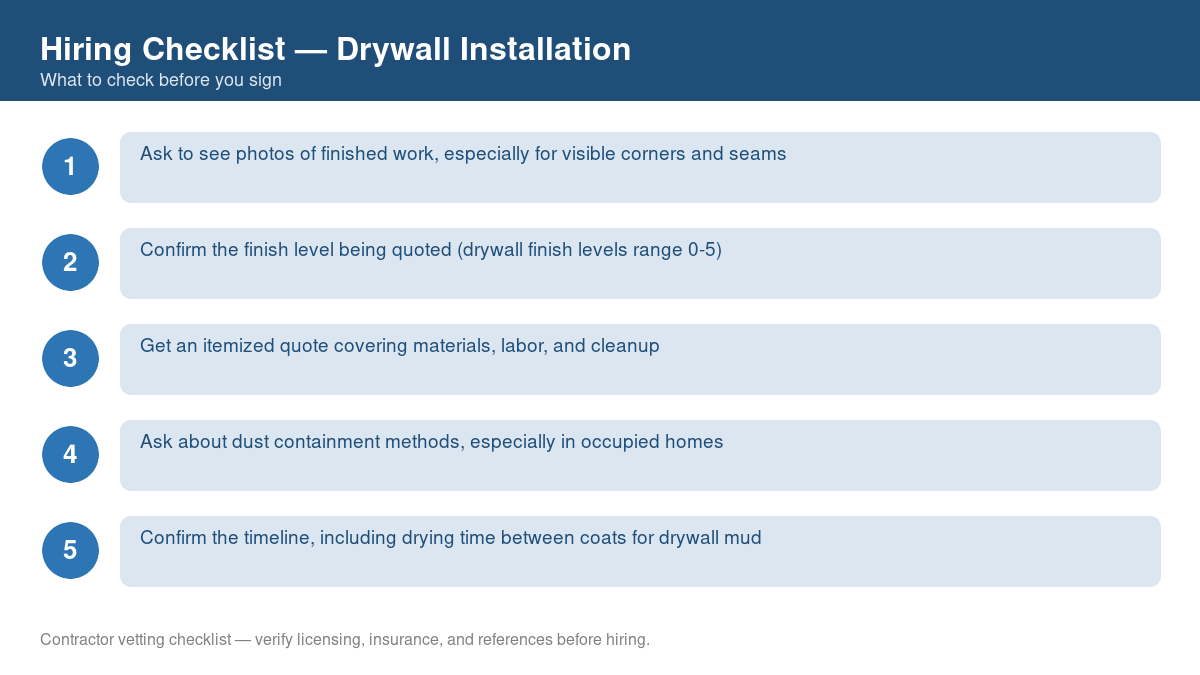
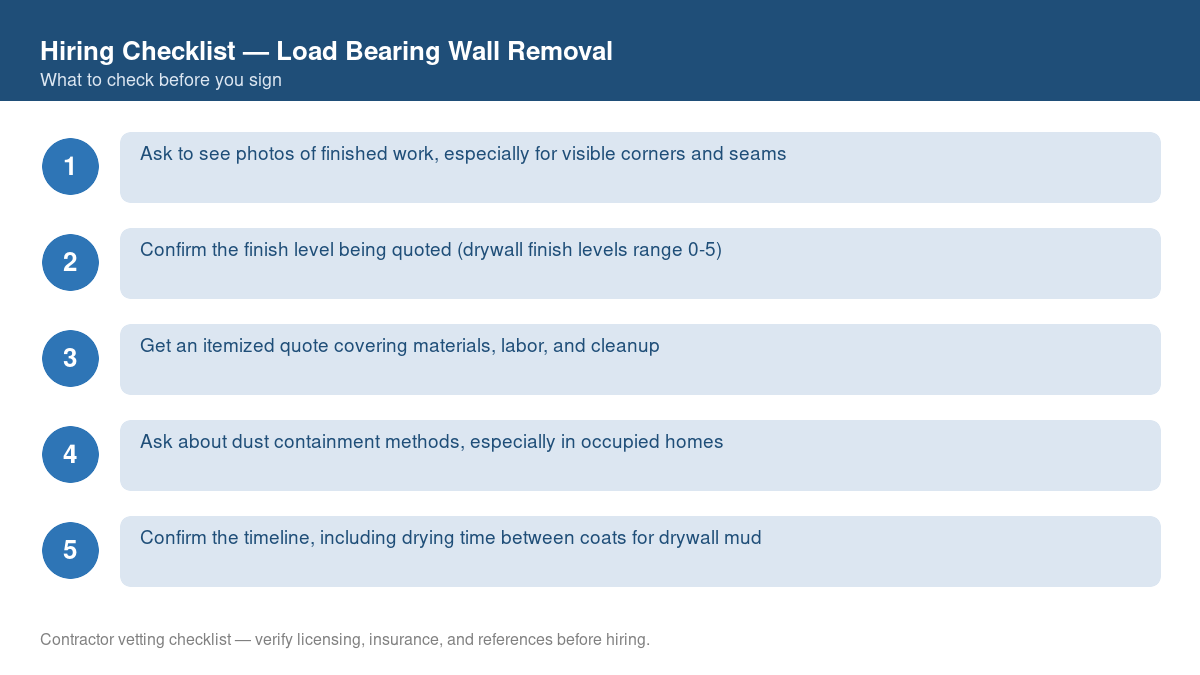
- Ask to see photos of finished work, especially for visible corners and seams.
- Confirm the finish level being quoted (drywall finish levels range 0-5).
- Get an itemized quote covering materials, labor, and cleanup.
- Ask about dust containment methods, especially in occupied homes.
- Confirm the timeline, including drying time between coats for drywall mud.
Red Flags to Watch For
- No discussion of finish level or dust containment for drywall work.
- No photos or portfolio of similar finish carpentry work.
- Unusually fast timelines that don't allow proper drying time between coats.
- Vague material specifications with no brand or grade listed.
DIY vs. Hiring a Professional
Some drywall & carpentry work is realistic for a confident, careful homeowner to tackle solo. Small repairs, cosmetic updates, and simple installations are often reasonable DIY candidates. Work that's code-regulated, involves specialized tools, or carries real safety risk (electrical, structural, gas, or major systems work) is generally better left to a licensed professional. When in doubt, a quick consultation with a contractor can tell you whether a project is realistically DIY-friendly before you buy materials and find out the hard way.
Best Time of Year to Start
Timing affects both price and availability for drywall & carpentry projects. Spring and early summer tend to be the busiest. And priciest. Season for most exterior and remodeling work, since demand peaks alongside good weather. Scheduling non-emergency work in the fall or winter often means more contractor availability and more room to negotiate on price, though weather-dependent exterior work may need to wait for a suitable window regardless of season.
Common Problems to Watch For
- Insulation replacement if walls are opened during drywall removal.
- Electrical or plumbing rerouting discovered once walls are opened.
- Additional coats of mud needed to achieve a higher finish level than initially scoped.
- Custom material costs for carpentry work using specialty or reclaimed wood.
Why These Drywall & Carpentry Problems Happen
Most costly drywall & carpentry problems start small and compound if ignored. Keep an eye out for the signs above, and don't wait for a minor issue to become an expensive emergency repair. A quick inspection or consultation is inexpensive insurance compared to the cost of a bigger failure down the road.
Ways to reduce the cost
- Match the finish level to the room's use. Closets and garages don't need the same finish level as living rooms.
- Bundle multiple rooms into one project to reduce per-visit setup and travel costs.
- Handle simple prep work like clearing the room yourself to reduce labor hours.
- Get multiple quotes and confirm each one specifies the same finish level and material grade.
Maintenance & Long-Term Care
Ask for written care instructions and warranty terms. Keep a record of inspections, maintenance, and repairs.
Upkeep Tips
- Inspect the completed work at the intervals recommended in the care instructions. Report damage or recurring problems promptly.
- Keep the invoice, warranty, permit records, and maintenance instructions together.
- Follow the product's maintenance instructions and check the warranty conditions.
- Address small problems as soon as you notice them rather than waiting for a bigger, more expensive failure.
Financing Your Project
If you borrow to pay for the work, include interest and fees in the budget. Compare repayment terms before choosing a loan.
Financing Options Compared
- Cash or savings: No loan interest, but the payment reduces the cash available for other expenses.
- Home equity loan or HELOC: Your home secures the debt. Compare interest rates, fees, and repayment terms.
- Personal loan: Check whether the loan is secured or unsecured, then compare the rate, fees, and total repayment cost.
- Contractor or manufacturer financing: Check the promotional period, fees, and interest charged if you do not repay the balance by the deadline.
Compare borrowing costs
Compare the interest rate, fees, repayment term, and total amount you will repay. A longer term can lower the monthly payment while increasing the total interest cost.
What a Complete Quote Should Include
- A detailed scope that identifies the work, quantities, and exclusions.
- Material brands, grades, and quantities, with substitutions agreed in writing.
- Who obtains any required permits and pays the fees.
- Cleanup and disposal work, including any separate charges.
- Deposit amount and later payments, with the work required for each payment.
- Written warranty terms, including coverage, exclusions, and duration for materials and labor.
Check insurance coverage
Ask for evidence of the contractor's insurance and confirm coverage with the insurer. Check whether workers' compensation coverage is required for the crew. Ask your own insurer whether the planned work affects your policy.
Long-Term Cost of Ownership
Include maintenance, repairs, and eventual replacement when comparing costs. Ask what upkeep the proposed materials or equipment need and which costs the warranty covers.
Ask each contractor for the maintenance schedule and expected service life of the proposed materials or equipment. Request the written product specifications and warranty terms.
Check the contractor's work history
Read recent reviews and check how the contractor handled complaints. Contact references for similar work completed recently. Ask how the contractor records changes, prices extra work, and resolves disputes. Put those procedures in the contract.
Common Contract Terms Explained
Check these terms when reading the contract. Ask the contractor to explain any wording that leaves the scope, payment, or completion requirements unclear.
Contract Terms Glossary
- Change order: A written change to the contract. Agree on the additional or reduced work, price, and schedule before approving it.
- Punch list: Unfinished work or defects recorded during the walkthrough. Agree on when the contractor will resolve each item.
- Lien waiver: A document that waives lien rights under specified conditions. Check which payment it covers and whether it is conditional or unconditional.
- Retainage: Part of a payment held until the contract's release conditions are met. Specify the amount and conditions in the contract.
- Substantial completion: The stage when the work can be used for its intended purpose. Check the contract for the definition and any payment or warranty dates tied to it.
Plan for disruption
Ask which rooms or services will be unavailable during the work and for how long. Confirm any planned utility interruptions, dust controls, and daily cleanup.
Keep children and pets away from the work area. If you will lose access to a kitchen, bathroom, or essential service, ask when it will be usable again and plan around that schedule.
Frequently Asked Questions
- ('How much does drywall & carpentry work typically cost?', 'It varies significantly by project. See the pricing snapshot above for common drywall & carpentry projects, ranging from simple repairs to full installations. Get a local, written quote for an exact number.')
- ('How long does drywall & carpentry work usually take?', 'Drywall projects typically take three to seven days including drying time between coats, while custom carpentry projects vary widely by scope.')
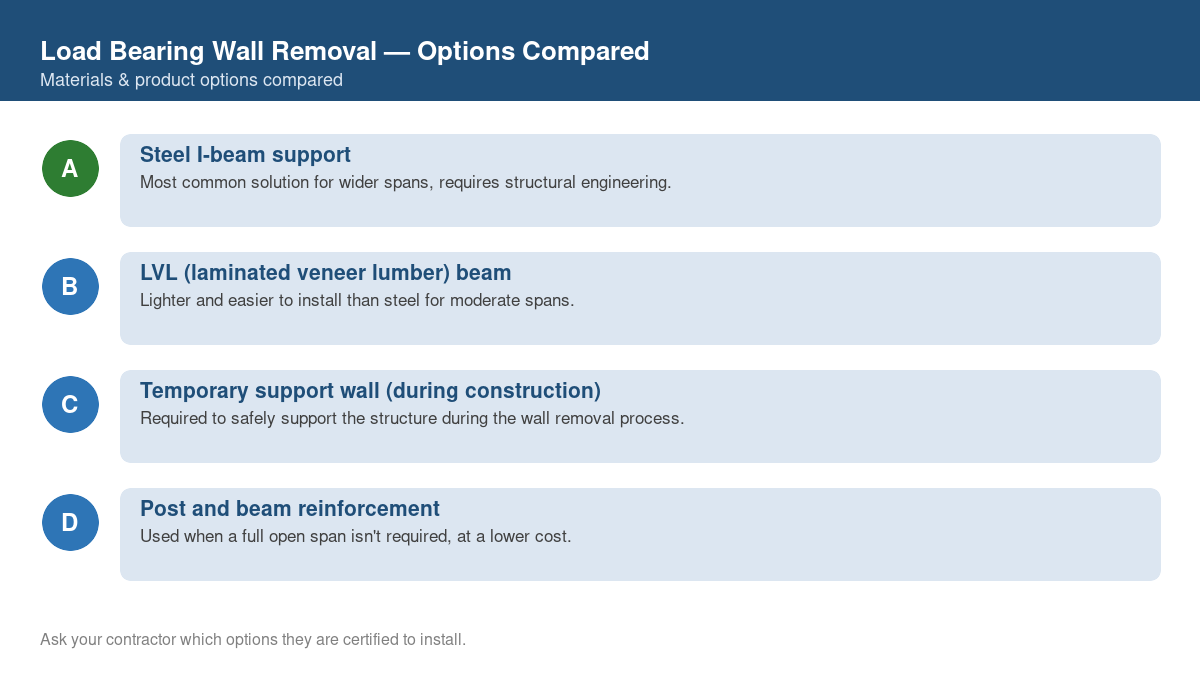
- ('Do I need a permit for drywall & carpentry work?', "Basic drywall repair and finish carpentry typically don't require a permit, but framing changes or load-bearing modifications usually do.")
- ('How long does drywall & carpentry work typically last?', 'Drywall itself can last the life of the home if it stays dry, while finish carpentry typically lasts decades with occasional refinishing.')
- ('How many quotes should I get before hiring a contractor?', 'Three is the general rule of thumb. Enough to spot outliers on price or scope without dragging the process out for weeks.')
- ('Can I DIY drywall & carpentry work myself?', 'Some smaller-scope work is DIY-friendly for a careful homeowner, but code-regulated or safety-sensitive work is best left to a licensed professional. See the DIY vs. Pro section above.')
- ('Can I negotiate the price on drywall & carpentry?', "Sometimes. Especially during a contractor's slower season. It's reasonable to ask, but be wary of a contractor who drops the price dramatically just to win the job; that can be a sign corners will be cut elsewhere.")
- ("What should I do if I'm unhappy with the finished work?", "Raise it with the contractor directly and in writing first. Reputable contractors will address legitimate issues. If that doesn't resolve it, your state's contractor licensing board is the next step.")
- ("How do I verify a contractor's license and insurance?", "Most states have an online license lookup tool through the state contractor licensing board. Ask for the license number and confirm it's active before signing anything.")
- ('Is it normal for a drywall & carpentry quote to change after the initial visit?', 'A small adjustment after a closer inspection is normal, but a large jump is worth questioning. Ask exactly what changed and why.')
Project planning
Check the scope, site conditions, and local requirements before setting the budget and schedule.
Project delivery options compared
| Approach | Best suited to | Primary trade-off |
|---|---|---|
| DIY or owner-managed | Low-risk cosmetic work within the homeowner’s skill level | Owner assumes safety, quality, scheduling, and code risks |
| Specialty contractor | A clearly defined trade-specific scope | May require the homeowner to coordinate other trades |
| General contractor or design-build team | Complex projects involving several trades or structural changes | Higher management cost, with centralized coordination |
Typical project timeline
| Phase | Typical planning window |
|---|---|
| Assessment and scope | 1-3 days |
| Selections and written quote | 2-14 days |
| Permits and scheduling | Varies by location |
| Active project work | 1 day to several weeks |
| Inspection, cleanup, and handoff | 1-3 days |
Benefits and limitations
Potential benefits
- Improves function, safety, or appearance
- Can address deferred maintenance before it spreads
- Creates an opportunity to document warranties and future upkeep
Potential trade-offs
- Upfront cost may change when hidden conditions are found
- Work can disrupt normal use of the area
- Permits, inspections, and material lead times may affect scheduling
Project stages