Windows and doors are a home's primary barrier against weather and a major factor in energy efficiency, so proper sizing and sealing matter as much as the product itself. Whether you're planning a single repair or a full project, this guide covers what windows & doors work typically costs, how the process works from first call to final walkthrough, and how to hire a contractor you can trust with the job.
We've put together 101 in-depth guides covering specific windows & doors topics. Cost breakdowns, step-by-step DIY instructions, hiring checklists, and more. Linked below. This overview page pulls together the big picture: what to budget, what to expect, and the questions worth asking before you sign a contract.
What This Typically Costs
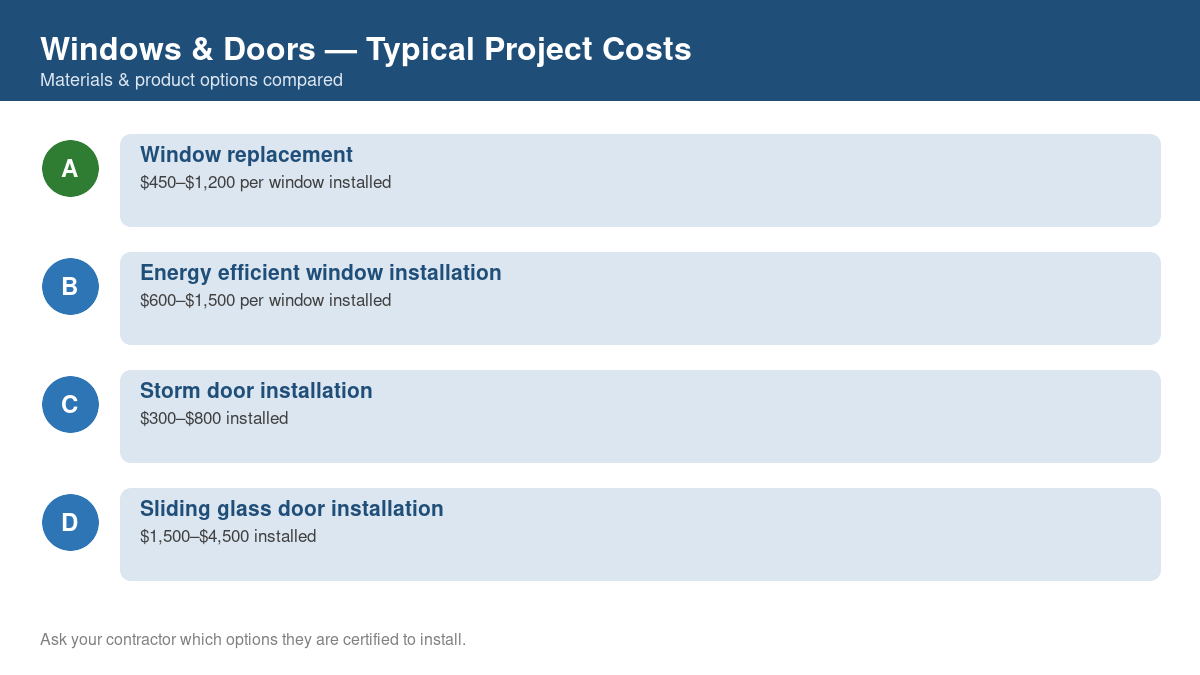
Pricing across windows & doors projects varies widely depending on scope. A small repair costs far less than a full replacement or installation. Here's a snapshot of typical national-average pricing across the most common windows & doors projects homeowners search for:
Typical Pricing by Project
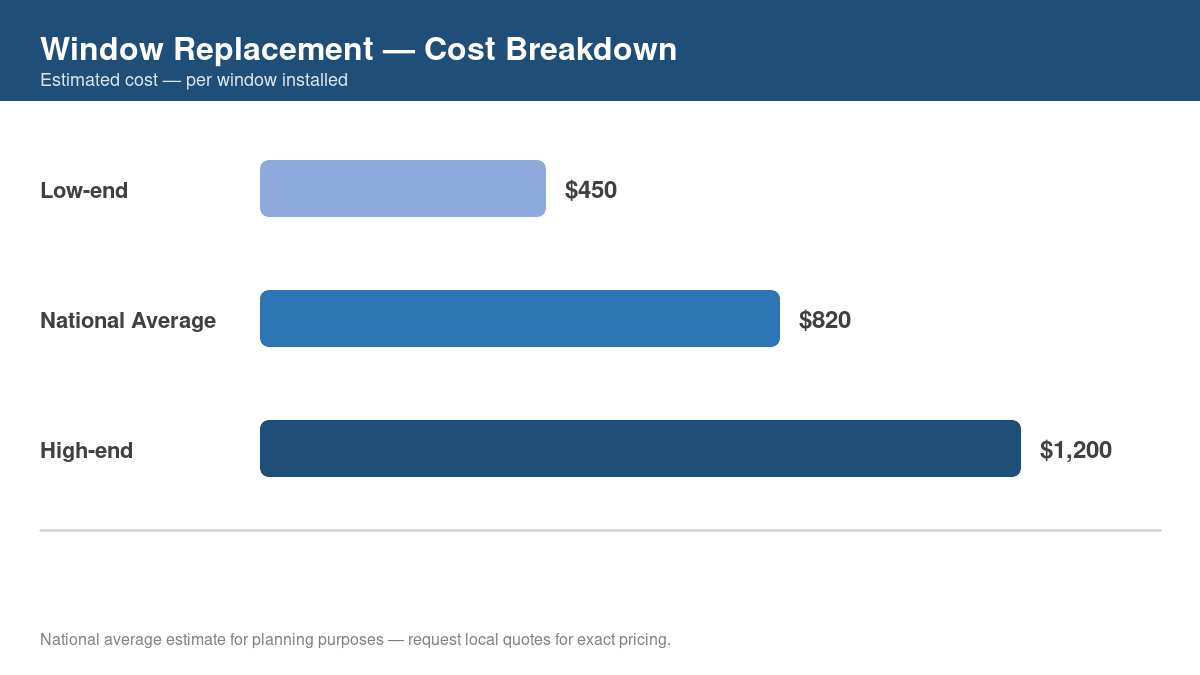
- Window replacement: $450–$1,200 per window installed.
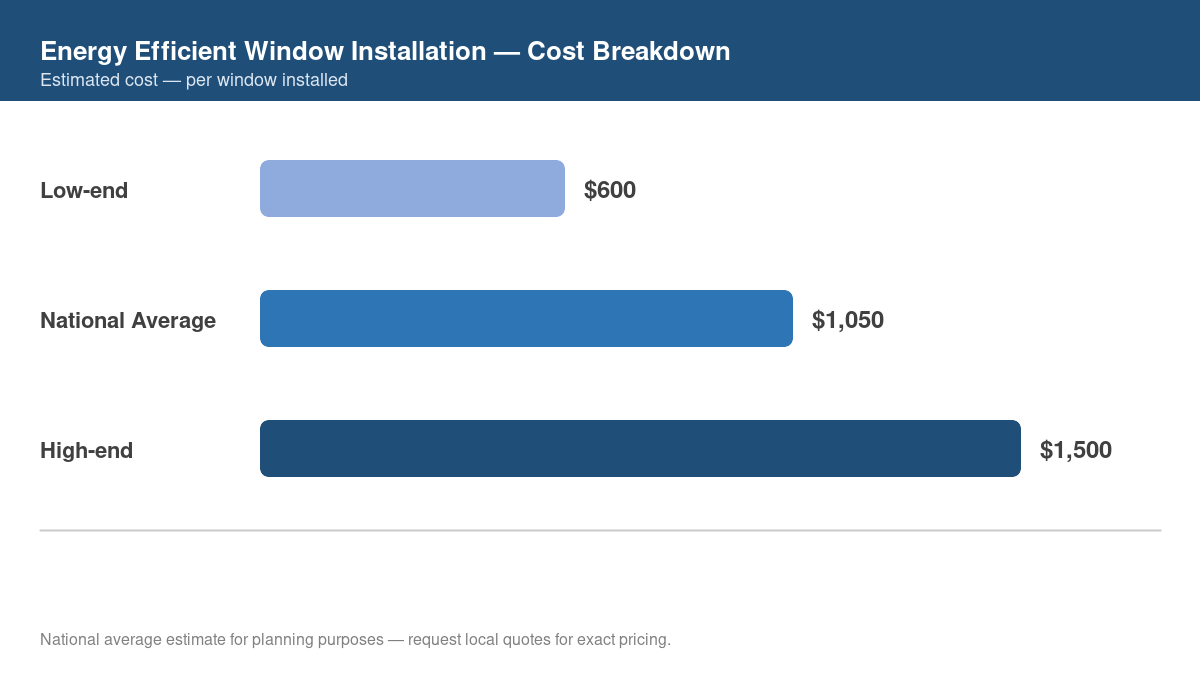
- Energy efficient window installation: $600–$1,500 per window installed.
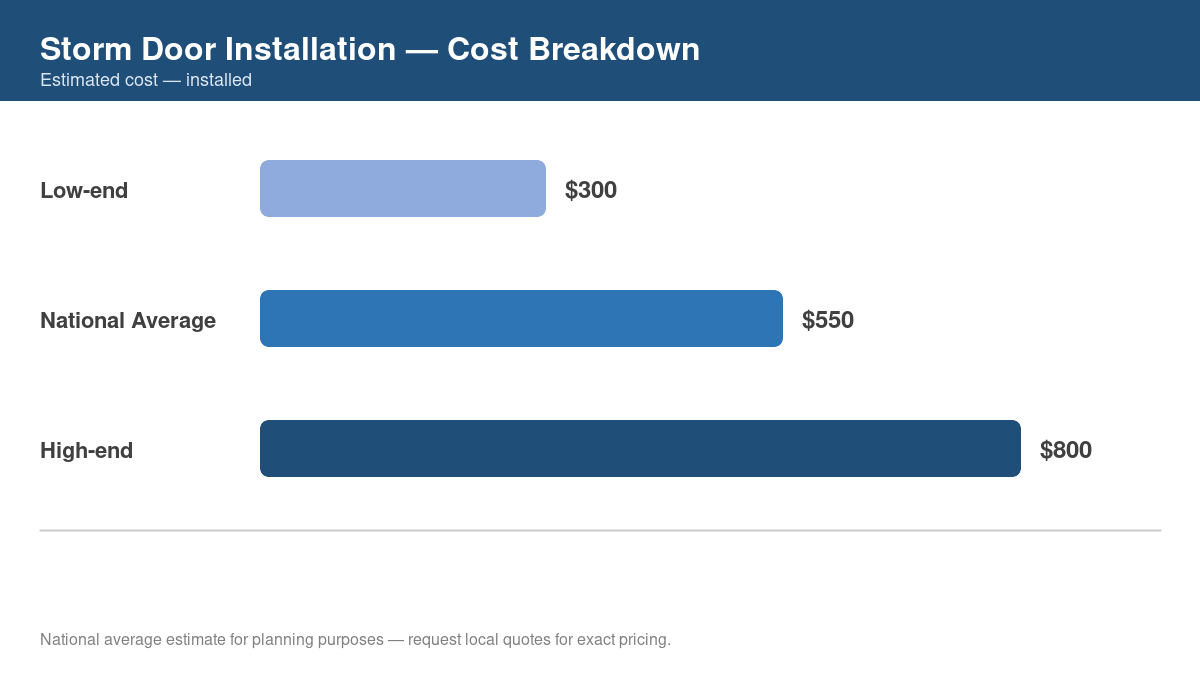
- Storm door installation: $300–$800 installed.
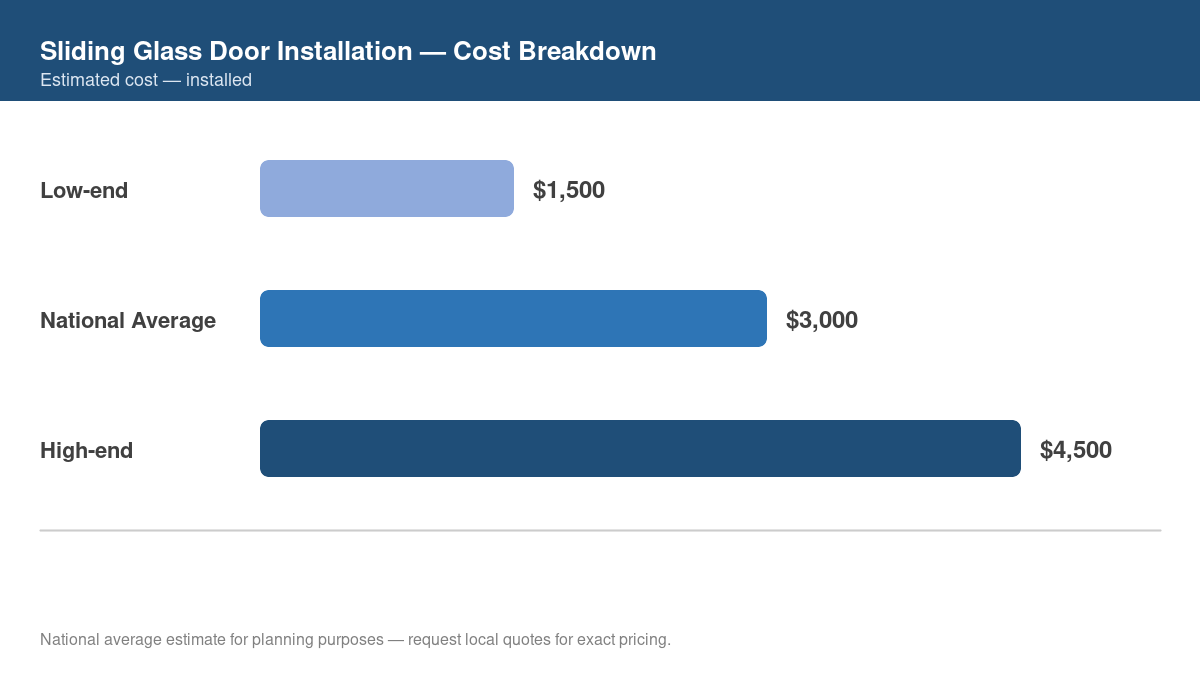
- Sliding glass door installation: $1,500–$4,500 installed.
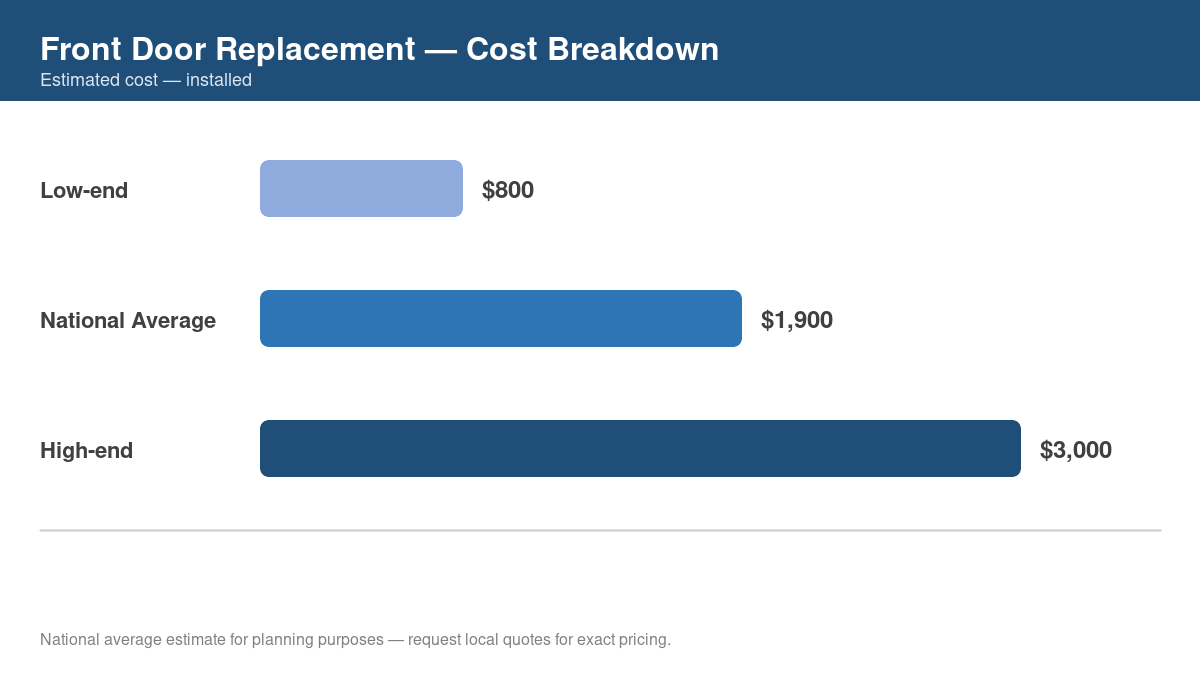
- Front door replacement: $800–$3,000 installed.
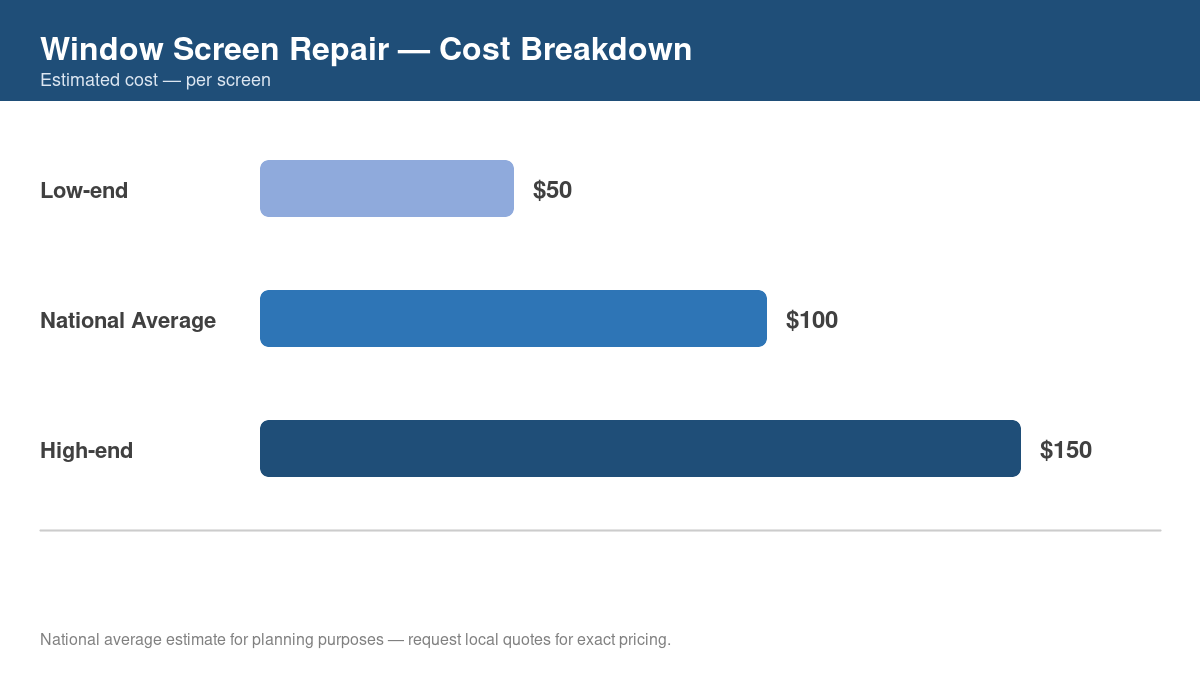
- Window screen repair: $50–$150 per screen.
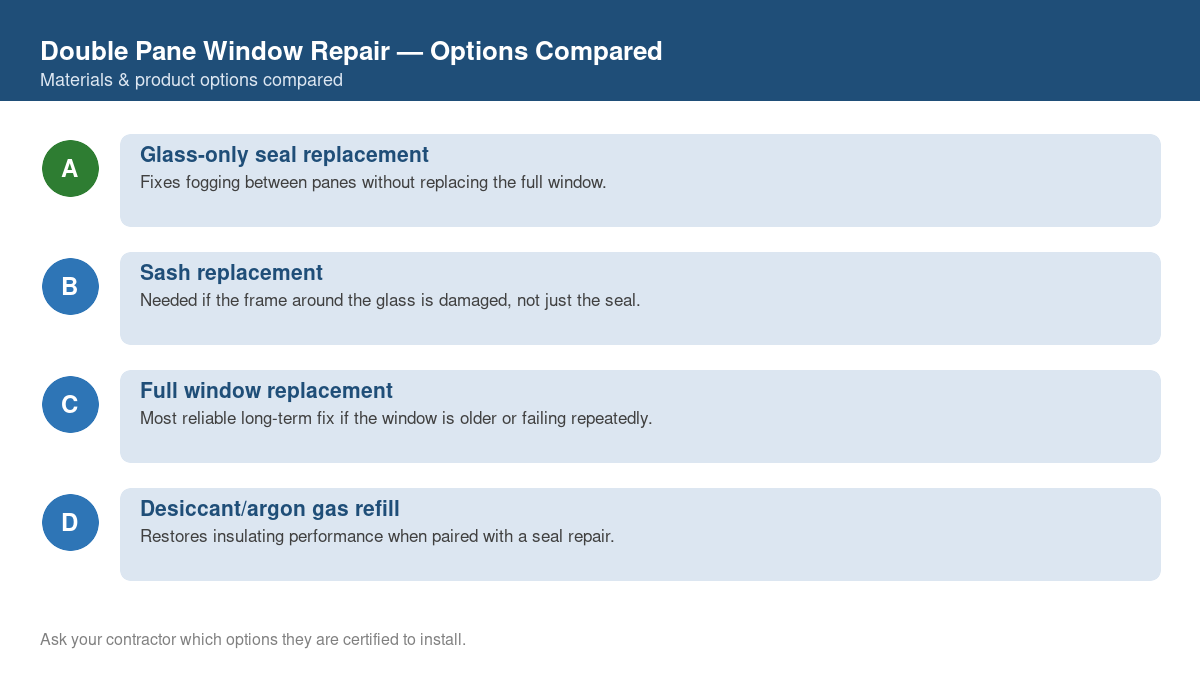
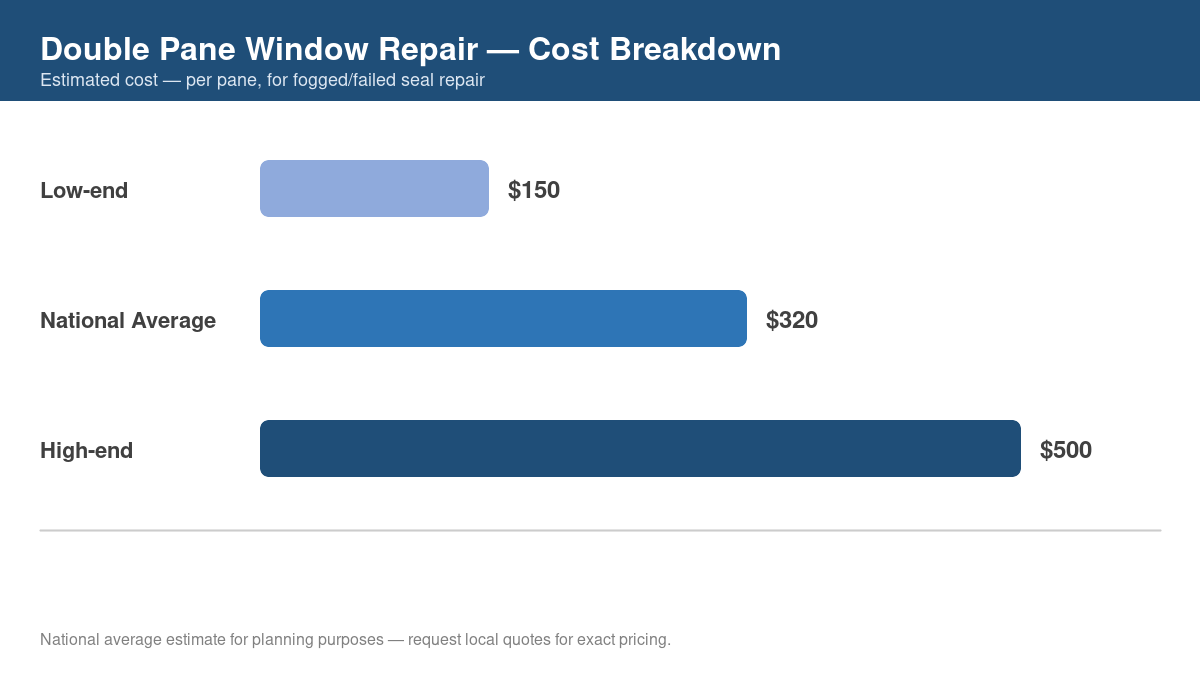
- Double pane window repair: $150–$500 per pane, for fogged/failed seal repair.
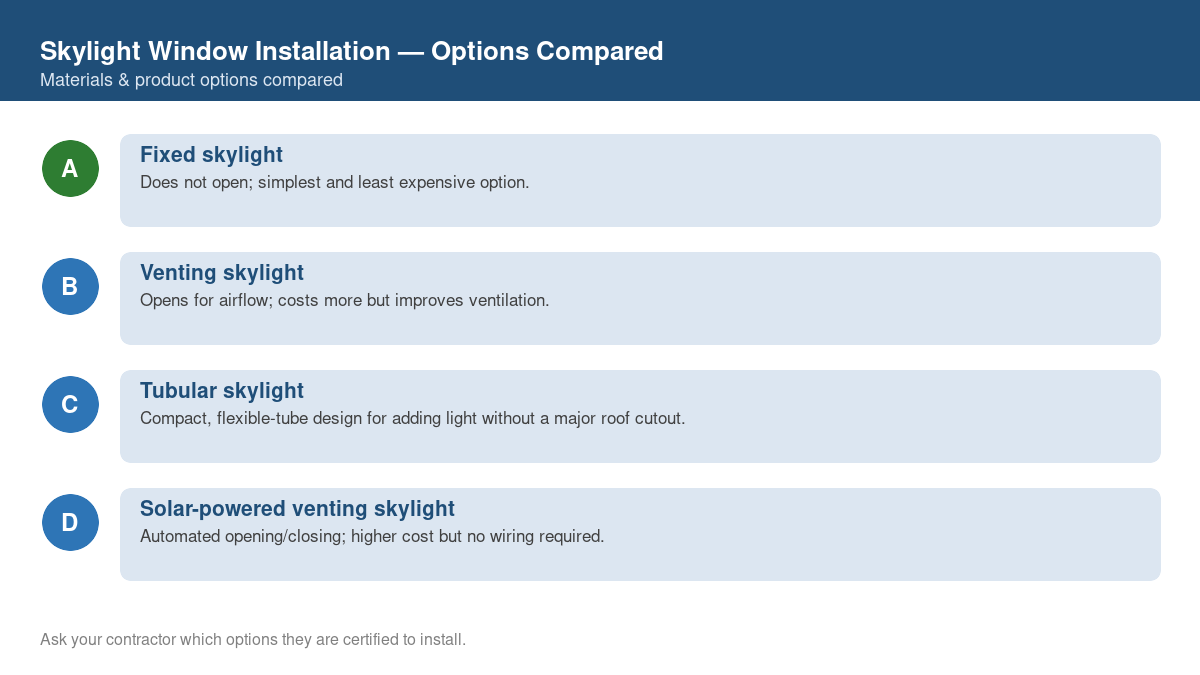
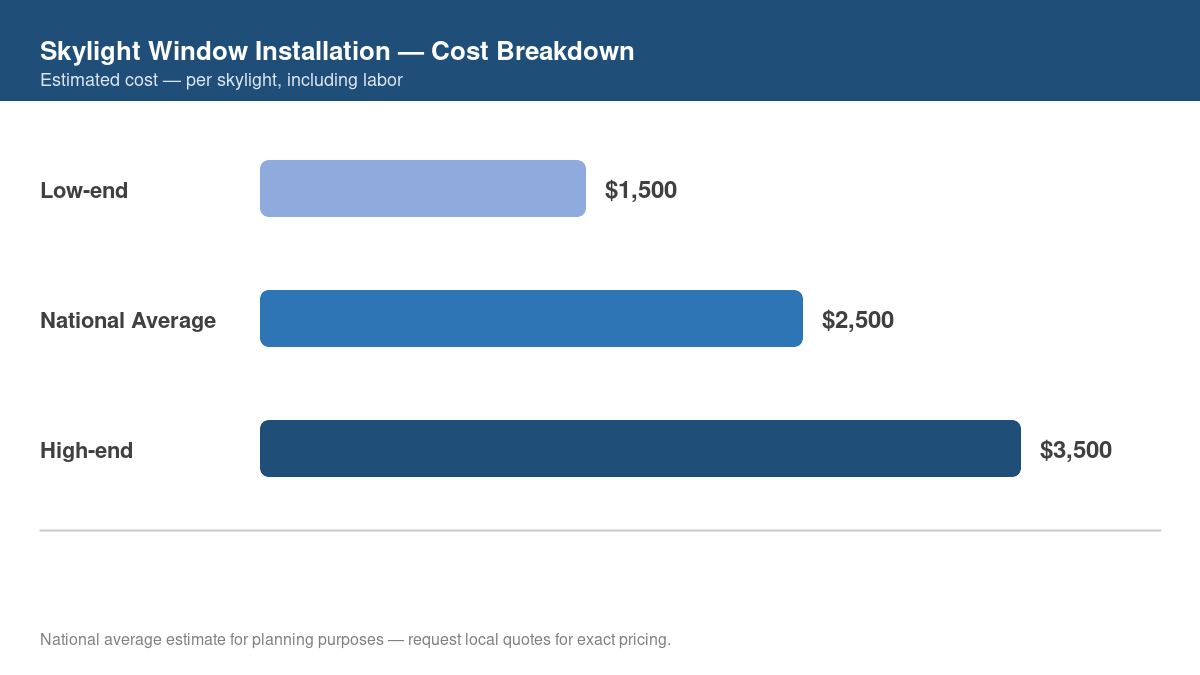
- Skylight window installation: $1,500–$3,500 per skylight, including labor.
Cost Notes
These are planning benchmarks, not quotes. Your actual price depends on your home, your local labor market, and the specific contractor you hire. Most window and door installations take a single day for a handful of openings, with whole-house projects taking two to five days. Always get at least two or three written, itemized quotes before committing to any windows & doors project.
What Affects the Price
- Number of openings and whether it's a full-frame or insert (pocket) replacement. More openings mean more materials and more labor hours, so whole-house projects have significant economies of scale per unit.
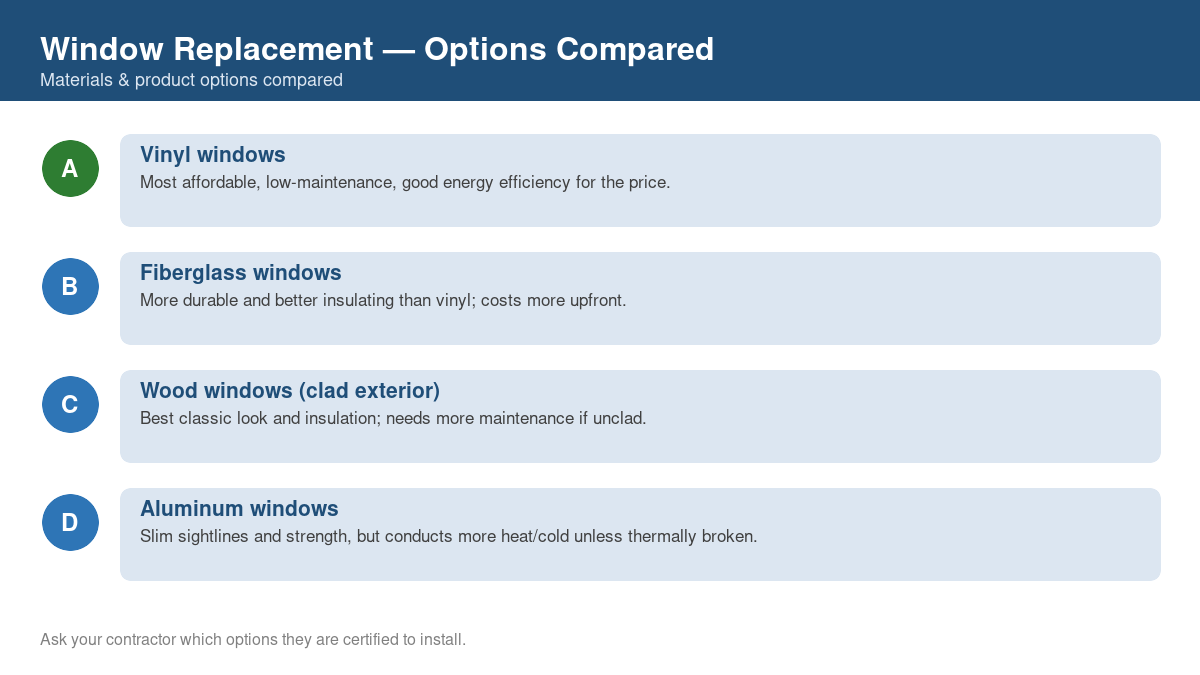
- Material (vinyl, fiberglass, wood, or aluminum) and glass package (double vs. triple pane, Low-E coating). Full-frame replacement costs more than an insert (pocket) replacement because it involves removing the entire existing frame.
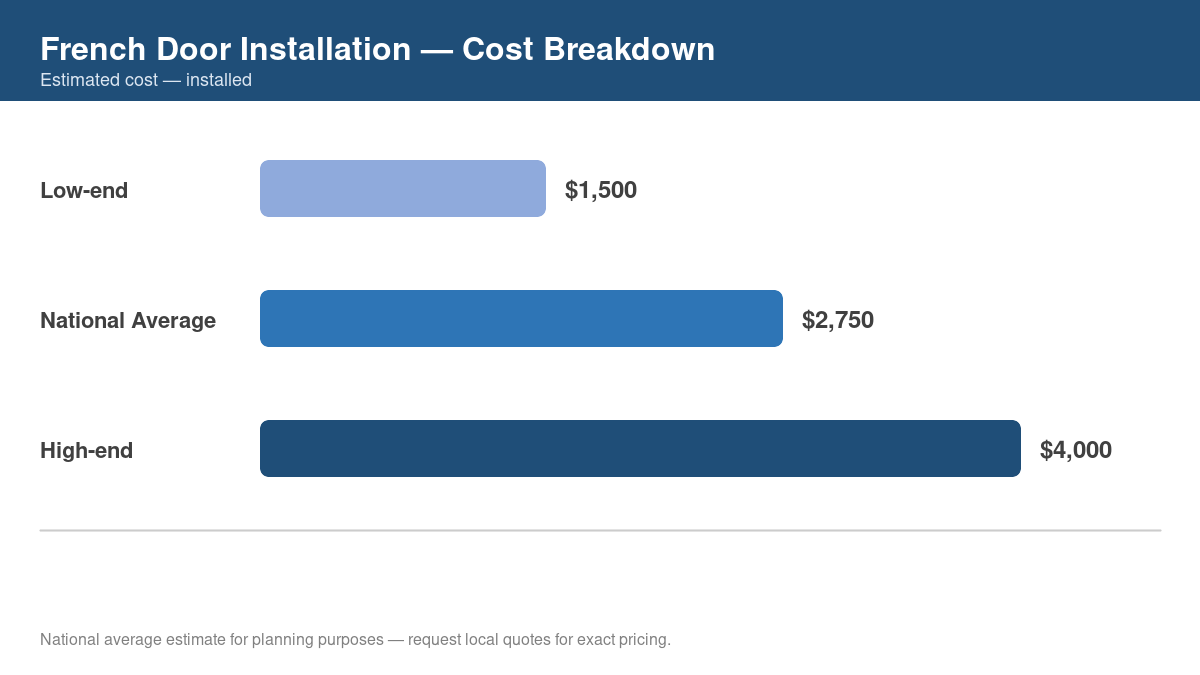
- Size and style (standard double-hung vs. custom shapes, sliders, or French doors). Upgraded glass packages and premium frame materials cost more but improve energy efficiency and comfort.
- Condition of the existing framing. Rot repair adds cost. Rotted or damaged framing discovered during removal adds carpentry repair costs before the new unit can be installed.
- Energy Star rating and any available utility rebates. Custom sizes and shapes cost more than standard, off-the-shelf dimensions.
- Local labor rates and disposal of old units. Local labor rates and disposal fees for old units vary meaningfully by region.
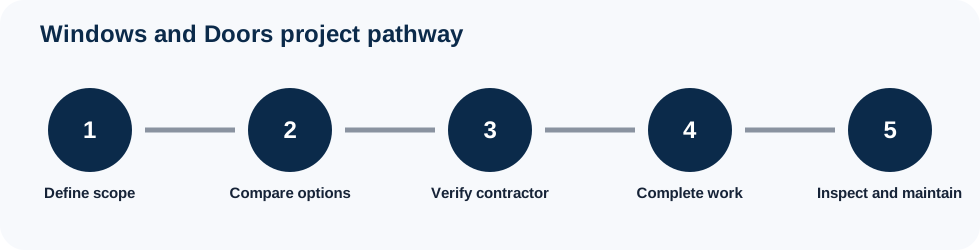
How the Process Works
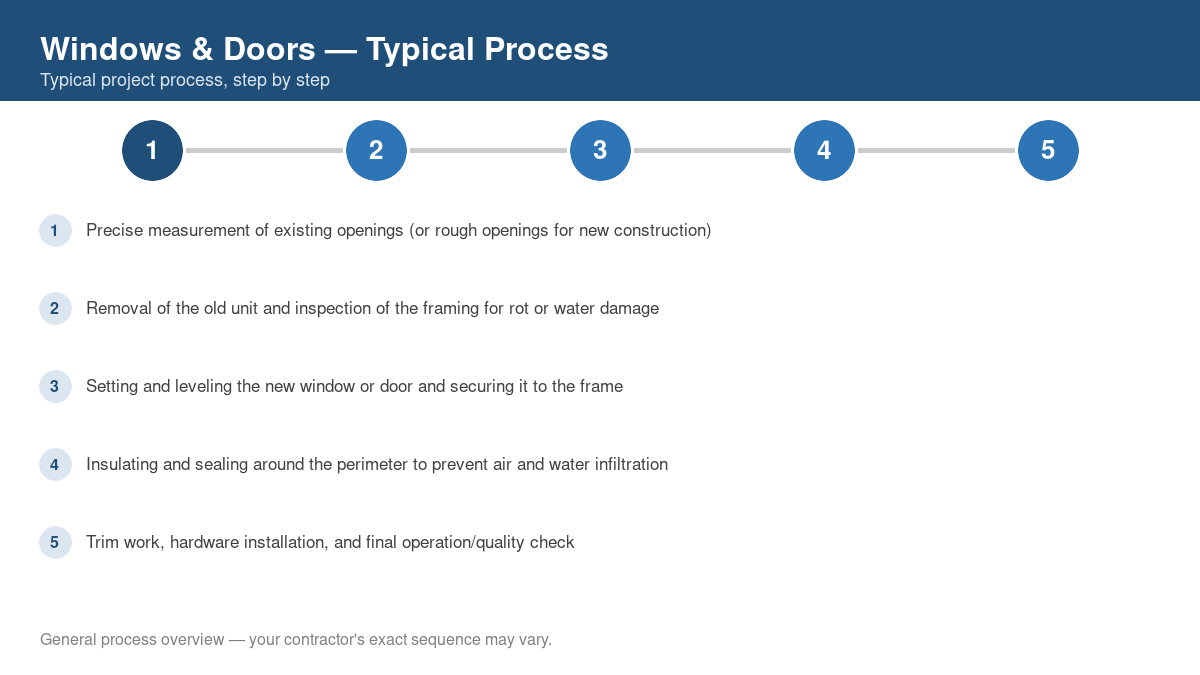
- Precise measurement of existing openings (or rough openings for new construction).
- Removal of the old unit and inspection of the framing for rot or water damage.
- Setting and leveling the new window or door and securing it to the frame.
- Insulating and sealing around the perimeter to prevent air and water infiltration.
- Trim work, hardware installation, and final operation/quality check.
How to Hire the Right Contractor
Hiring the right contractor matters as much as the work itself for windows & doors projects. Start by confirming licensing and insurance. Ask for proof directly, a verbal assurance. From there, request at least two or three written, itemized quotes so you're comparing scope and materials apples-to-apples, a bottom-line number.
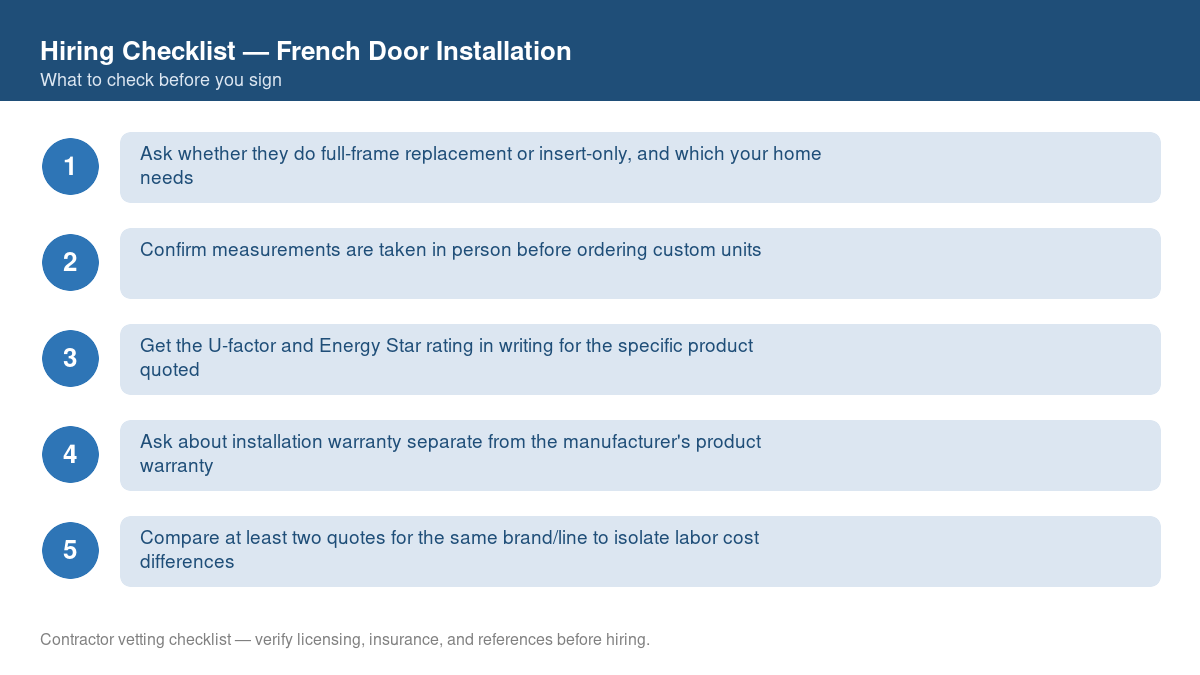
Hiring Checklist
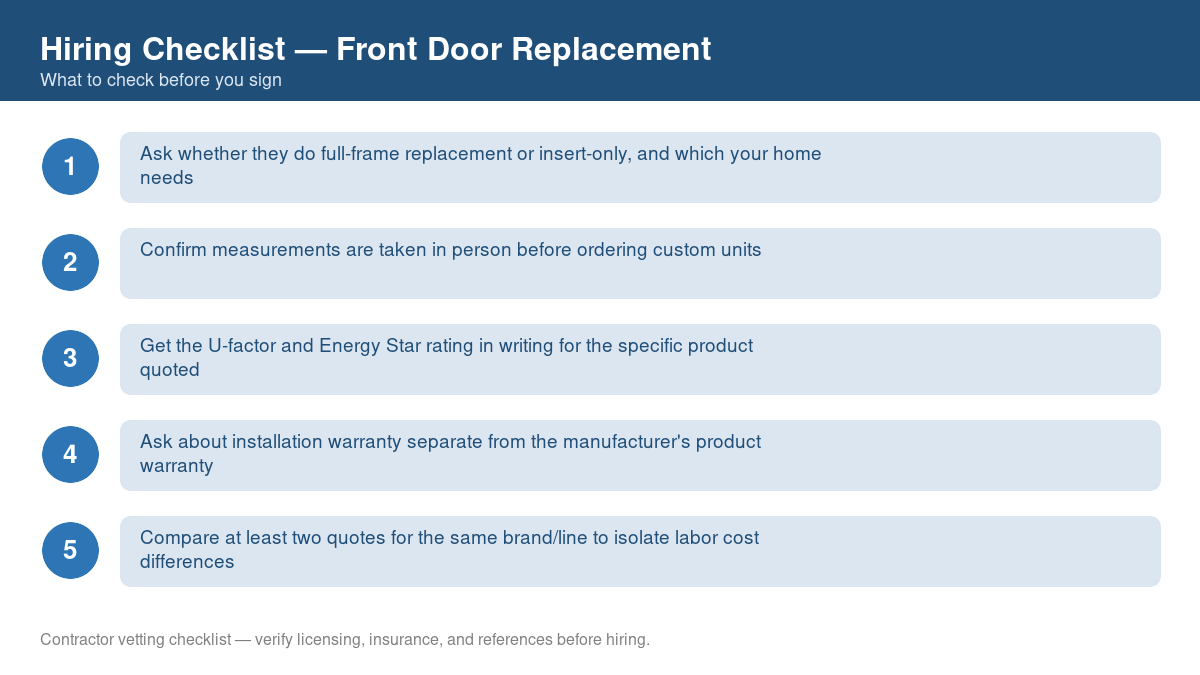
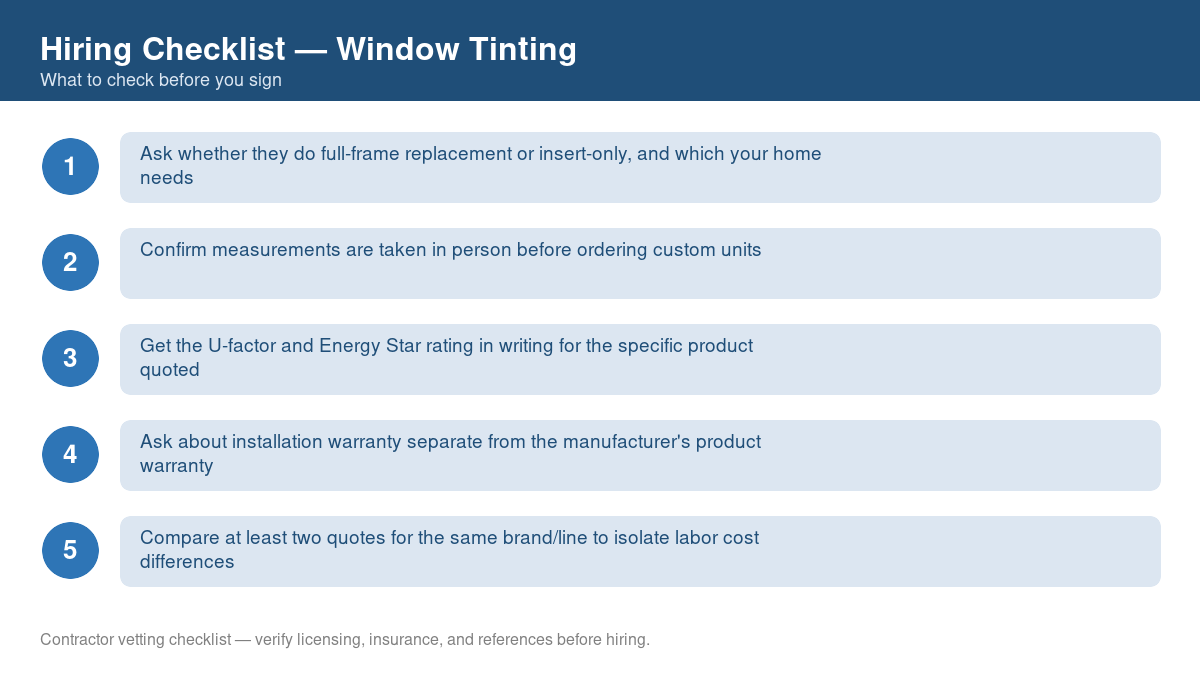
- Ask whether they do full-frame replacement or insert-only, and which your home needs.
- Confirm measurements are taken in person before ordering custom units.
- Get the U-factor and Energy Star rating in writing for the specific product quoted.
- Ask about installation warranty separate from the manufacturer's product warranty.
- Compare at least two quotes for the same brand/line to isolate labor cost differences.
Red Flags to Watch For
- Quotes given without an in-person measurement.
- No distinction between product warranty and installation warranty.
- Pressure-only, one-day sales pricing on custom orders.
- No discussion of rotted framing risk before removing the old unit.
DIY vs. Hiring a Professional
Some windows & doors work is realistic for a confident, careful homeowner to tackle solo. Small repairs, cosmetic updates, and simple installations are often reasonable DIY candidates. Work that's code-regulated, involves specialized tools, or carries real safety risk (electrical, structural, gas, or major systems work) is generally better left to a licensed professional. When in doubt, a quick consultation with a contractor can tell you whether a project is realistically DIY-friendly before you buy materials and find out the hard way.
Best Time of Year to Start
Timing affects both price and availability for windows & doors projects. Spring and early summer tend to be the busiest. And priciest. Season for most exterior and remodeling work, since demand peaks alongside good weather. Scheduling non-emergency work in the fall or winter often means more contractor availability and more room to negotiate on price, though weather-dependent exterior work may need to wait for a suitable window regardless of season.
Common Problems to Watch For
- Rotted framing repair discovered once the old window or door is removed.
- Custom sizing charges for non-standard openings.
- Interior or exterior trim and paint touch-up after installation.
- Disposal fees for old units, especially with older single-pane or lead-paint-era windows.
Why These Windows & Doors Problems Happen
Most costly windows & doors problems start small and compound if ignored. Keep an eye out for the signs above, and don't wait for a minor issue to become an expensive emergency repair. A quick inspection or consultation is inexpensive insurance compared to the cost of a bigger failure down the road.
Ways to reduce the cost
- Replace windows in batches (a full side of the house, or all at once) to reduce the per-unit cost of labor and setup.
- Ask about insert (pocket) replacement instead of full-frame replacement if your existing frames are in good condition. It's typically faster and cheaper.
- Look for Energy Star rebates or utility incentives, which are common for qualifying window and door upgrades.
- Get multiple quotes for the same brand and glass package so you're comparing labor cost apples-to-apples.
Maintenance & Long-Term Care
Ask for written care instructions and warranty terms. Keep a record of inspections, maintenance, and repairs.
Upkeep Tips
- Inspect the completed work at the intervals recommended in the care instructions. Report damage or recurring problems promptly.
- Keep the invoice, warranty, permit records, and maintenance instructions together.
- Follow the product's maintenance instructions and check the warranty conditions.
- Address small problems as soon as you notice them rather than waiting for a bigger, more expensive failure.
Financing Your Project
If you borrow to pay for the work, include interest and fees in the budget. Compare repayment terms before choosing a loan.
Financing Options Compared
- Cash or savings: No loan interest, but the payment reduces the cash available for other expenses.
- Home equity loan or HELOC: Your home secures the debt. Compare interest rates, fees, and repayment terms.
- Personal loan: Check whether the loan is secured or unsecured, then compare the rate, fees, and total repayment cost.
- Contractor or manufacturer financing: Check the promotional period, fees, and interest charged if you do not repay the balance by the deadline.
Compare borrowing costs
Compare the interest rate, fees, repayment term, and total amount you will repay. A longer term can lower the monthly payment while increasing the total interest cost.
What a Complete Quote Should Include
- A detailed scope that identifies the work, quantities, and exclusions.
- Material brands, grades, and quantities, with substitutions agreed in writing.
- Who obtains any required permits and pays the fees.
- Cleanup and disposal work, including any separate charges.
- Deposit amount and later payments, with the work required for each payment.
- Written warranty terms, including coverage, exclusions, and duration for materials and labor.
Check insurance coverage
Ask for evidence of the contractor's insurance and confirm coverage with the insurer. Check whether workers' compensation coverage is required for the crew. Ask your own insurer whether the planned work affects your policy.
Long-Term Cost of Ownership
Include maintenance, repairs, and eventual replacement when comparing costs. Ask what upkeep the proposed materials or equipment need and which costs the warranty covers.
Ask each contractor for the maintenance schedule and expected service life of the proposed materials or equipment. Request the written product specifications and warranty terms.
Check the contractor's work history
Read recent reviews and check how the contractor handled complaints. Contact references for similar work completed recently. Ask how the contractor records changes, prices extra work, and resolves disputes. Put those procedures in the contract.
Common Contract Terms Explained
Check these terms when reading the contract. Ask the contractor to explain any wording that leaves the scope, payment, or completion requirements unclear.
Contract Terms Glossary
- Change order: A written change to the contract. Agree on the additional or reduced work, price, and schedule before approving it.
- Punch list: Unfinished work or defects recorded during the walkthrough. Agree on when the contractor will resolve each item.
- Lien waiver: A document that waives lien rights under specified conditions. Check which payment it covers and whether it is conditional or unconditional.
- Retainage: Part of a payment held until the contract's release conditions are met. Specify the amount and conditions in the contract.
- Substantial completion: The stage when the work can be used for its intended purpose. Check the contract for the definition and any payment or warranty dates tied to it.
Plan for disruption
Ask which rooms or services will be unavailable during the work and for how long. Confirm any planned utility interruptions, dust controls, and daily cleanup.
Keep children and pets away from the work area. If you will lose access to a kitchen, bathroom, or essential service, ask when it will be usable again and plan around that schedule.
Frequently Asked Questions
- ('How much does windows & doors work typically cost?', 'It varies significantly by project. See the pricing snapshot above for common windows & doors projects, ranging from simple repairs to full installations. Get a local, written quote for an exact number.')
- ('How long does windows & doors work usually take?', 'Most window and door installations take a single day for a handful of openings, with whole-house projects taking two to five days.')
- ('Do I need a permit for windows & doors work?', "Permit requirements vary by area and project size. Many single-window replacements don't require one, but full-frame changes, structural openings, or whole-house projects often do.")
- ('How long does windows & doors work typically last?', 'Quality windows and doors typically last 20–40 years depending on material and climate exposure.')
- ('How many quotes should I get before hiring a contractor?', 'Three is the general rule of thumb. Enough to spot outliers on price or scope without dragging the process out for weeks.')
- ('Can I DIY windows & doors work myself?', 'Some smaller-scope work is DIY-friendly for a careful homeowner, but code-regulated or safety-sensitive work is best left to a licensed professional. See the DIY vs. Pro section above.')
- ('Can I negotiate the price on windows & doors?', "Sometimes. Especially during a contractor's slower season. It's reasonable to ask, but be wary of a contractor who drops the price dramatically just to win the job; that can be a sign corners will be cut elsewhere.")
- ("What should I do if I'm unhappy with the finished work?", "Raise it with the contractor directly and in writing first. Reputable contractors will address legitimate issues. If that doesn't resolve it, your state's contractor licensing board is the next step.")
- ("How do I verify a contractor's license and insurance?", "Most states have an online license lookup tool through the state contractor licensing board. Ask for the license number and confirm it's active before signing anything.")
- ('Is it normal for a windows & doors quote to change after the initial visit?', 'A small adjustment after a closer inspection is normal, but a large jump is worth questioning. Ask exactly what changed and why.')
Project planning
Check the scope, site conditions, and local requirements before setting the budget and schedule.
Project delivery options compared
| Approach | Best suited to | Primary trade-off |
|---|---|---|
| DIY or owner-managed | Low-risk cosmetic work within the homeowner’s skill level | Owner assumes safety, quality, scheduling, and code risks |
| Specialty contractor | A clearly defined trade-specific scope | May require the homeowner to coordinate other trades |
| General contractor or design-build team | Complex projects involving several trades or structural changes | Higher management cost, with centralized coordination |
Typical project timeline
| Phase | Typical planning window |
|---|---|
| Assessment and scope | 1-3 days |
| Selections and written quote | 2-14 days |
| Permits and scheduling | Varies by location |
| Active project work | 1 day to several weeks |
| Inspection, cleanup, and handoff | 1-3 days |
Benefits and limitations
Potential benefits
- Improves function, safety, or appearance
- Can address deferred maintenance before it spreads
- Creates an opportunity to document warranties and future upkeep
Potential trade-offs
- Upfront cost may change when hidden conditions are found
- Work can disrupt normal use of the area
- Permits, inspections, and material lead times may affect scheduling
Project stages