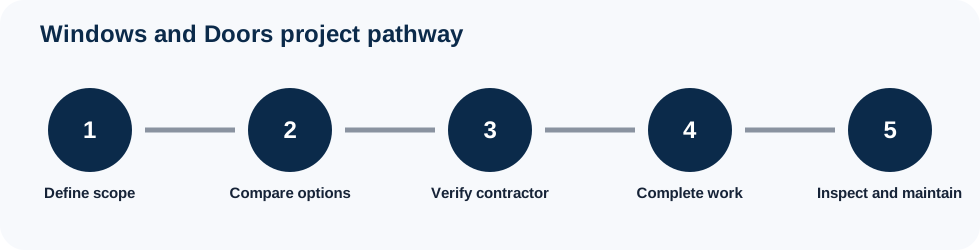
Before you start skylight window installation, run through this checklist to make sure you've covered budget, permits, and contractor vetting. Windows and doors are a home's primary barrier against weather and a major factor in energy efficiency, so proper sizing and sealing matter as much as the product itself.
What should you check before starting?
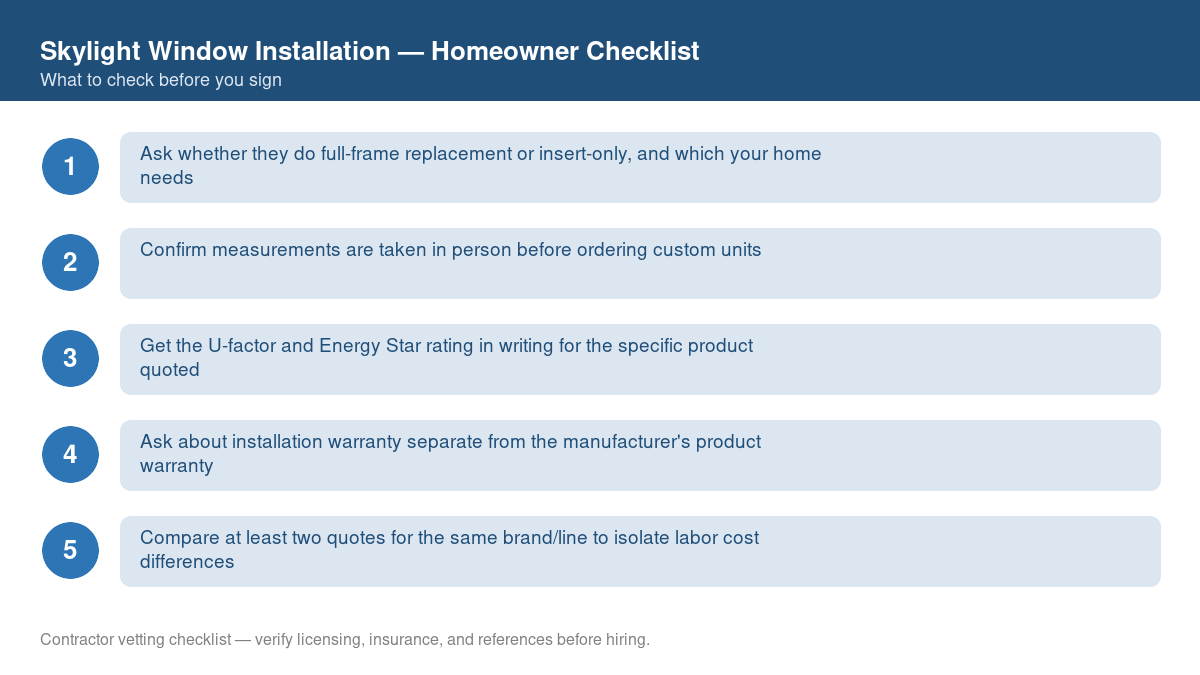
- Ask whether they do full-frame replacement or insert-only, and which your home needs.
- Confirm measurements are taken in person before ordering custom units.
- Get the U-factor and Energy Star rating in writing for the specific product quoted.
- Ask about installation warranty separate from the manufacturer's product warranty.
- Compare at least two quotes for the same brand/line to isolate labor cost differences.
What should the budget include?
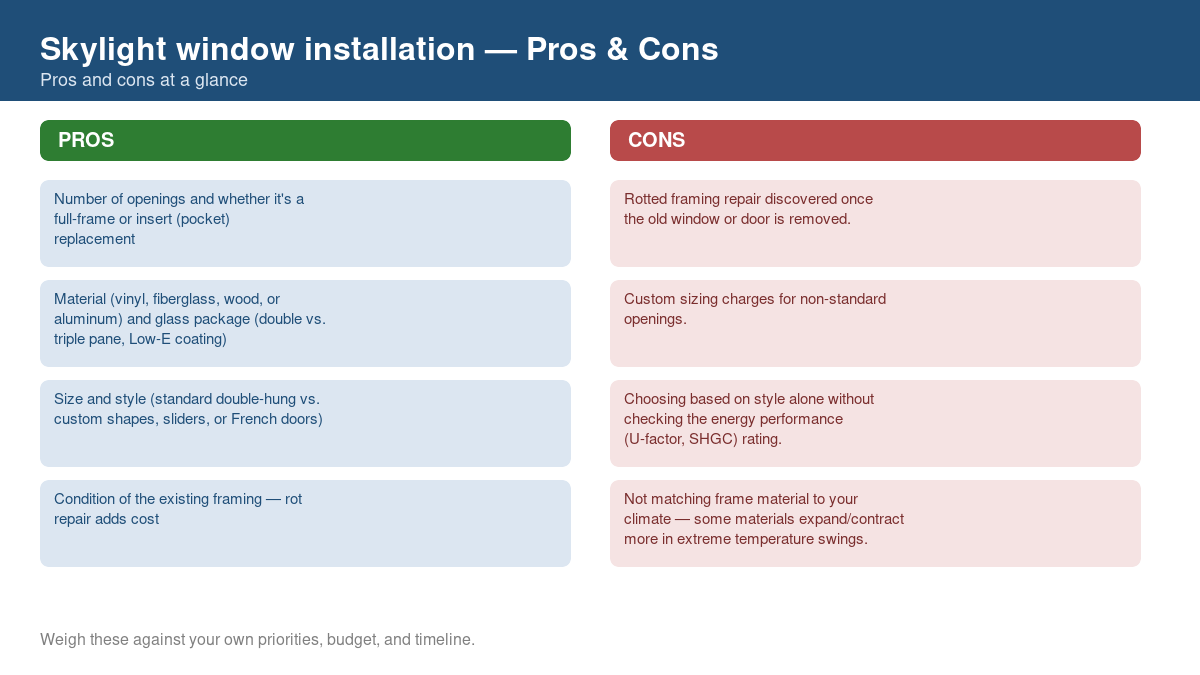
- Number of openings and whether it's a full-frame or insert (pocket) replacement. More openings mean more materials and more labor hours, so whole-house projects have significant economies of scale per unit.
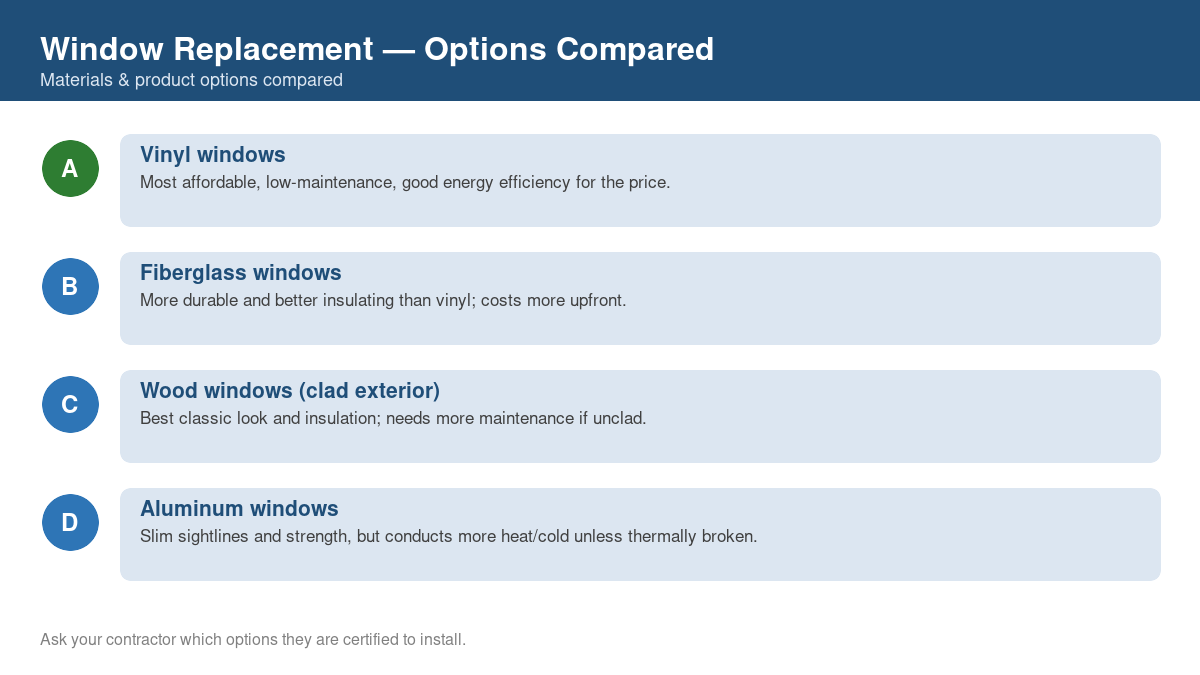
- Material (vinyl, fiberglass, wood, or aluminum) and glass package (double vs. triple pane, Low-E coating). Full-frame replacement costs more than an insert (pocket) replacement because it involves removing the entire existing frame.
- Size and style (standard double-hung vs. custom shapes, sliders, or French doors). Upgraded glass packages and premium frame materials cost more but improve energy efficiency and comfort.
- Condition of the existing framing. Rot repair adds cost. Rotted or damaged framing discovered during removal adds carpentry repair costs before the new unit can be installed.
- Energy Star rating and any available utility rebates. Custom sizes and shapes cost more than standard, off-the-shelf dimensions.
- Local labor rates and disposal of old units. Local labor rates and disposal fees for old units vary meaningfully by region.
- Budget $1,500–$3,500 per skylight, including labor as a starting planning range. See the Roofing category for roof-integration cost factors.
Which permit and code questions should you ask?
Permit requirements vary by area and project size. Many single-window replacements don't require one, but full-frame changes, structural openings, or whole-house projects often do.
Which contractor warning signs should you investigate?
- Quotes given without an in-person measurement.
- No distinction between product warranty and installation warranty.
- Pressure-only, one-day sales pricing on custom orders.
- No discussion of rotted framing risk before removing the old unit.
What should you confirm before work begins?
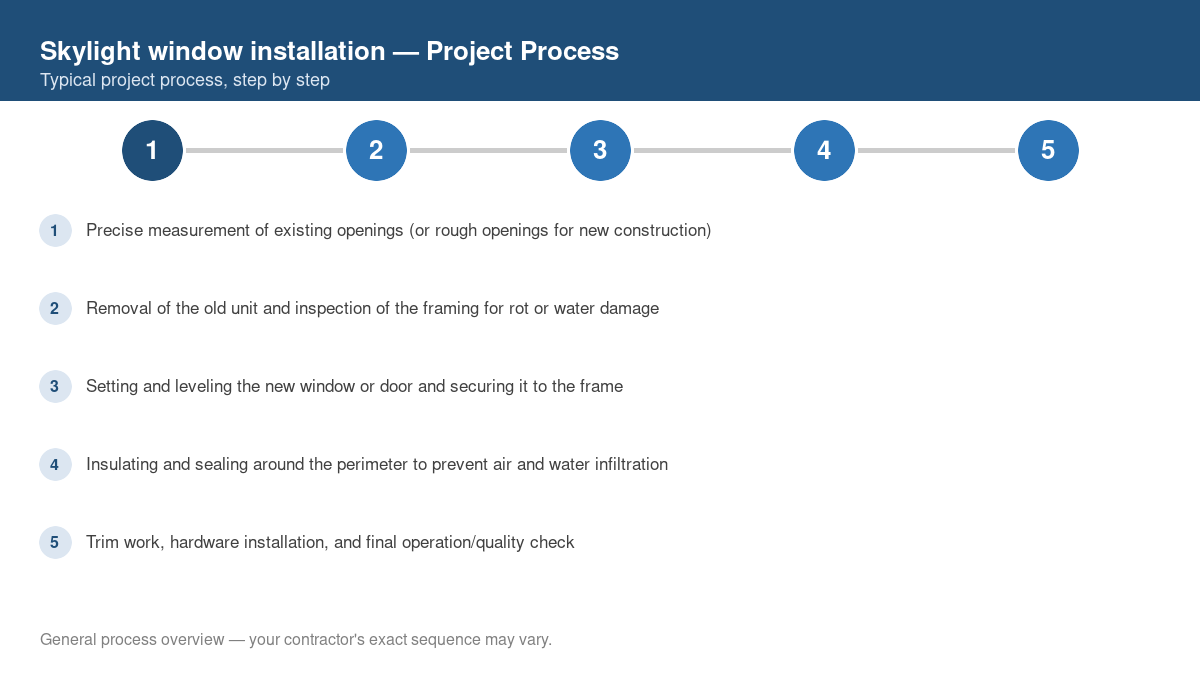
- Precise measurement of existing openings (or rough openings for new construction).
- Removal of the old unit and inspection of the framing for rot or water damage.
- Setting and leveling the new window or door and securing it to the frame.
- Insulating and sealing around the perimeter to prevent air and water infiltration.
What other questions should you ask?
What maintenance information should you request?
Ask for written care instructions and warranty terms. Keep a record of inspections, maintenance, and repairs.
How Skylight window installation Compares to Other Windows & Doors Projects
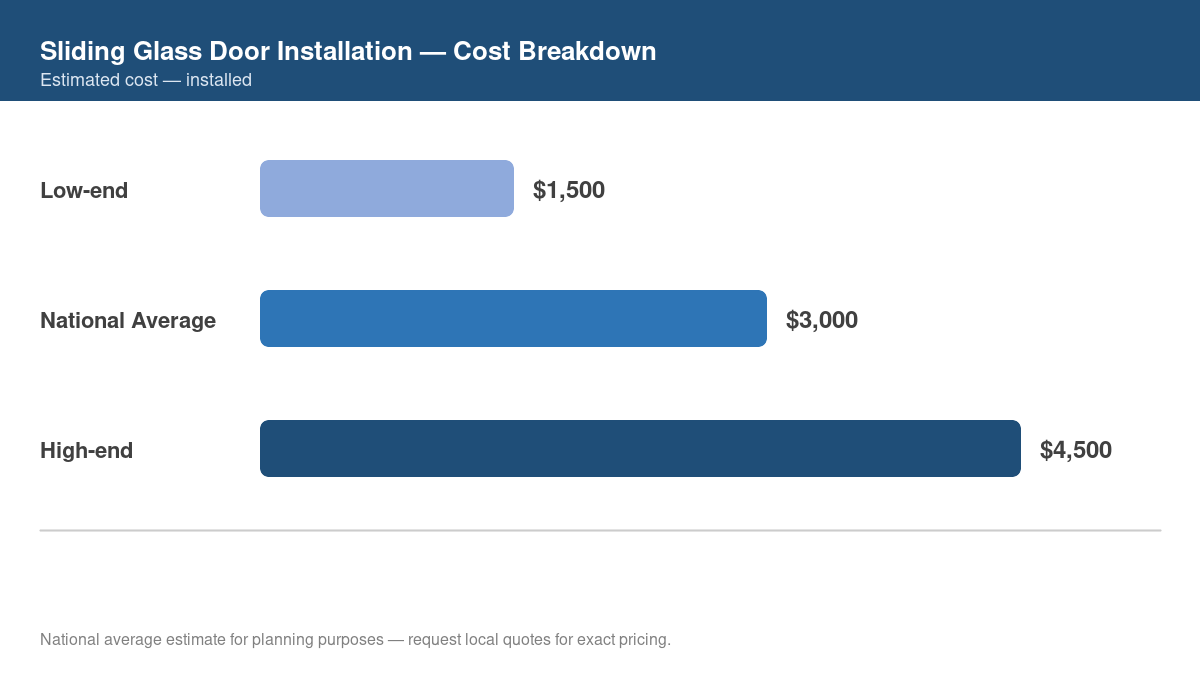
Related work may include sliding glass door installation, garage door replacement, and window tinting. Ask whether any of these jobs need to be coordinated with this project. Have the contractor price combined and separate work if both are practical.
How should you plan project financing?
If you borrow to pay for the work, include interest and fees in the budget. Compare repayment terms before choosing a loan.
What should a complete estimate include?
- A detailed scope that identifies the work, quantities, and exclusions.
- Material brands, grades, and quantities, with substitutions agreed in writing.
- Who obtains any required permits and pays the fees.
- Cleanup and disposal work, including any separate charges.
What else should you ask before hiring?
- Can I negotiate the price on skylight window installation? Ask whether the price is negotiable. If the contractor offers a discount, confirm that the scope, materials, and warranty stay the same.
- What should I do if I'm unhappy with the finished work? Describe the problem to the contractor in writing and ask for a response by a stated date. Keep photographs and records. Check the contract's dispute process and the complaint options available in your state.
How should you check insurance coverage?
Ask for evidence of the contractor's insurance and confirm coverage with the insurer. Check whether workers' compensation coverage is required for the crew. Ask your own insurer whether the planned work affects your policy.
How should you start planning?
- Get at least two or three written, itemized quotes for skylight window installation before deciding.
- Confirm licensing, insurance, and recent local references for any contractor you're considering.
- Ask about the payment schedule and warranty terms for skylight window installation before signing anything.
Ready to check contractors off your skylight window installation list? Get free quotes from licensed local pros near you.
Get Free QuotesProject planning
Check the scope, site conditions, and local requirements before setting the budget and schedule.
Project delivery options compared
| Approach | Best suited to | Primary trade-off |
|---|---|---|
| DIY or owner-managed | Low-risk cosmetic work within the homeowner’s skill level | Owner assumes safety, quality, scheduling, and code risks |
| Specialty contractor | A clearly defined trade-specific scope | May require the homeowner to coordinate other trades |
| General contractor or design-build team | Complex projects involving several trades or structural changes | Higher management cost, with centralized coordination |
Typical project timeline
| Phase | Typical planning window |
|---|---|
| Assessment and scope | 1-3 days |
| Selections and written quote | 2-14 days |
| Permits and scheduling | Varies by location |
| Active project work | 1 day to several weeks |
| Inspection, cleanup, and handoff | 1-3 days |
Benefits and limitations
Potential benefits
- Improves function, safety, or appearance
- Can address deferred maintenance before it spreads
- Creates an opportunity to document warranties and future upkeep
Potential trade-offs
- Upfront cost may change when hidden conditions are found
- Work can disrupt normal use of the area
- Permits, inspections, and material lead times may affect scheduling
Project stages