Above-ground pool installation typically takes one to two days, while inground pool construction typically takes six to twelve weeks depending on complexity and weather. Ask the contractor for a schedule that includes preparation, active work, and any inspections.
Pools and spas carry significant ongoing costs beyond installation, so understanding both upfront and long-term costs is essential before committing.
Typical Timeline
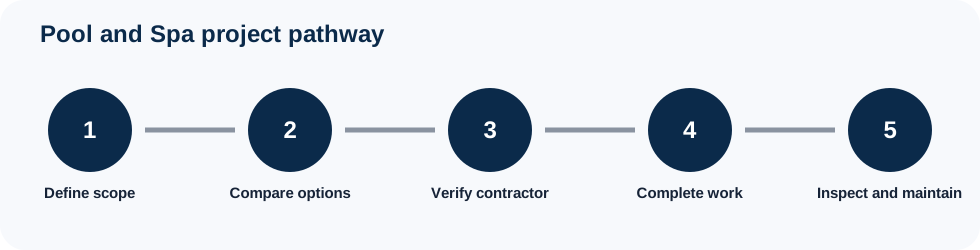
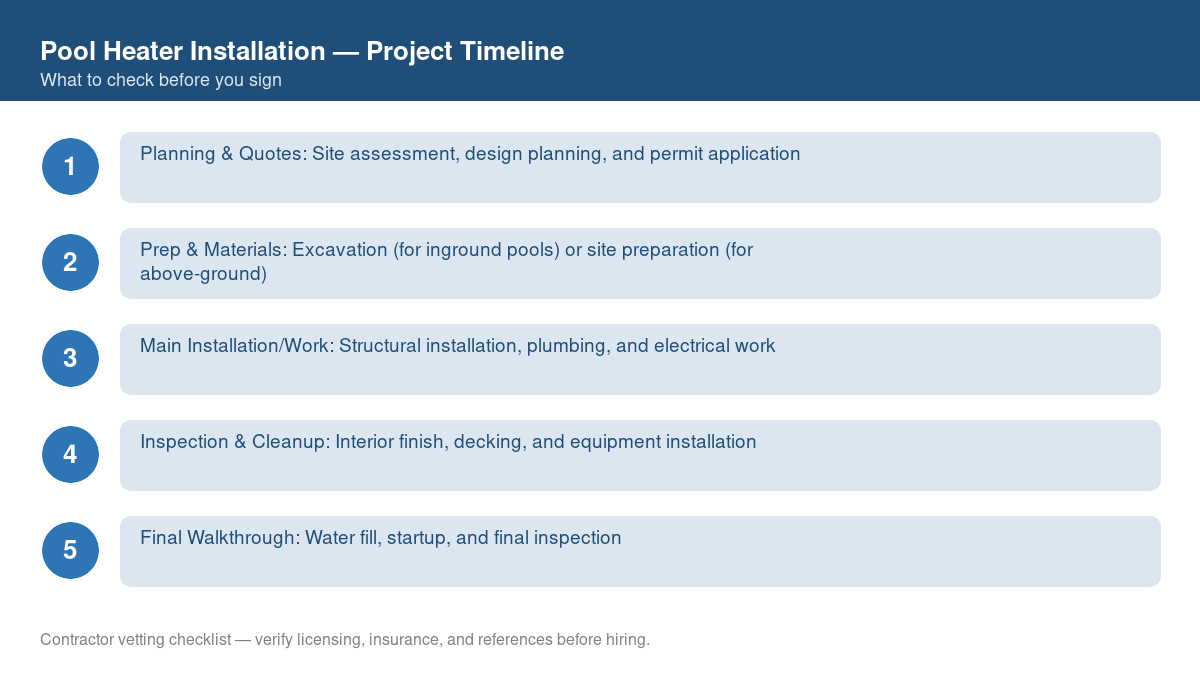
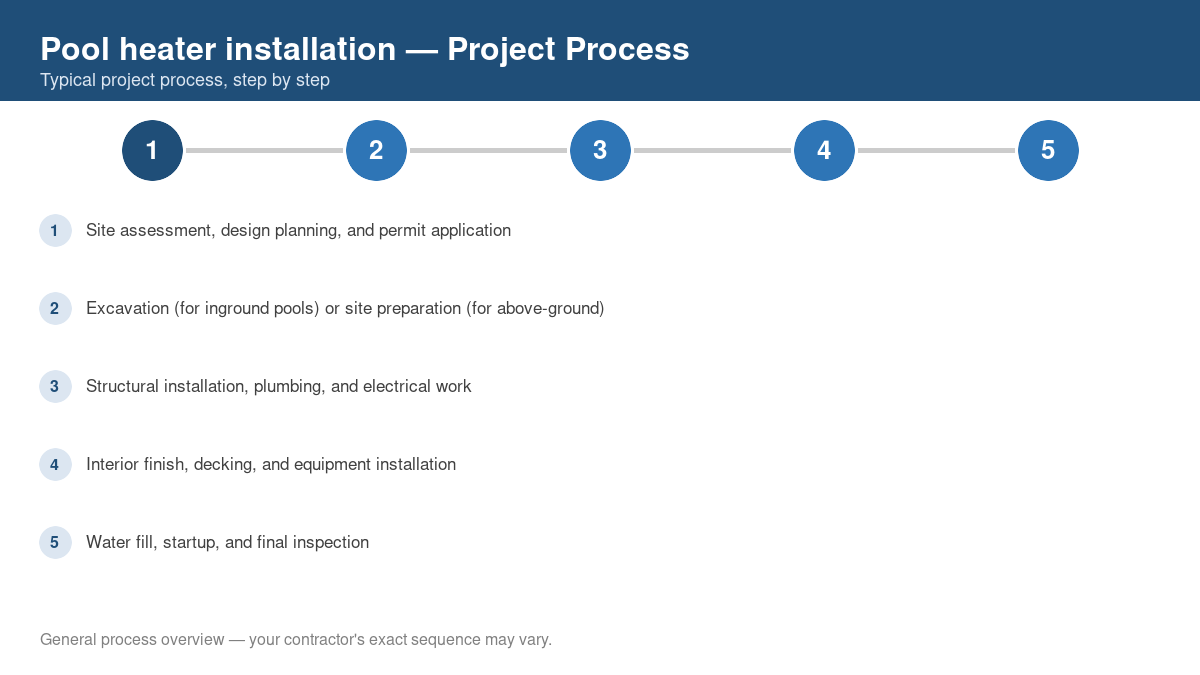
- Planning & Quotes: Site assessment, design planning, and permit application.
- Prep & Materials: Excavation (for inground pools) or site preparation (for above-ground).
- Main Installation/Work: Structural installation, plumbing, and electrical work.
- Inspection & Cleanup: Interior finish, decking, and equipment installation.
- Final Walkthrough: Water fill, startup, and final inspection.
What Affects the Timeline
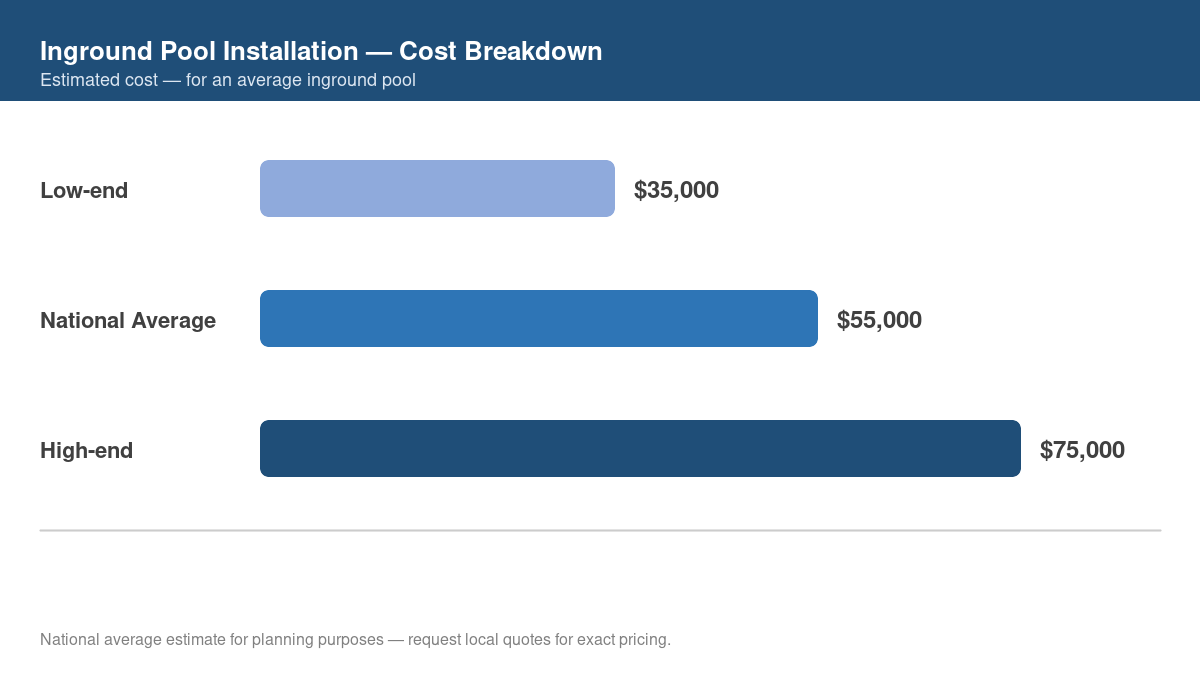
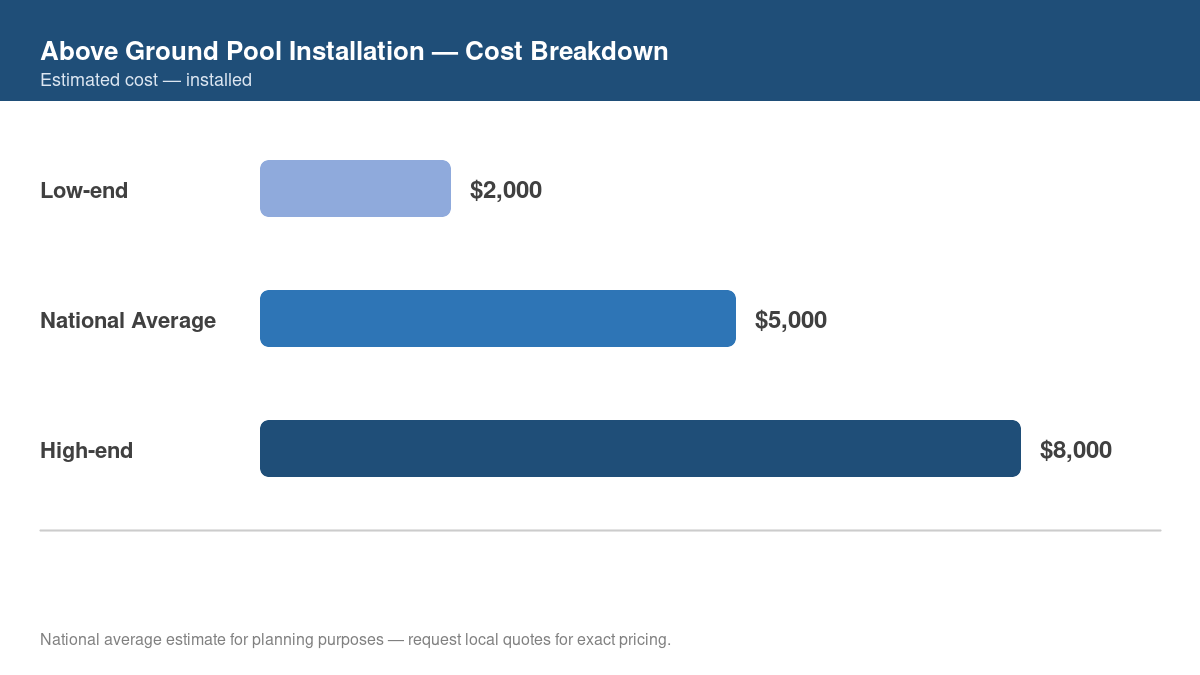
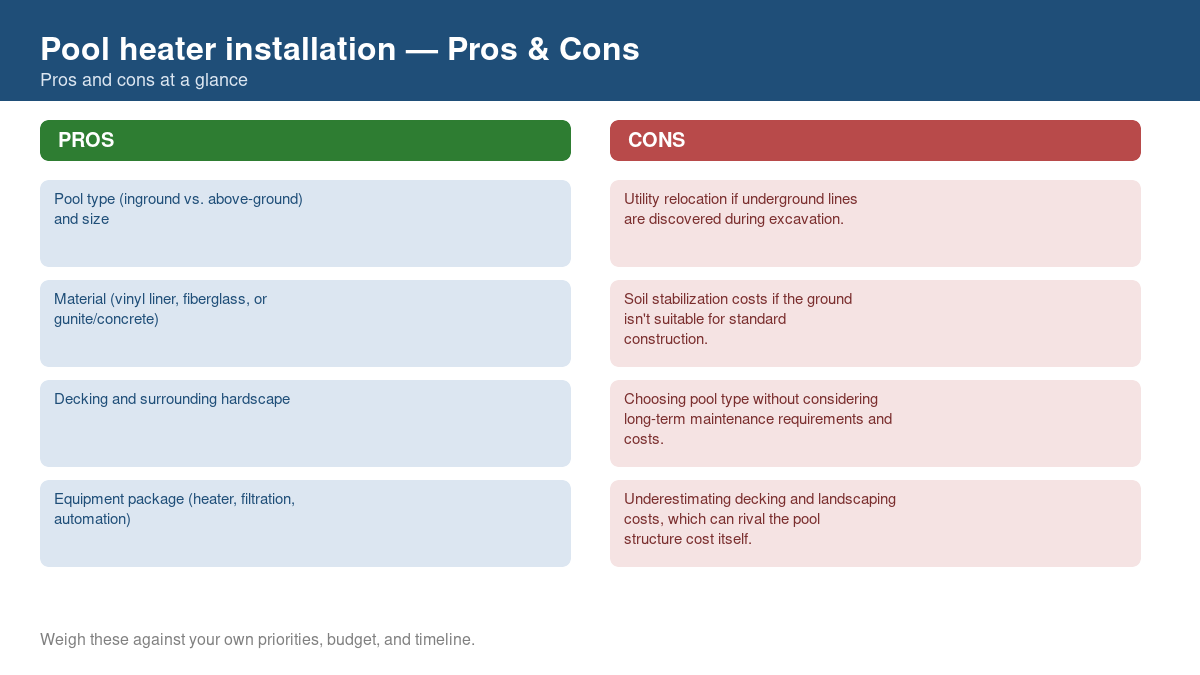
- Pool type (inground vs. above-ground) and size. Inground pools cost significantly more than above-ground pools due to excavation and structural work.
- Material (vinyl liner, fiberglass, or gunite/concrete). Gunite/concrete pools cost more than vinyl liner or fiberglass but offer more design flexibility and durability.
- Decking and surrounding hardscape. Larger decking and hardscape areas add substantial cost beyond the pool structure itself.
- Equipment package (heater, filtration, automation). Automation, heating, and advanced filtration systems add cost but improve convenience and water quality.
- Site conditions. Difficult access or poor soil adds cost. Difficult site access or poor soil conditions increase excavation time and equipment costs.
- Local permit and fencing code requirements. Most areas require pool fencing and safety features by code, which adds to the total project cost.
Common Causes of Delay
For pool heater installation, the most common delays come from material backorders, permit processing taking longer than expected, and homeowners changing their minds mid-project on materials or layout. Weather can also push back exterior work regardless of how well the project is planned. Building a small buffer into your expected timeline. A week or two beyond the contractor's initial estimate. Avoids unnecessary stress if something minor comes up.
How to Keep Your Project on Schedule
- Choose a vinyl liner or fiberglass pool instead of gunite/concrete if upfront cost is the top priority.
- Keep the decking design simple initially, and add hardscaping upgrades in future phases.
- Get multiple quotes and confirm each includes the same equipment package and warranty terms.
- Have all decisions (materials, colors, layout) finalized before work starts to avoid mid-project delays.
What other questions should you ask?
What maintenance information should you request?
Ask for written care instructions and warranty terms. Keep a record of inspections, maintenance, and repairs.
How Pool heater installation Compares to Other Pool & Spa Projects
Related work may include pool liner replacement, pool opening and closing service, and above ground pool installation. Ask whether any of these jobs need to be coordinated with this project. Have the contractor price combined and separate work if both are practical.
How should you plan project financing?
If you borrow to pay for the work, include interest and fees in the budget. Compare repayment terms before choosing a loan.
What should a complete estimate include?
- A detailed scope that identifies the work, quantities, and exclusions.
- Material brands, grades, and quantities, with substitutions agreed in writing.
- Who obtains any required permits and pays the fees.
- Cleanup and disposal work, including any separate charges.
What else should you ask before hiring?
- Can I negotiate the price on pool heater installation? Ask whether the price is negotiable. If the contractor offers a discount, confirm that the scope, materials, and warranty stay the same.
- What should I do if I'm unhappy with the finished work? Describe the problem to the contractor in writing and ask for a response by a stated date. Keep photographs and records. Check the contract's dispute process and the complaint options available in your state.
How should you check insurance coverage?
Ask for evidence of the contractor's insurance and confirm coverage with the insurer. Check whether workers' compensation coverage is required for the crew. Ask your own insurer whether the planned work affects your policy.
How should you start planning?
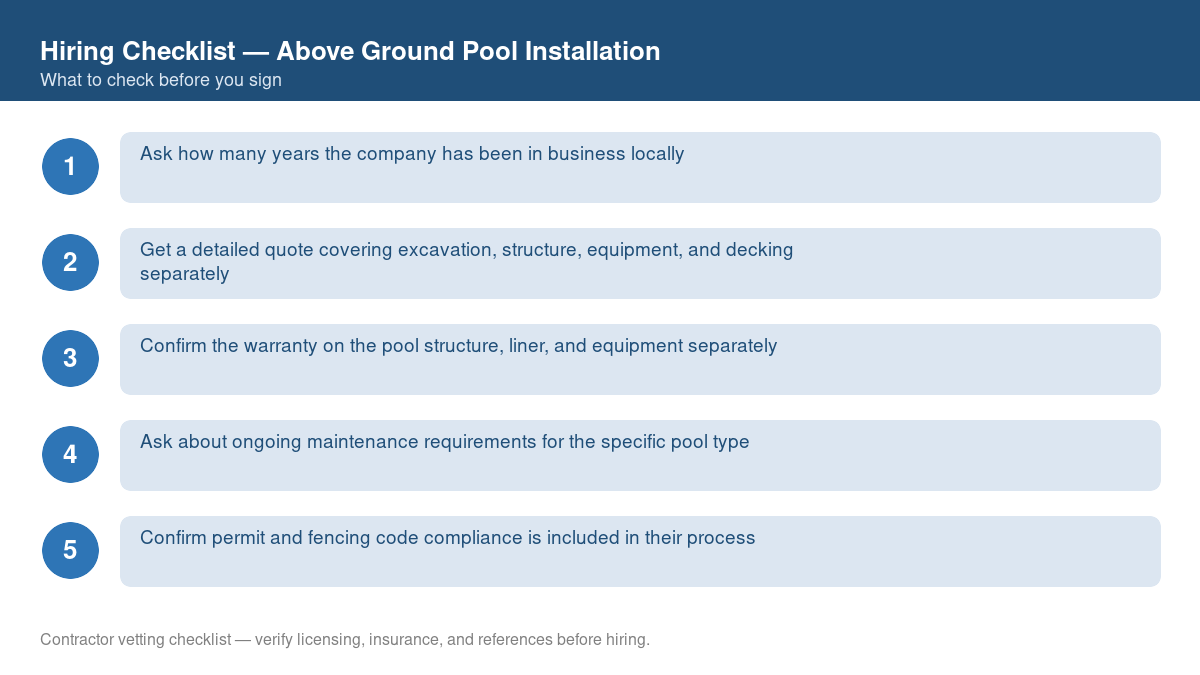
- Get at least two or three written, itemized quotes for pool heater installation before deciding.
- Confirm licensing, insurance, and recent local references for any contractor you're considering.
- Ask about the payment schedule and warranty terms for pool heater installation before signing anything.
Want an accurate timeline for your pool heater installation project? Get free quotes from local contractors who can give you a real schedule.
Get Free QuotesProject planning
Check the scope, site conditions, and local requirements before setting the budget and schedule.
Project delivery options compared
| Approach | Best suited to | Primary trade-off |
|---|---|---|
| DIY or owner-managed | Low-risk cosmetic work within the homeowner’s skill level | Owner assumes safety, quality, scheduling, and code risks |
| Specialty contractor | A clearly defined trade-specific scope | May require the homeowner to coordinate other trades |
| General contractor or design-build team | Complex projects involving several trades or structural changes | Higher management cost, with centralized coordination |
Benefits and limitations
Potential benefits
- Improves function, safety, or appearance
- Can address deferred maintenance before it spreads
- Creates an opportunity to document warranties and future upkeep
Potential trade-offs
- Upfront cost may change when hidden conditions are found
- Work can disrupt normal use of the area
- Permits, inspections, and material lead times may affect scheduling
Project stages