The signs below can help you decide whether to investigate above ground pool installation. Ask a contractor to identify the cause of the problem and explain the proposed work before you commit.
Pools and spas carry significant ongoing costs beyond installation, so understanding both upfront and long-term costs is essential before committing.
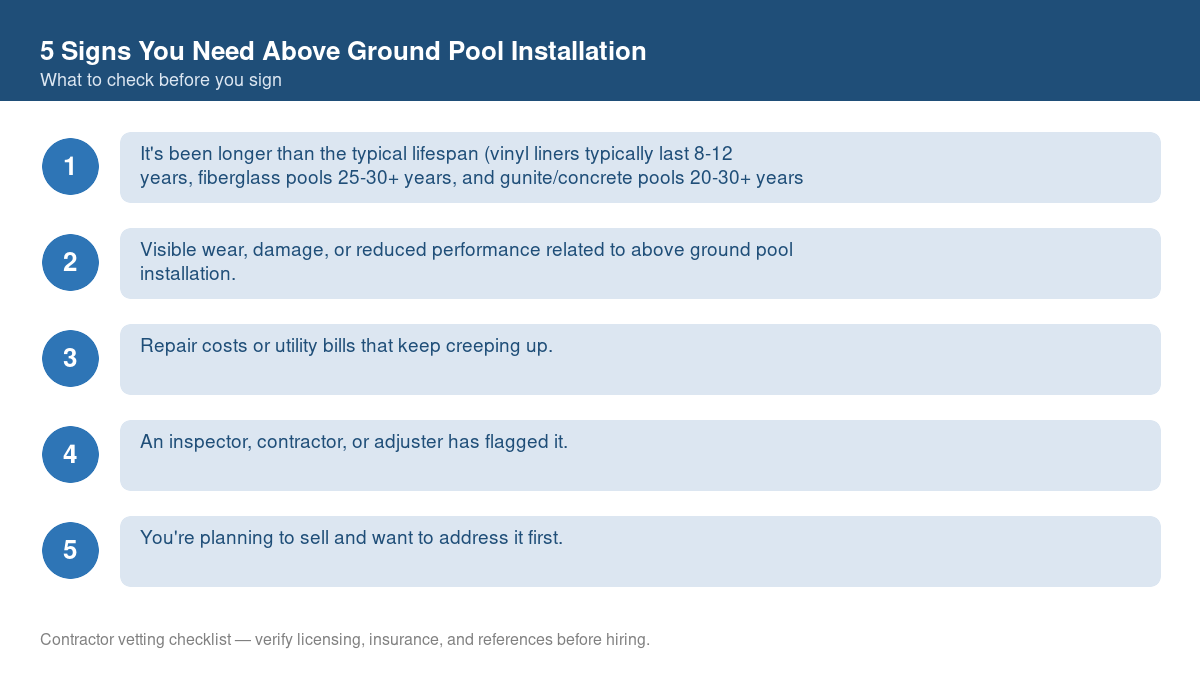
Signs to Watch For
- It's been longer than the typical lifespan (vinyl liners typically last 8-12 years, fiberglass pools 25-30+ years, and gunite/concrete pools 20-30+ years between resurfacing) since it was last done. Age alone doesn't guarantee failure, but it does raise the odds significantly.
- You've noticed visible wear, damage, or reduced performance related to above ground pool installation. Small visible issues are usually the tip of a larger problem underneath.
- You're paying more than expected on repairs or utility bills that trace back to this area of your home. Recurring repair calls are usually a sign that patching isn't solving the underlying issue.
- A home inspector, contractor, or insurance adjuster has flagged it as a concern. These professionals see hundreds of homes and are generally conservative about what they call out.
- You're planning to sell soon and want to address it before it becomes a negotiating point with buyers. Unresolved issues found during a buyer's inspection tend to cost more in negotiated concessions than fixing them upfront.
What Happens If You Wait
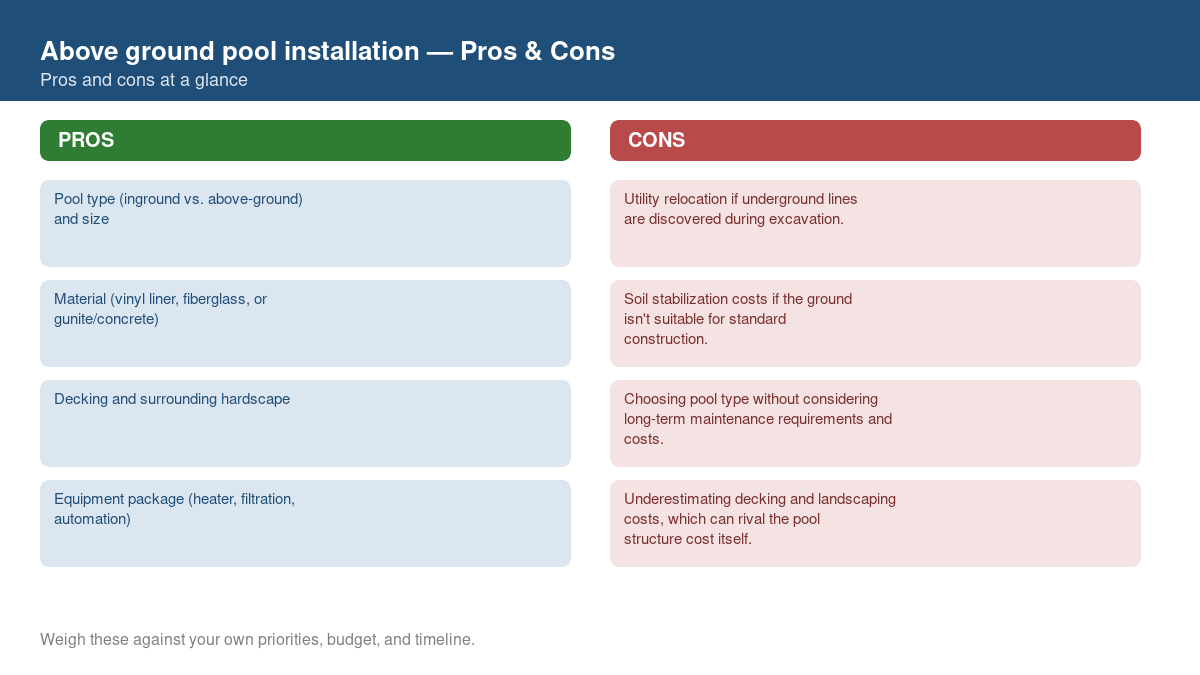
Waiting rarely makes above ground pool installation cheaper. Small issues tend to compound into bigger, more expensive repairs, and delaying can also mean losing manufacturer warranty coverage or dealing with emergency pricing if the problem worsens suddenly. Utility relocation if underground lines are discovered during excavation.
How to Confirm It's Time
If you're seeing one or two of these signs around above ground pool installation, it's usually worth getting a professional opinion rather than guessing. A quick inspection or consultation costs little compared to the price of letting a real issue go unaddressed, and a reputable contractor won't pressure you into work you don't actually need yet. A second opinion is always reasonable to ask for.
What This Typically Costs
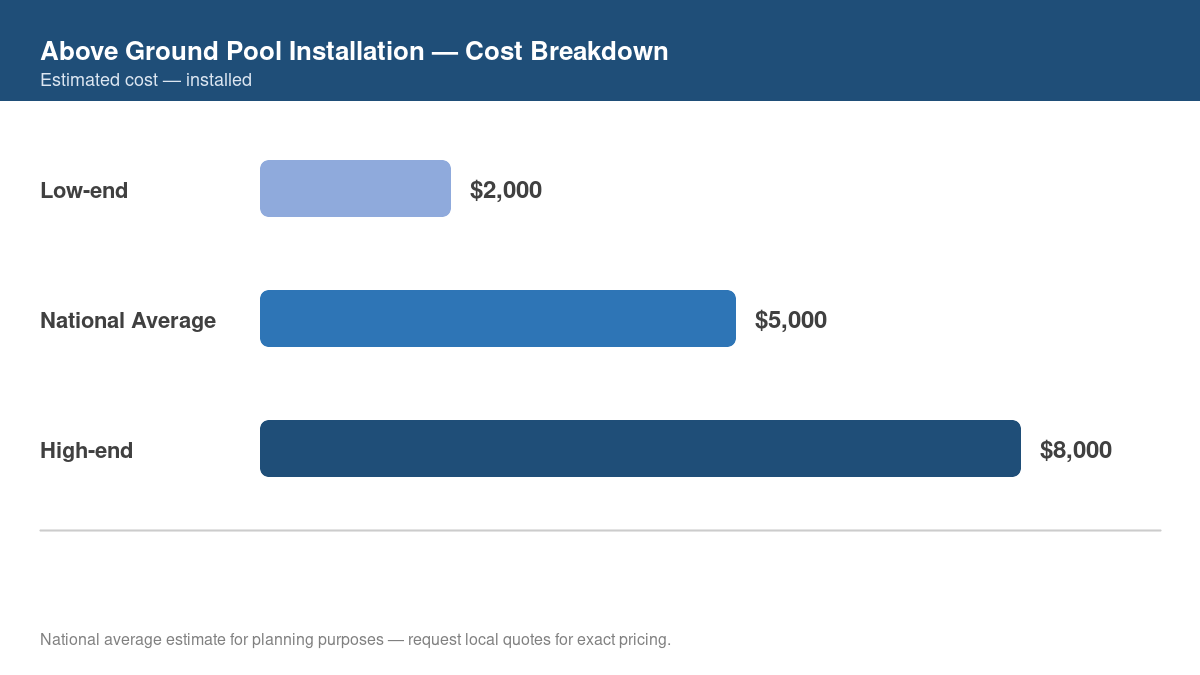
When it is time to act, expect to pay roughly $2,000–$8,000 installed. Larger, deeper pools with premium decking cost more than basic round pools.
Next Steps
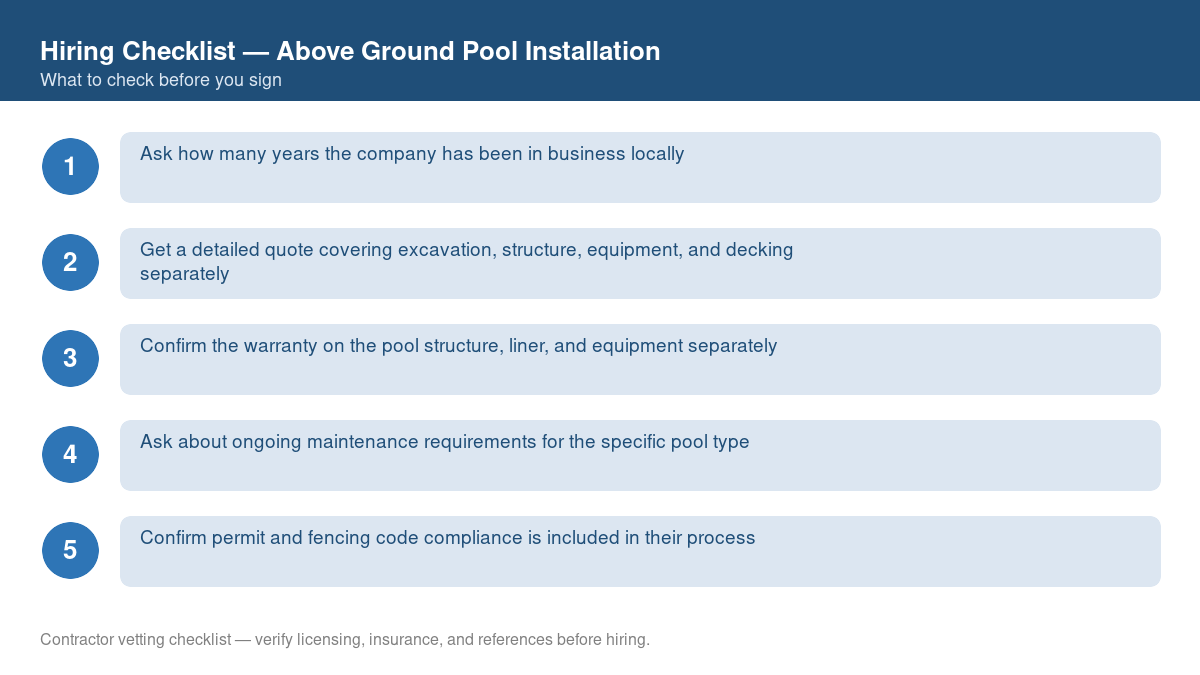
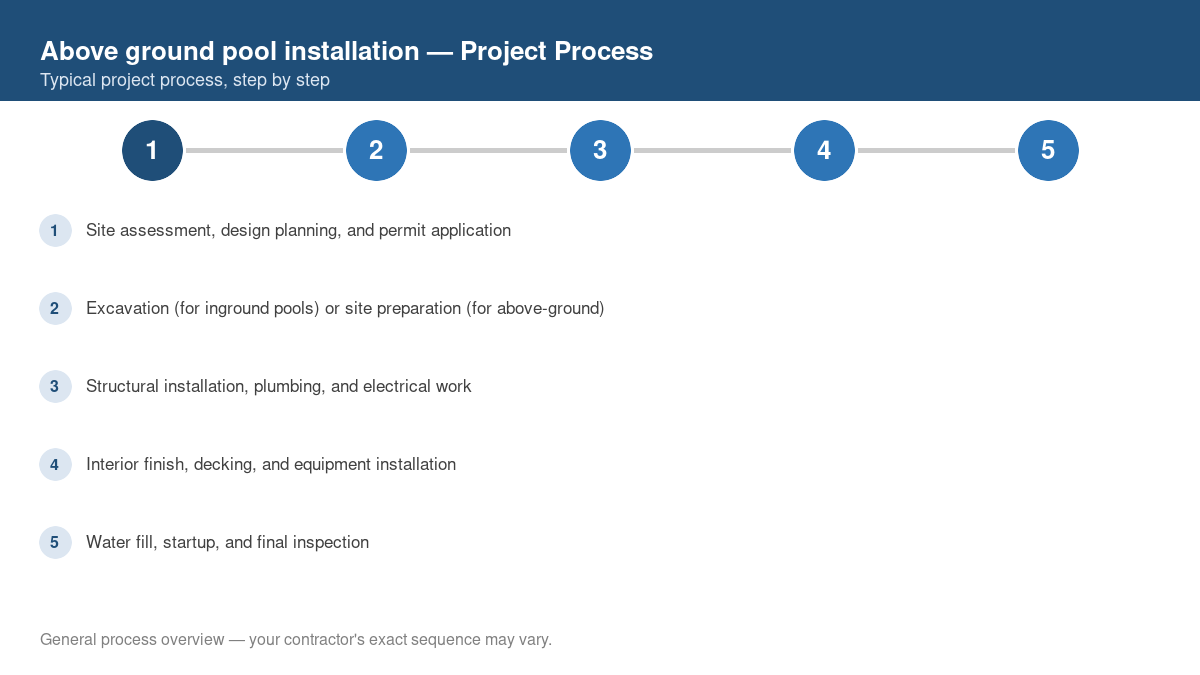
- Ask how many years the company has been in business locally.
- Get a detailed quote covering excavation, structure, equipment, and decking separately.
- Confirm the warranty on the pool structure, liner, and equipment separately.
- Ask about ongoing maintenance requirements for the specific pool type.
What other questions should you ask?
What maintenance information should you request?
Ask for written care instructions and warranty terms. Keep a record of inspections, maintenance, and repairs.
How Above ground pool installation Compares to Other Pool & Spa Projects
Related work may include inground pool installation, pool opening and closing service, and pool liner replacement. Ask whether any of these jobs need to be coordinated with this project. Have the contractor price combined and separate work if both are practical.
How should you plan project financing?
If you borrow to pay for the work, include interest and fees in the budget. Compare repayment terms before choosing a loan.
What should a complete estimate include?
- A detailed scope that identifies the work, quantities, and exclusions.
- Material brands, grades, and quantities, with substitutions agreed in writing.
- Who obtains any required permits and pays the fees.
- Cleanup and disposal work, including any separate charges.
What else should you ask before hiring?
- Can I negotiate the price on above ground pool installation? Ask whether the price is negotiable. If the contractor offers a discount, confirm that the scope, materials, and warranty stay the same.
- What should I do if I'm unhappy with the finished work? Describe the problem to the contractor in writing and ask for a response by a stated date. Keep photographs and records. Check the contract's dispute process and the complaint options available in your state.
How should you check insurance coverage?
Ask for evidence of the contractor's insurance and confirm coverage with the insurer. Check whether workers' compensation coverage is required for the crew. Ask your own insurer whether the planned work affects your policy.
How should you start planning?
- Get at least two or three written, itemized quotes for above ground pool installation before deciding.
- Confirm licensing, insurance, and recent local references for any contractor you're considering.
- Ask about the payment schedule and warranty terms for above ground pool installation before signing anything.
Noticing these signs around above ground pool installation? Get free quotes from local, licensed contractors to see what it'll take to fix it.
Get Free QuotesProject planning
Check the scope, site conditions, and local requirements before setting the budget and schedule.
Project delivery options compared
| Approach | Best suited to | Primary trade-off |
|---|---|---|
| DIY or owner-managed | Low-risk cosmetic work within the homeowner’s skill level | Owner assumes safety, quality, scheduling, and code risks |
| Specialty contractor | A clearly defined trade-specific scope | May require the homeowner to coordinate other trades |
| General contractor or design-build team | Complex projects involving several trades or structural changes | Higher management cost, with centralized coordination |
Typical project timeline
| Phase | Typical planning window |
|---|---|
| Assessment and scope | 1-3 days |
| Selections and written quote | 2-14 days |
| Permits and scheduling | Varies by location |
| Active project work | 1 day to several weeks |
| Inspection, cleanup, and handoff | 1-3 days |
Benefits and limitations
Potential benefits
- Improves function, safety, or appearance
- Can address deferred maintenance before it spreads
- Creates an opportunity to document warranties and future upkeep
Potential trade-offs
- Upfront cost may change when hidden conditions are found
- Work can disrupt normal use of the area
- Permits, inspections, and material lead times may affect scheduling
Project stages