Septic tank pumping goes wrong more often from avoidable mistakes than from bad luck. Plumbing systems are largely hidden inside walls and floors, which makes proper installation and prompt repair critical to avoiding costly water damage. Here are the most common mistakes homeowners make, why they happen, and how to steer clear of them.
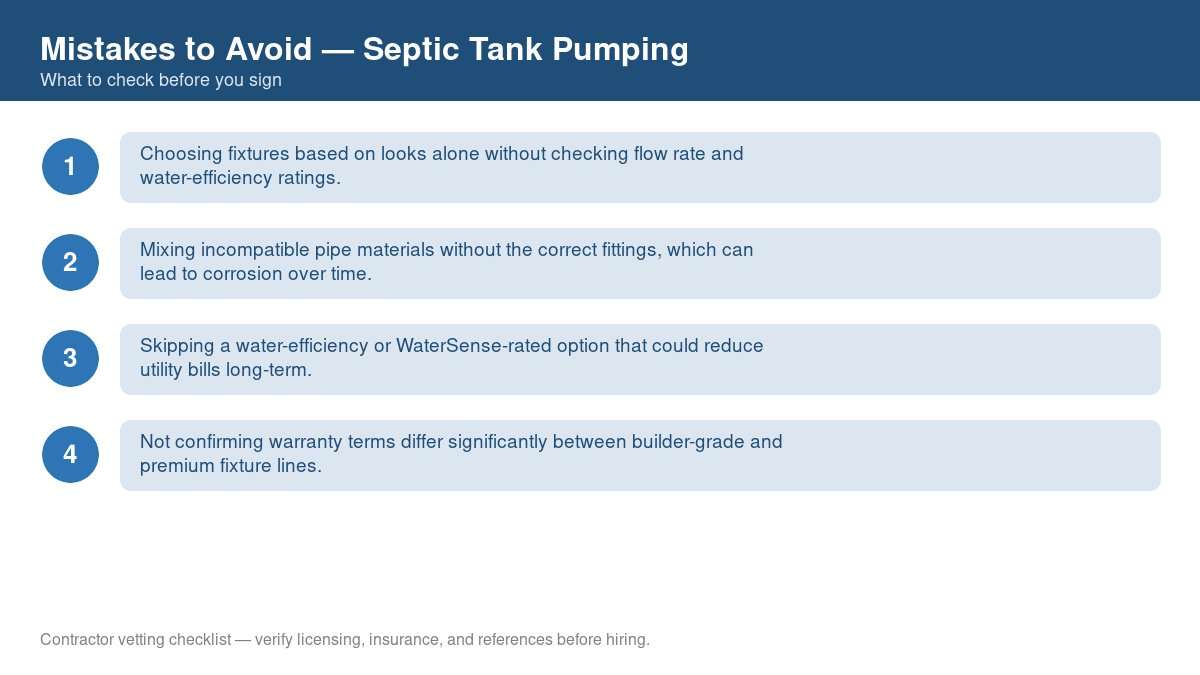
Common Mistakes
- Choosing fixtures based on looks alone without checking flow rate and water-efficiency ratings.
- Mixing incompatible pipe materials without the correct fittings, which can lead to corrosion over time.
- Skipping a water-efficiency or WaterSense-rated option that could reduce utility bills long-term.
- Not confirming warranty terms differ significantly between builder-grade and premium fixture lines.
Why These Mistakes Happen
Most septic tank pumping mistakes happen because homeowners are comparing quotes on price alone, skipping research on materials or contractors, or trying to save time by skipping steps that feel optional but aren't. Rushing the decision-making phase is the single biggest driver of costly do-overs. A little extra time spent researching upfront is almost always cheaper than fixing a mistake later.
How to Avoid Them
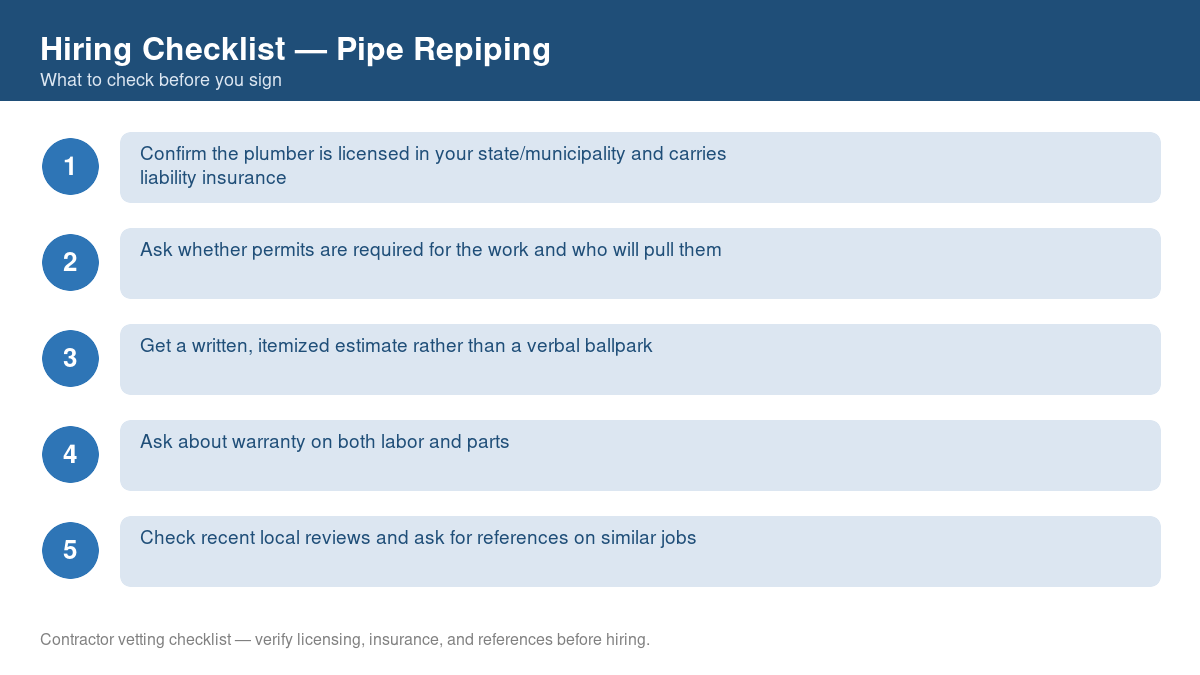
- Confirm the plumber is licensed in your state/municipality and carries liability insurance.
- Ask whether permits are required for the work and who will pull them.
- Get a written, itemized estimate rather than a verbal ballpark.
- Ask about warranty on both labor and parts.
Contractor Red Flags Tied to These Mistakes
- Estimates given without seeing the job site or asking detailed questions.
- No mention of permits for work that legally requires one.
- Cash-only payment demands with no invoice.
The Cost of Getting It Wrong
Fixing a mistake after the fact often costs more than doing it right the first time. Sometimes 1.5–2x the original $300–$700 per pumping service budget once rework, materials, and second labor charges are added. Insurance and warranty coverage can also be affected if a mistake stems from unlicensed or unpermitted work.
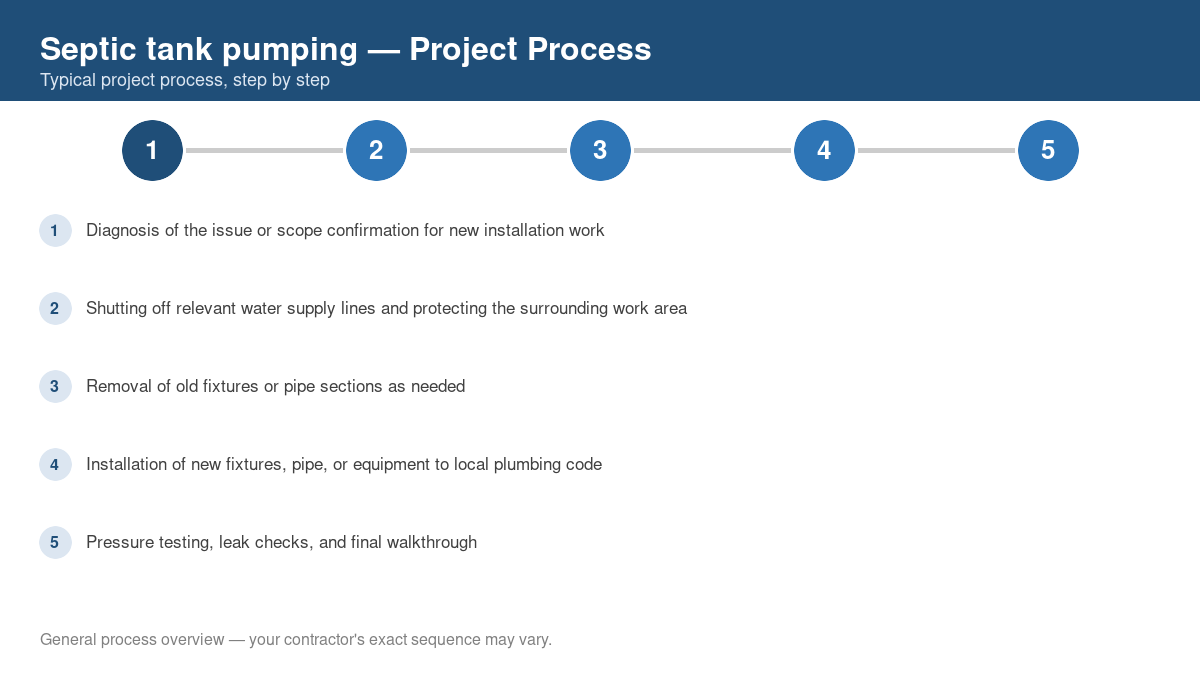
What other questions should you ask?
What maintenance information should you request?
Ask for written care instructions and warranty terms. Keep a record of inspections, maintenance, and repairs.
How Septic tank pumping Compares to Other Plumbing Projects
Related work may include water heater installation, bathtub to shower conversion, and pipe repiping. Ask whether any of these jobs need to be coordinated with this project. Have the contractor price combined and separate work if both are practical.
How should you plan project financing?
If you borrow to pay for the work, include interest and fees in the budget. Compare repayment terms before choosing a loan.
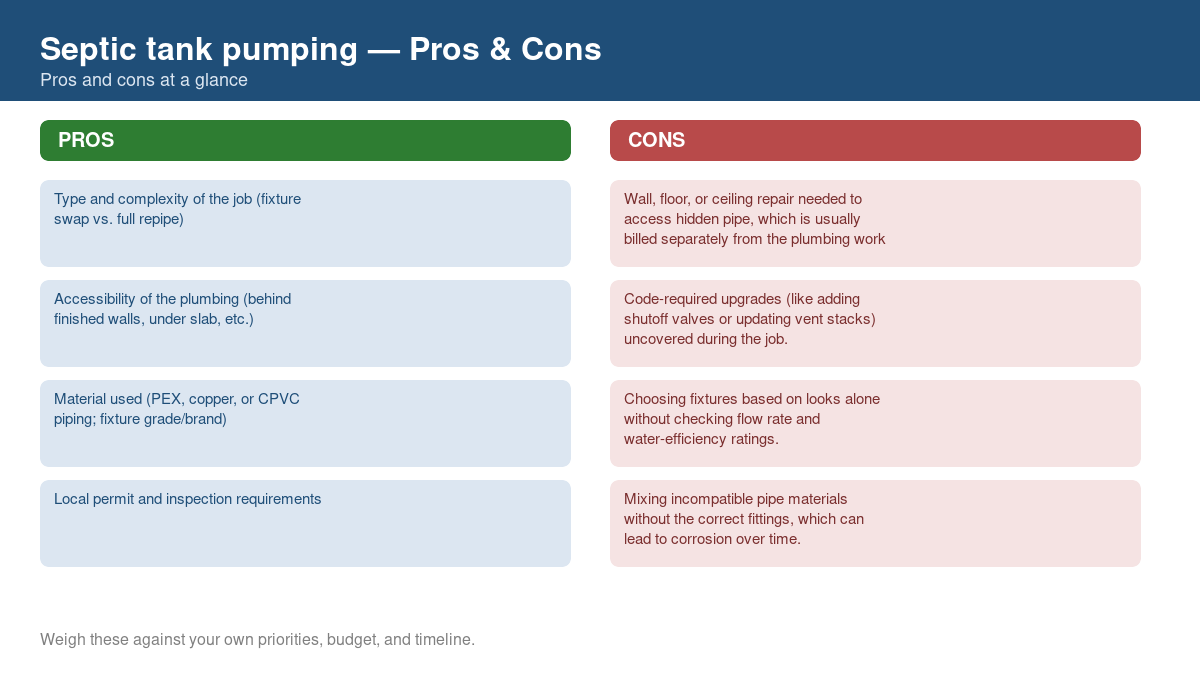
What should a complete estimate include?
- A detailed scope that identifies the work, quantities, and exclusions.
- Material brands, grades, and quantities, with substitutions agreed in writing.
- Who obtains any required permits and pays the fees.
- Cleanup and disposal work, including any separate charges.
What else should you ask before hiring?
- Can I negotiate the price on septic tank pumping? Ask whether the price is negotiable. If the contractor offers a discount, confirm that the scope, materials, and warranty stay the same.
- What should I do if I'm unhappy with the finished work? Describe the problem to the contractor in writing and ask for a response by a stated date. Keep photographs and records. Check the contract's dispute process and the complaint options available in your state.
How should you check insurance coverage?
Ask for evidence of the contractor's insurance and confirm coverage with the insurer. Check whether workers' compensation coverage is required for the crew. Ask your own insurer whether the planned work affects your policy.
How should you start planning?
- Get at least two or three written, itemized quotes for septic tank pumping before deciding.
- Confirm licensing, insurance, and recent local references for any contractor you're considering.
- Ask about the payment schedule and warranty terms for septic tank pumping before signing anything.
Avoid costly septic tank pumping mistakes. Get free quotes from licensed local contractors who'll do it right the first time.
Get Free QuotesProject planning
Check the scope, site conditions, and local requirements before setting the budget and schedule.
Project delivery options compared
| Approach | Best suited to | Primary trade-off |
|---|---|---|
| DIY or owner-managed | Low-risk cosmetic work within the homeowner’s skill level | Owner assumes safety, quality, scheduling, and code risks |
| Specialty contractor | A clearly defined trade-specific scope | May require the homeowner to coordinate other trades |
| General contractor or design-build team | Complex projects involving several trades or structural changes | Higher management cost, with centralized coordination |
Typical project timeline
| Phase | Typical planning window |
|---|---|
| Diagnosis and scope | Same day to 3 days |
| Selections and permits | 1-14 days |
| Access and preparation | Half day to 2 days |
| Installation or repair | 1-5 days |
| Testing and cleanup | 2-8 hours |
Benefits and limitations
Potential benefits
- Protects the home from water damage
- Can improve pressure and efficiency
- Modern fixtures may reduce water use
Potential trade-offs
- Hidden piping conditions can change scope
- Water may need to be shut off
- Code-compliant work may require permits
Project stages