Timing matters for home automation setup. Contractor availability, material pricing, and weather all shift by season. Smart home and design upgrades depend heavily on compatibility with your existing systems, so planning the ecosystem before buying individual products avoids expensive mismatches. Here's how to plan around the calendar.
Best Time of Year for This Project
For home automation setup, spring and fall tend to be the busiest (and priciest) seasons, since demand peaks alongside good weather. Late fall and winter often bring more contractor availability and better pricing, though weather-dependent exterior work may need to wait for a suitable window. Booking a few months ahead of your target season is the best way to lock in your preferred contractor.
Weather Considerations
If home automation setup is weather-dependent exterior work, it needs a suitable window regardless of season demand, so check typical local weather patterns for your project type before locking in a date. Interior work is far less weather-sensitive and can usually be scheduled any time of year based on contractor availability and pricing alone.
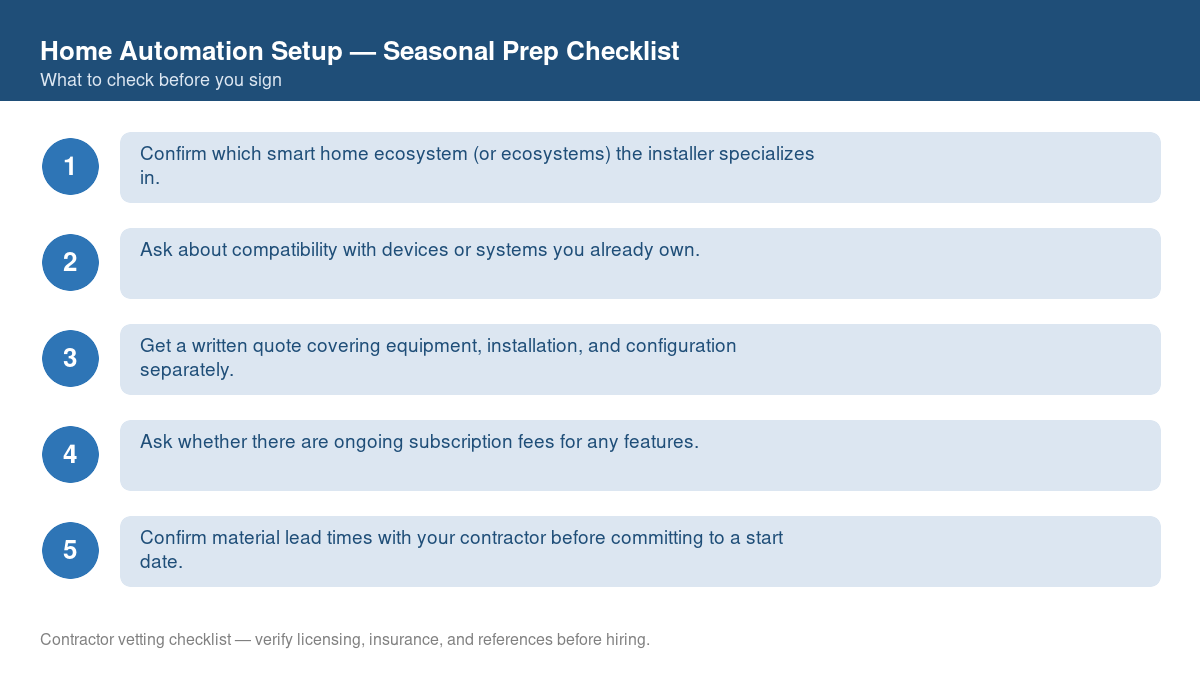
Seasonal Prep Checklist
- Confirm which smart home ecosystem (or ecosystems) the installer specializes in.
- Ask about compatibility with devices or systems you already own.
- Get a written quote covering equipment, installation, and configuration separately.
- Ask whether there are ongoing subscription fees for any features.
- Confirm material lead times with your contractor before committing to a start date.
Seasonal Cost Considerations
Expect quotes to run toward the higher end of the $500–$5,000 for a whole-home automation package range during peak season, and potentially lower during a contractor's slow season. Full integration across lighting, climate, and security costs more than a single-system setup.
Off-Season Advantages
- Start with a hub-compatible ecosystem to avoid needing to replace devices as you expand your system.
- DIY simple installations (smart plugs, battery-powered locks) and hire pros for anything requiring wiring.
- Buy during major sales events, which are common for smart home products around the holidays.
- Choose devices with no or low ongoing subscription fees if long-term cost matters most.
- Off-season scheduling gives contractors more flexibility, which can translate into better pricing or faster turnaround.
What other questions should you ask?
What maintenance information should you request?
Ask for written care instructions and warranty terms. Keep a record of inspections, maintenance, and repairs.
How Home automation setup Compares to Other Interior Design & Smart Home Projects
Related work may include smart home security system installation, interior design consultation, and smart lock installation. Ask whether any of these jobs need to be coordinated with this project. Have the contractor price combined and separate work if both are practical.
How should you plan project financing?
If you borrow to pay for the work, include interest and fees in the budget. Compare repayment terms before choosing a loan.
What should a complete estimate include?
- A detailed scope that identifies the work, quantities, and exclusions.
- Material brands, grades, and quantities, with substitutions agreed in writing.
- Who obtains any required permits and pays the fees.
- Cleanup and disposal work, including any separate charges.
What else should you ask before hiring?
- Can I negotiate the price on home automation setup? Ask whether the price is negotiable. If the contractor offers a discount, confirm that the scope, materials, and warranty stay the same.
- What should I do if I'm unhappy with the finished work? Describe the problem to the contractor in writing and ask for a response by a stated date. Keep photographs and records. Check the contract's dispute process and the complaint options available in your state.
How should you check insurance coverage?
Ask for evidence of the contractor's insurance and confirm coverage with the insurer. Check whether workers' compensation coverage is required for the crew. Ask your own insurer whether the planned work affects your policy.
How should you start planning?
- Get at least two or three written, itemized quotes for home automation setup before deciding.
- Confirm licensing, insurance, and recent local references for any contractor you're considering.
- Ask about the payment schedule and warranty terms for home automation setup before signing anything.
Ready to schedule home automation setup? Get free quotes from local contractors before their calendar fills up.
Get Free QuotesProject planning
Check the scope, site conditions, and local requirements before setting the budget and schedule.
Project delivery options compared
| Approach | Best suited to | Primary trade-off |
|---|---|---|
| DIY or owner-managed | Low-risk cosmetic work within the homeowner’s skill level | Owner assumes safety, quality, scheduling, and code risks |
| Specialty contractor | A clearly defined trade-specific scope | May require the homeowner to coordinate other trades |
| General contractor or design-build team | Complex projects involving several trades or structural changes | Higher management cost, with centralized coordination |
Typical project timeline
| Phase | Typical planning window |
|---|---|
| Assessment and scope | 1-3 days |
| Selections and written quote | 2-14 days |
| Permits and scheduling | Varies by location |
| Active project work | 1 day to several weeks |
| Inspection, cleanup, and handoff | 1-3 days |
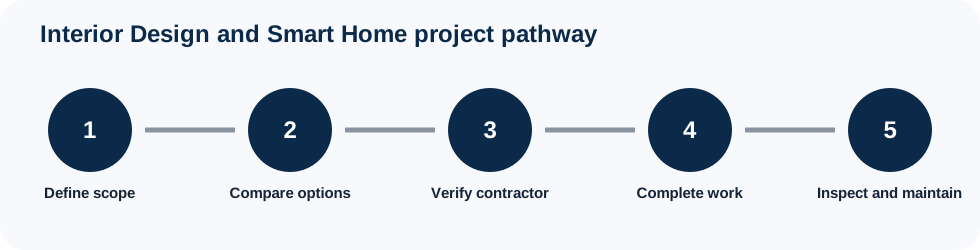
Project stages