For kitchen lighting upgrade, confirm the cost, schedule, permit requirements, and scope before work begins. The questions below cover those decisions.
Quick Facts
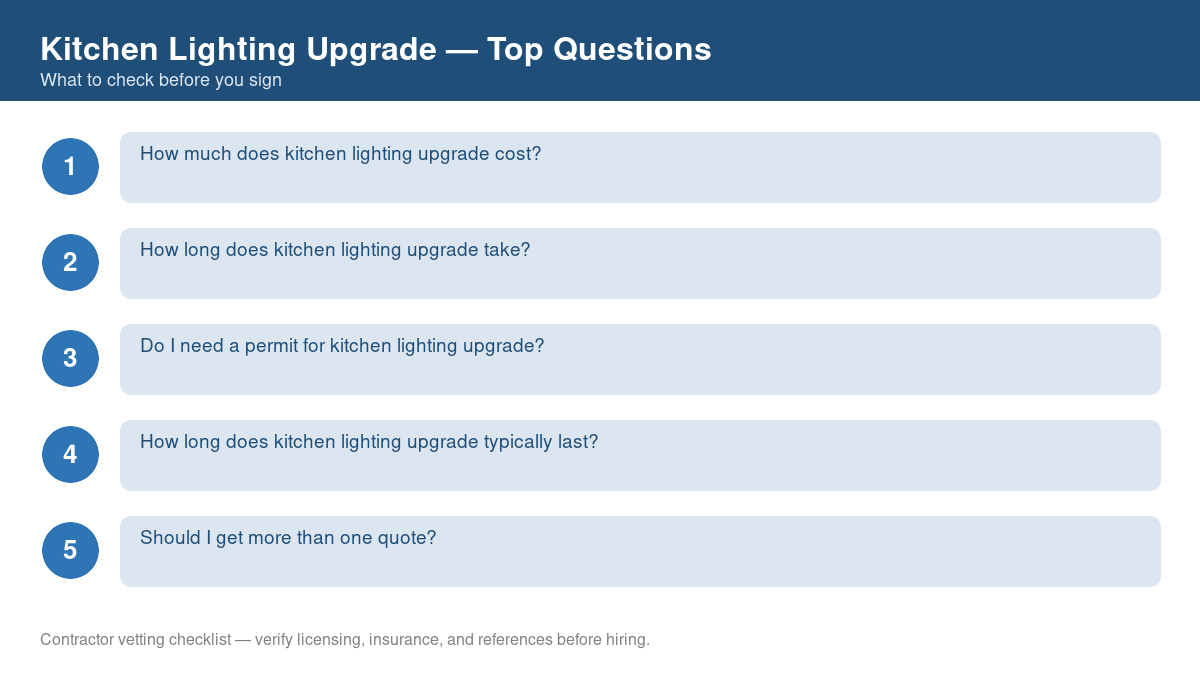
- Cost: $500–$3,000 for a full kitchen.
- Timeline: a full kitchen remodel typically takes six to twelve weeks, while cosmetic updates like refacing or countertop replacement can take one to two weeks.
- Permit needed: Most kitchen remodels involving plumbing, electrical, or structural changes require permits. Cosmetic-only updates like cabinet refacing usually don't.
- Typical lifespan: a quality kitchen remodel typically lasts 15–20 years before needing another major update, though cabinets and counters can last longer with good care.
What other questions should you ask?
How should you start planning?
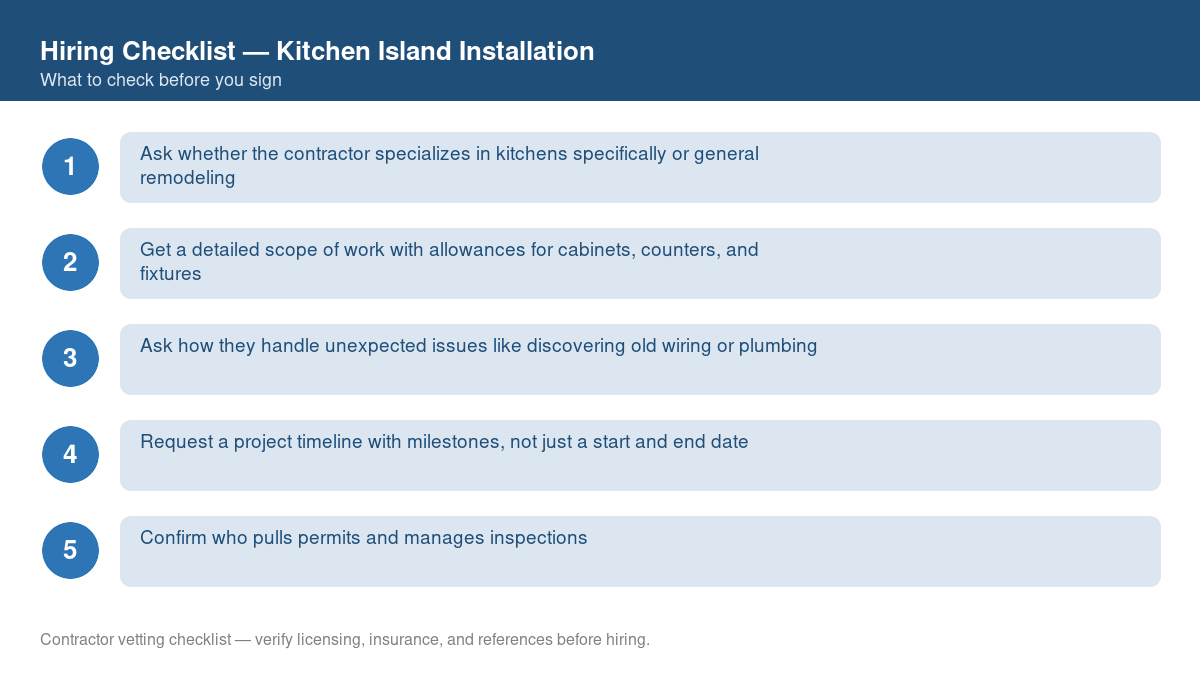
- Ask whether the contractor specializes in kitchens specifically or general remodeling.
- Get a detailed scope of work with allowances for cabinets, counters, and fixtures.
- Ask how they handle unexpected issues like discovering old wiring or plumbing.
- Request a project timeline with milestones, a start and end date.
Which warning signs should you investigate?
- Vague allowances with no specific brand or price-per-unit for cabinets and counters.
- No formal contract or payment schedule tied to project milestones.
- Reluctance to provide a detailed timeline or sequencing plan.
What maintenance information should you request?
Ask for written care instructions and warranty terms. Keep a record of inspections, maintenance, and repairs.
How Kitchen lighting upgrade Compares to Other Kitchen Remodeling Projects
Related work may include kitchen sink replacement, kitchen cabinet refacing, and full kitchen remodel. Ask whether any of these jobs need to be coordinated with this project. Have the contractor price combined and separate work if both are practical.
How should you plan project financing?
If you borrow to pay for the work, include interest and fees in the budget. Compare repayment terms before choosing a loan.
What should a complete estimate include?
- A detailed scope that identifies the work, quantities, and exclusions.
- Material brands, grades, and quantities, with substitutions agreed in writing.
- Who obtains any required permits and pays the fees.
- Cleanup and disposal work, including any separate charges.
What else should you ask before hiring?
- Can I negotiate the price on kitchen lighting upgrade? Ask whether the price is negotiable. If the contractor offers a discount, confirm that the scope, materials, and warranty stay the same.
- What should I do if I'm unhappy with the finished work? Describe the problem to the contractor in writing and ask for a response by a stated date. Keep photographs and records. Check the contract's dispute process and the complaint options available in your state.
How should you check insurance coverage?
Ask for evidence of the contractor's insurance and confirm coverage with the insurer. Check whether workers' compensation coverage is required for the crew. Ask your own insurer whether the planned work affects your policy.
How should you start planning?
- Get at least two or three written, itemized quotes for kitchen lighting upgrade before deciding.
- Confirm licensing, insurance, and recent local references for any contractor you're considering.
- Ask about the payment schedule and warranty terms for kitchen lighting upgrade before signing anything.
Still have questions about kitchen lighting upgrade? Get free quotes and expert answers from licensed local contractors.
Get Free QuotesProject planning
Check the scope, site conditions, and local requirements before setting the budget and schedule.
Project delivery options compared
| Approach | Best suited to | Primary trade-off |
|---|---|---|
| DIY or owner-managed | Low-risk cosmetic work within the homeowner’s skill level | Owner assumes safety, quality, scheduling, and code risks |
| Specialty contractor | A clearly defined trade-specific scope | May require the homeowner to coordinate other trades |
| General contractor or design-build team | Complex projects involving several trades or structural changes | Higher management cost, with centralized coordination |
Typical project timeline
| Phase | Typical planning window |
|---|---|
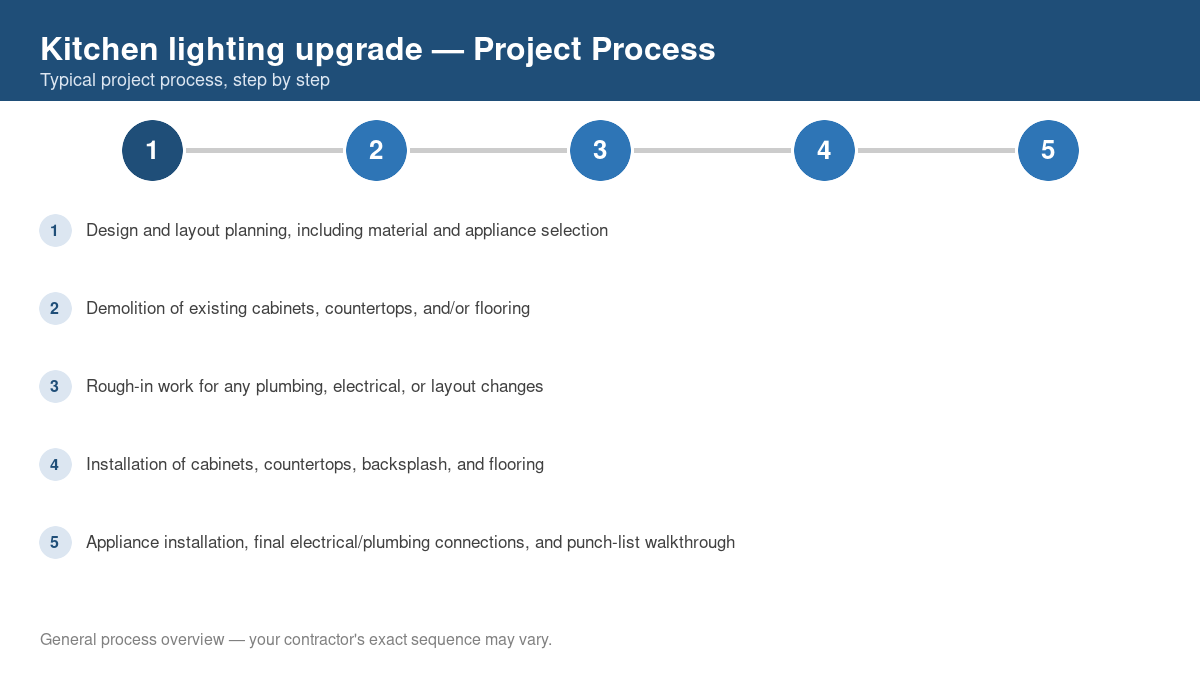
| Design and selections | 2-8 weeks |
| Permits and ordering | 2-8 weeks |
| Demolition and rough-ins | 1-3 weeks |
| Cabinets and finishes | 3-8 weeks |
| Punch list and inspection | 2-7 days |
Benefits and limitations
Potential benefits
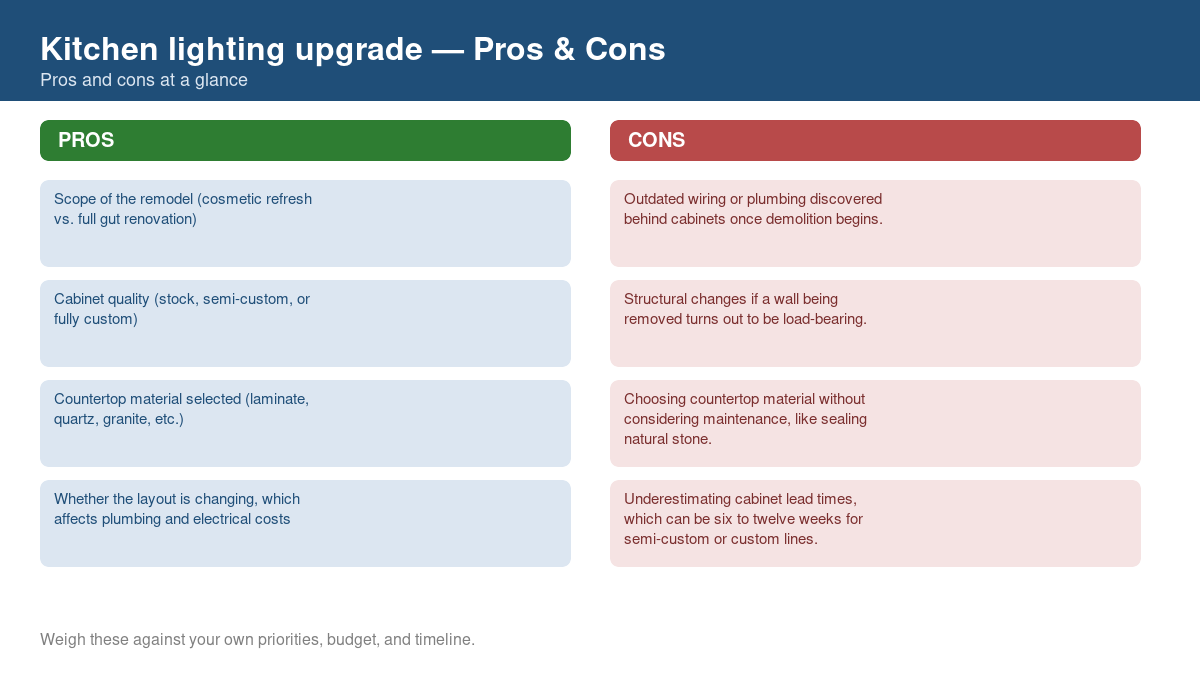
- Improves workflow and storage
- Can increase resale appeal
- Allows efficient lighting and appliances
Potential trade-offs
- Temporary loss of kitchen use
- Selections and change orders can raise cost
- Multi-trade coordination is complex
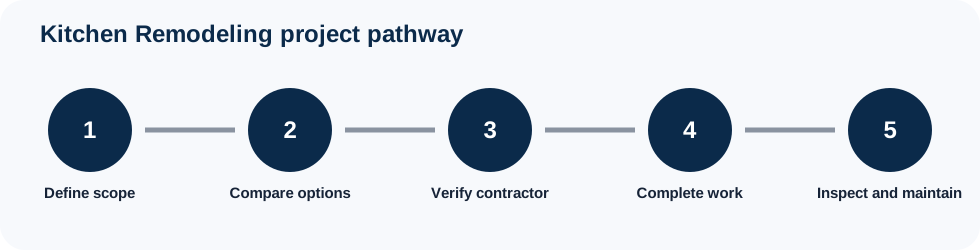
Project stages