Compare the options for duct cleaning by cost, maintenance, and suitability for your home. Ask what a newer feature does and whether it addresses a need you have.
Heating and cooling systems are one of the largest energy users in a home, so correct sizing and installation quality directly affect comfort and utility bills.
Which options are listed?
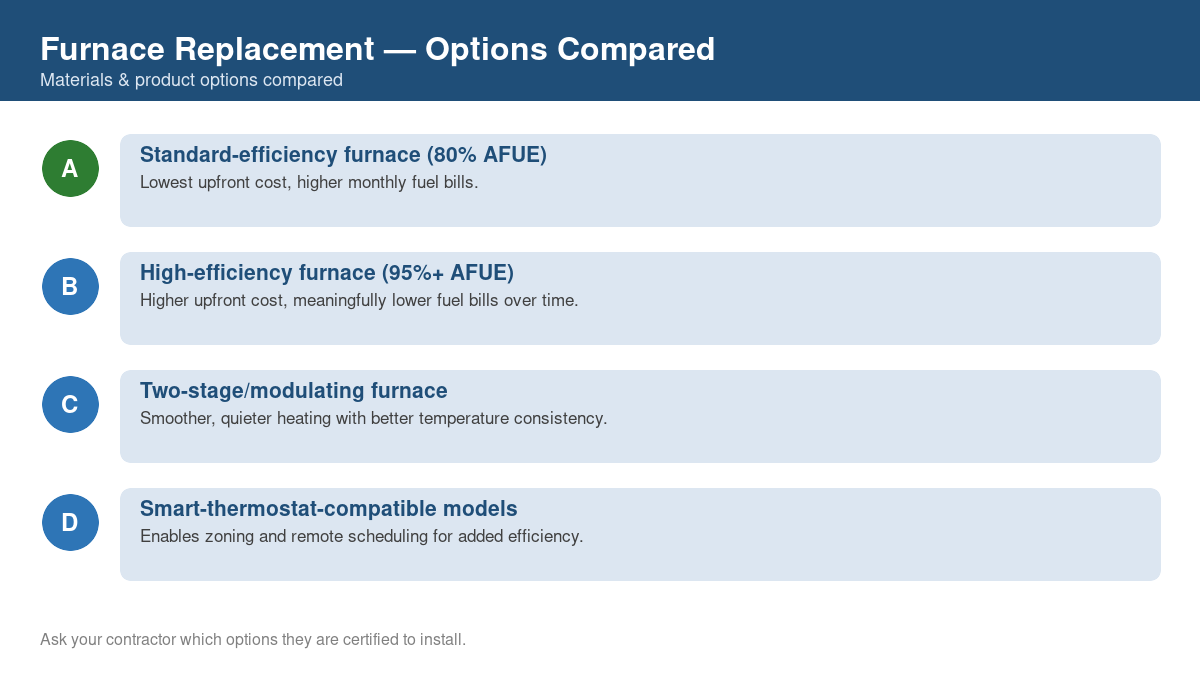
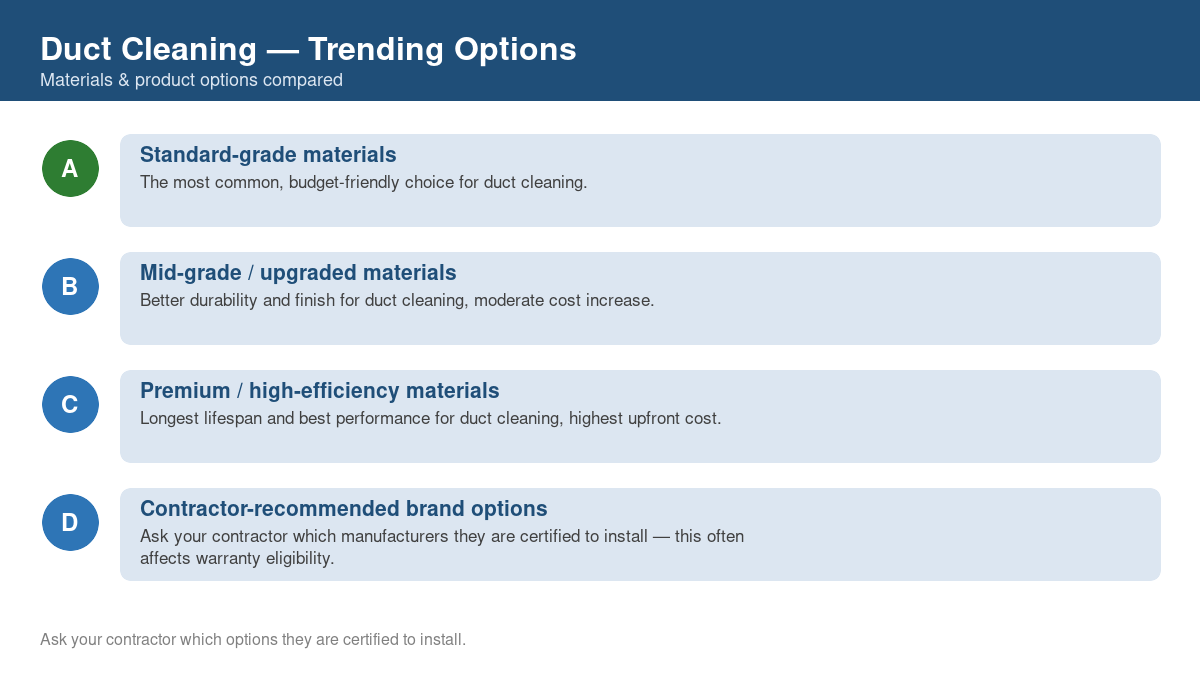
- Standard-grade materials. The most common, budget-friendly choice for duct cleaning.
- Mid-grade / upgraded materials. Better durability and finish for duct cleaning, moderate cost increase.
- Premium / high-efficiency materials. Longest lifespan and best performance for duct cleaning, highest upfront cost.
- Contractor-recommended brand options. Ask your contractor which manufacturers they are certified to install. This often affects warranty eligibility.
- Increased demand for low-maintenance, energy-efficient options across nearly every category.
Which factors affect the choice?
For duct cleaning, rising material and labor costs are pushing more homeowners toward durable, low-maintenance options that reduce long-term costs even if the upfront price is higher. Energy efficiency and smart-home compatibility are also increasingly common priorities, driven partly by utility costs and partly by resale expectations from buyers.
How should you choose an option?
Trending options for duct cleaning aren't always the right choice for every home. Classic, widely-available materials tend to be easier to match, repair, and resell against buyer expectations. If you plan to stay long-term, prioritize what you'll enjoy daily; if you're optimizing for resale, lean toward broadly appealing, not niche, choices.
How can you keep selections within your budget?
Set a budget before choosing finishes or products. Spend more where a feature meets a specific need, and compare the cost of simpler alternatives.
What cost information is listed for these options?
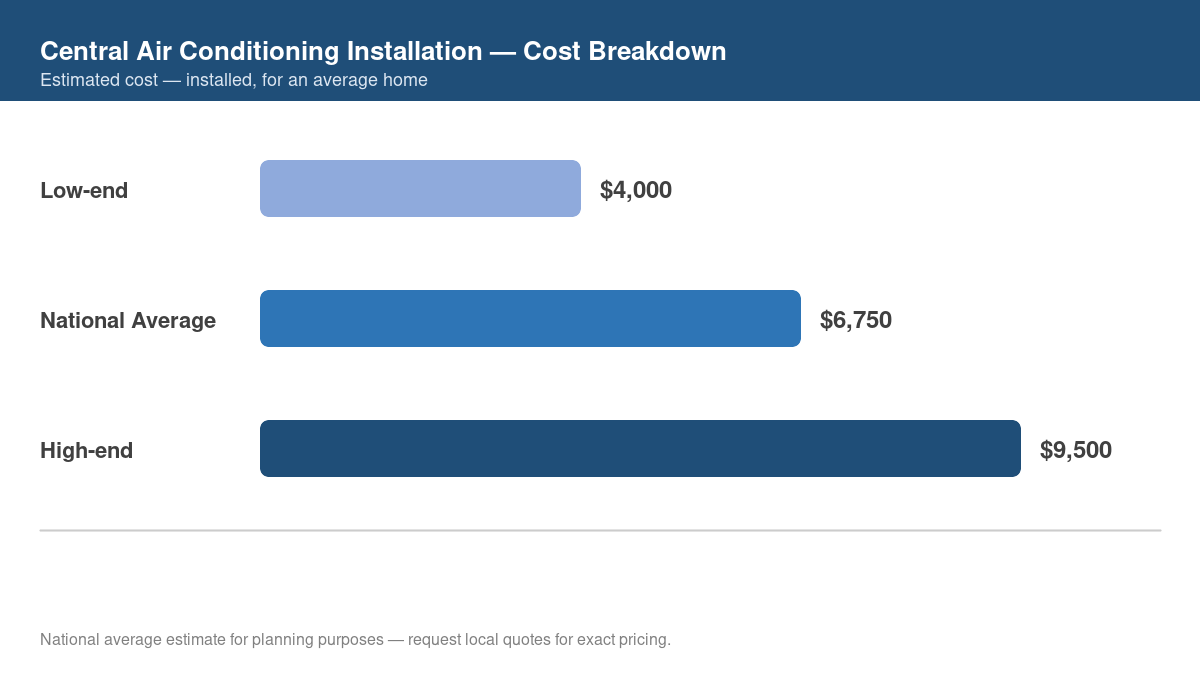
Trending premium options for duct cleaning typically cost more upfront. Expect $300–$1,000 for an average home across the range of options. Cost rises with the number of vents and system accessibility.
What other questions should you ask?
What maintenance information should you request?
Ask for written care instructions and warranty terms. Keep a record of inspections, maintenance, and repairs.
How Duct cleaning Compares to Other HVAC Projects
Related work may include furnace repair, HVAC zoning system installation, and whole house dehumidifier installation. Ask whether any of these jobs need to be coordinated with this project. Have the contractor price combined and separate work if both are practical.
How should you plan project financing?
If you borrow to pay for the work, include interest and fees in the budget. Compare repayment terms before choosing a loan.
What should a complete estimate include?
- A detailed scope that identifies the work, quantities, and exclusions.
- Material brands, grades, and quantities, with substitutions agreed in writing.
- Who obtains any required permits and pays the fees.
- Cleanup and disposal work, including any separate charges.
What else should you ask before hiring?
- Can I negotiate the price on duct cleaning? Ask whether the price is negotiable. If the contractor offers a discount, confirm that the scope, materials, and warranty stay the same.
- What should I do if I'm unhappy with the finished work? Describe the problem to the contractor in writing and ask for a response by a stated date. Keep photographs and records. Check the contract's dispute process and the complaint options available in your state.
How should you check insurance coverage?
Ask for evidence of the contractor's insurance and confirm coverage with the insurer. Check whether workers' compensation coverage is required for the crew. Ask your own insurer whether the planned work affects your policy.
How should you start planning?
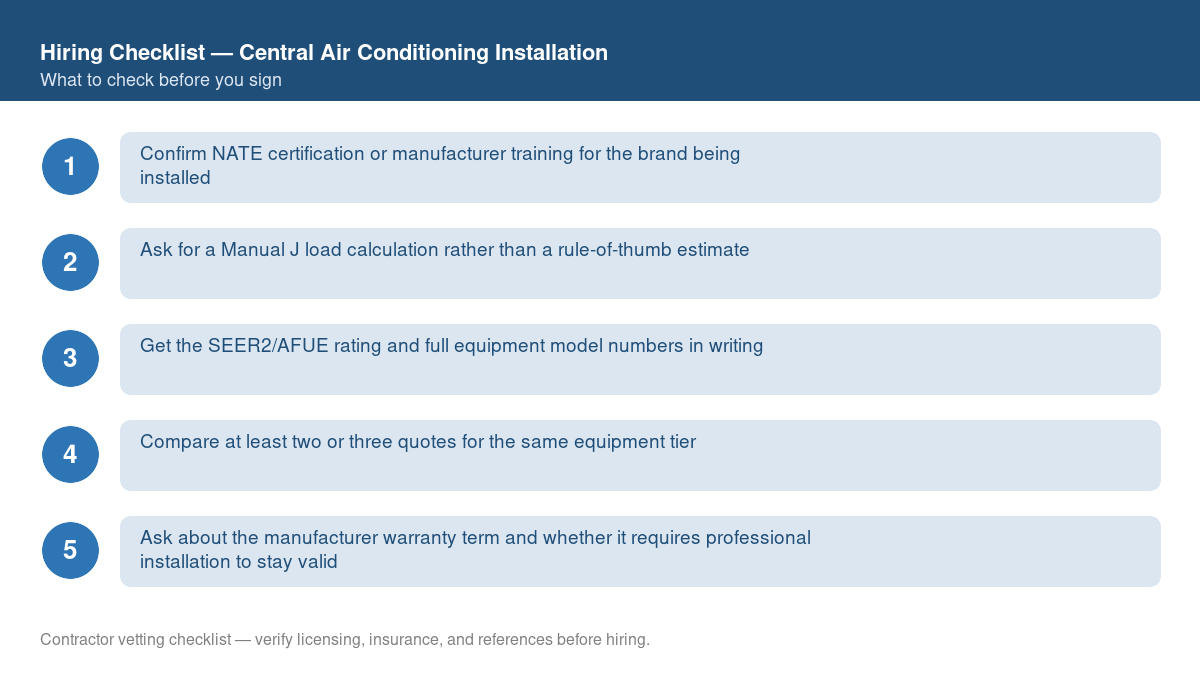
- Get at least two or three written, itemized quotes for duct cleaning before deciding.
- Confirm licensing, insurance, and recent local references for any contractor you're considering.
- Ask about the payment schedule and warranty terms for duct cleaning before signing anything.
Considering a trending upgrade for duct cleaning? Get free quotes from local contractors experienced with the latest options.
Get Free QuotesProject planning
Check the scope, site conditions, and local requirements before setting the budget and schedule.
Project delivery options compared
| Approach | Best suited to | Primary trade-off |
|---|---|---|
| DIY or owner-managed | Low-risk cosmetic work within the homeowner’s skill level | Owner assumes safety, quality, scheduling, and code risks |
| Specialty contractor | A clearly defined trade-specific scope | May require the homeowner to coordinate other trades |
| General contractor or design-build team | Complex projects involving several trades or structural changes | Higher management cost, with centralized coordination |
Typical project timeline
| Phase | Typical planning window |
|---|---|
| Assessment and sizing | 1-3 days |
| Equipment selection | 1-7 days |
| Permit and scheduling | 1-14 days |
| Installation | 1-3 days |
| Testing and commissioning | 2-6 hours |
Benefits and limitations
Potential benefits
- Improves comfort and efficiency
- Can reduce operating costs
- Supports better indoor air quality
Potential trade-offs
- Correct sizing requires careful evaluation
- Equipment and duct upgrades can be expensive
- Maintenance remains necessary
Project stages