Before hiring a contractor for home staging renovations, check their experience with the work, any required license, and insurance. Ask for recent references and an itemized estimate.
Ask each contractor to explain the scope, exclusions, payment schedule, and warranty. Compare written estimates for the same work.
What work should the scope cover?
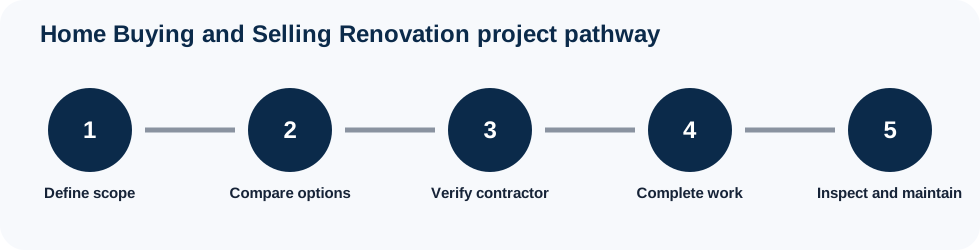
- Assessment of the home's condition and market positioning. This step sets the foundation for everything that follows, so don't rush it or let a contractor skip it.
- Prioritization of projects by expected return on investment. Ask your contractor to walk you through this step specifically so you know what to expect on project day.
- Budgeting and contractor selection for prioritized work. Ask your contractor to walk you through this step specifically so you know what to expect on project day.
- Execution of renovations or repairs. Ask your contractor to walk you through this step specifically so you know what to expect on project day.
- Final staging, cleaning, and market preparation. Ask your contractor to walk you through this step specifically so you know what to expect on project day.
What should you ask before hiring?
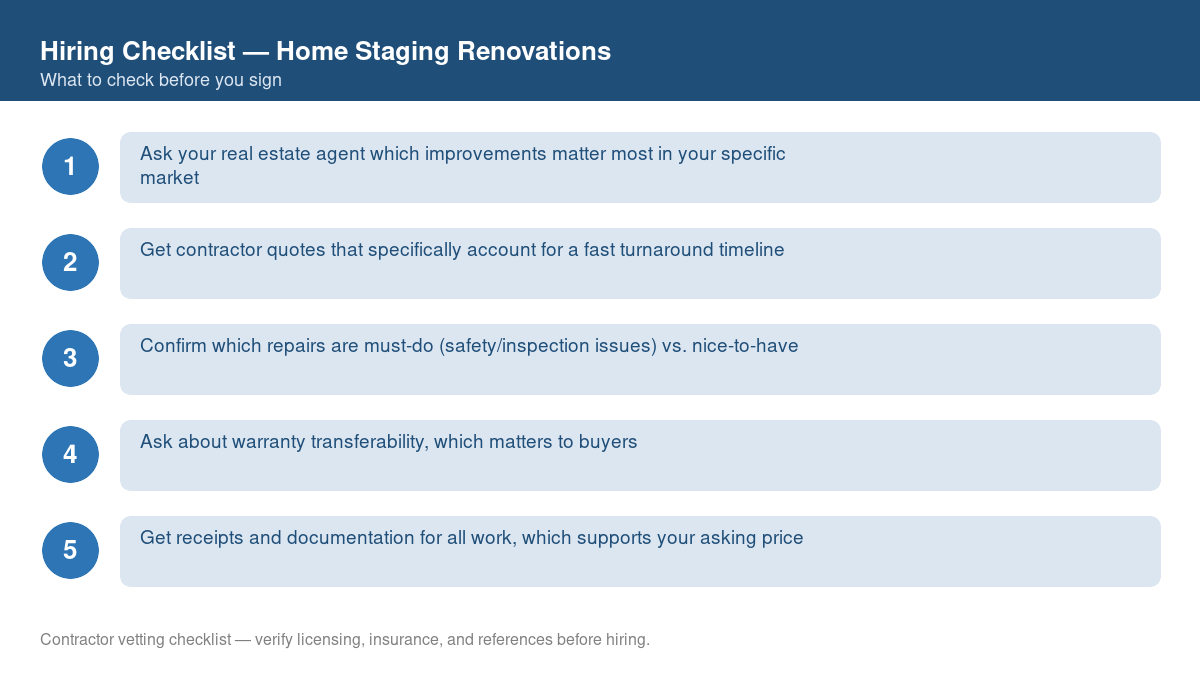
- Ask your real estate agent which improvements matter most in your specific market?
- Get contractor quotes that specifically account for a fast turnaround timeline?
- Confirm which repairs are must-do (safety/inspection issues) vs. nice-to-have?
- Ask about warranty transferability, which matters to buyers?
- Get receipts and documentation for all work, which supports your asking price?
Which warning signs should you investigate?
- Recommendations to over-improve beyond what comparable homes in the area support. Treat this as a reason to get a second opinion before signing anything.
- No timeline commitment when you're working against a listing date. Reputable local contractors rarely need to rely on this kind of pressure to win business.
- No documentation or receipts provided for completed work. This is worth asking about directly during your walkthrough or estimate call.
- Pressure to use only cosmetic fixes when inspection-relevant issues exist. A contractor who bristles at this question is telling you something important.
What cost range does the guide list?
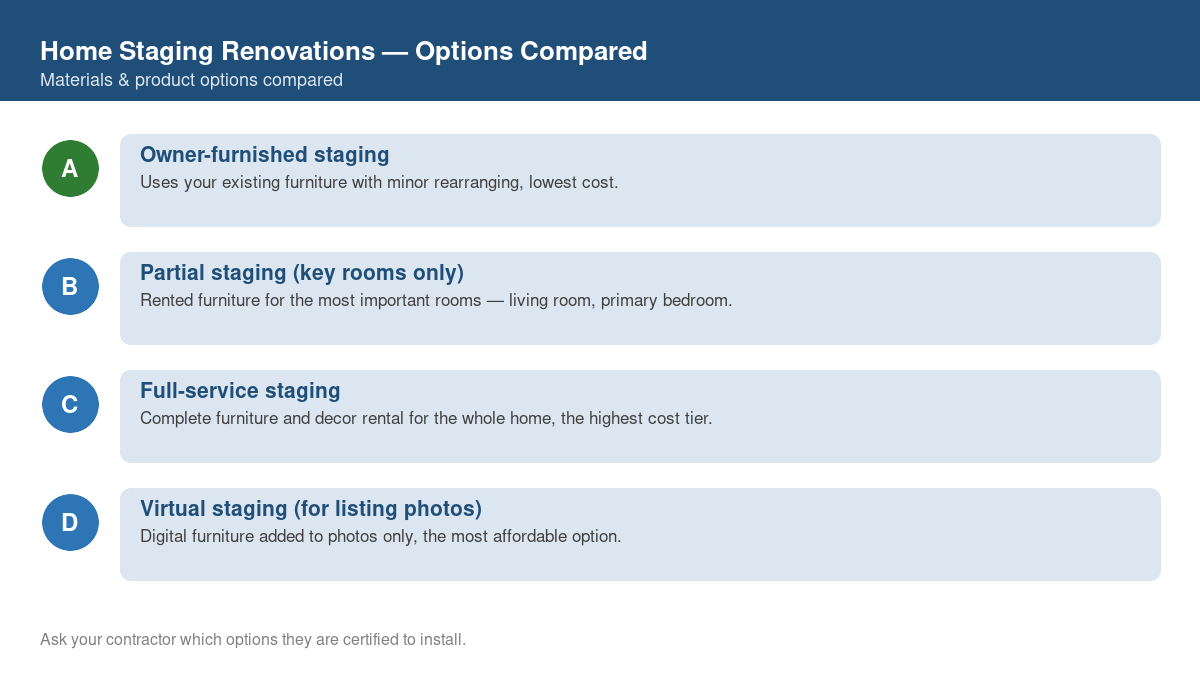
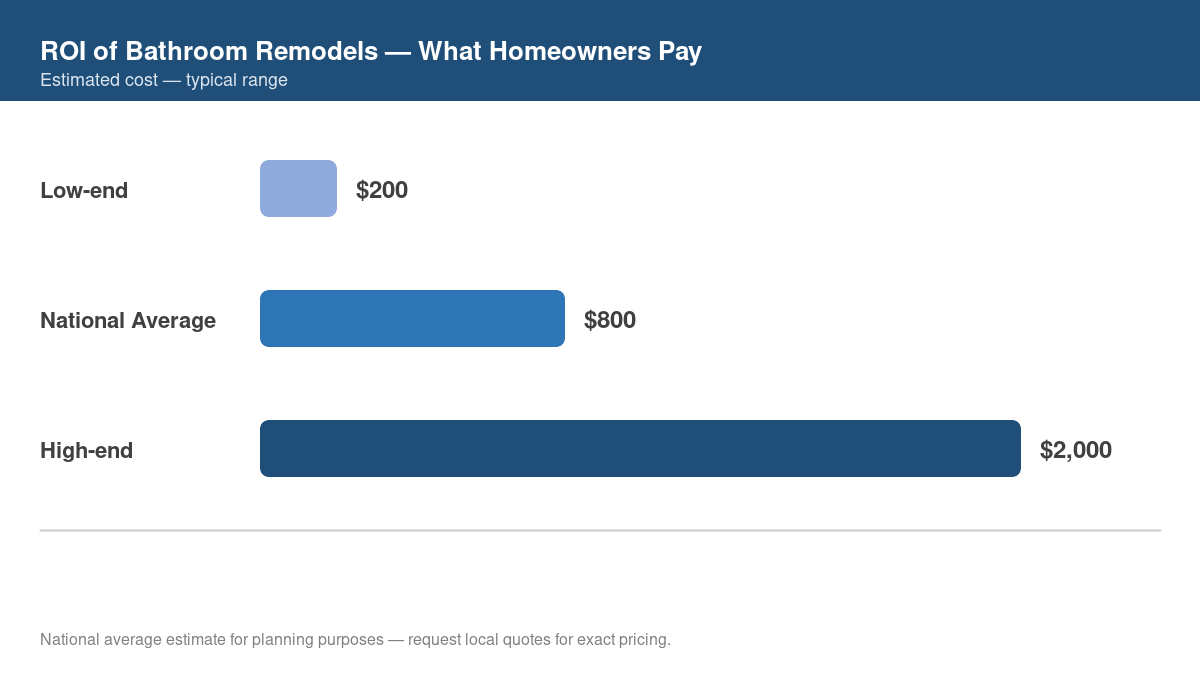
Expect to pay roughly $500–$5,000 for staging-related updates for home staging renovations. Use this as a baseline when comparing quotes. Professional staging furniture rental adds ongoing monthly cost beyond one-time renovation work. If a quote comes in well below this range, ask what's being left out. Corners cut on prep work, permits, or disposal often show up later as change orders.
How do you compare estimates for the same scope?
Line up every home staging renovations quote against the same checklist: identical scope of work, identical material grade, and identical inclusions (permits, disposal, cleanup). A lower number on paper often means something was left out, not that the contractor is more efficient. Ask each contractor to itemize labor and materials separately so you can see exactly where the differences come from, and confirm the payment schedule and warranty terms before comparing final numbers.
What other questions should you ask?
What maintenance information should you request?
Ask for written care instructions and warranty terms. Keep a record of inspections, maintenance, and repairs.
How should you plan ongoing care?
- Inspect the completed work at the intervals recommended in the care instructions. Report damage or recurring problems promptly.
- Keep the invoice, warranty, permit records, and maintenance instructions together.
- Follow the product's maintenance instructions and check the warranty conditions.
- Address small problems as soon as you notice them rather than waiting for a bigger, more expensive failure.
How Home staging renovations Compares to Other Home Buying & Selling Renovation Projects
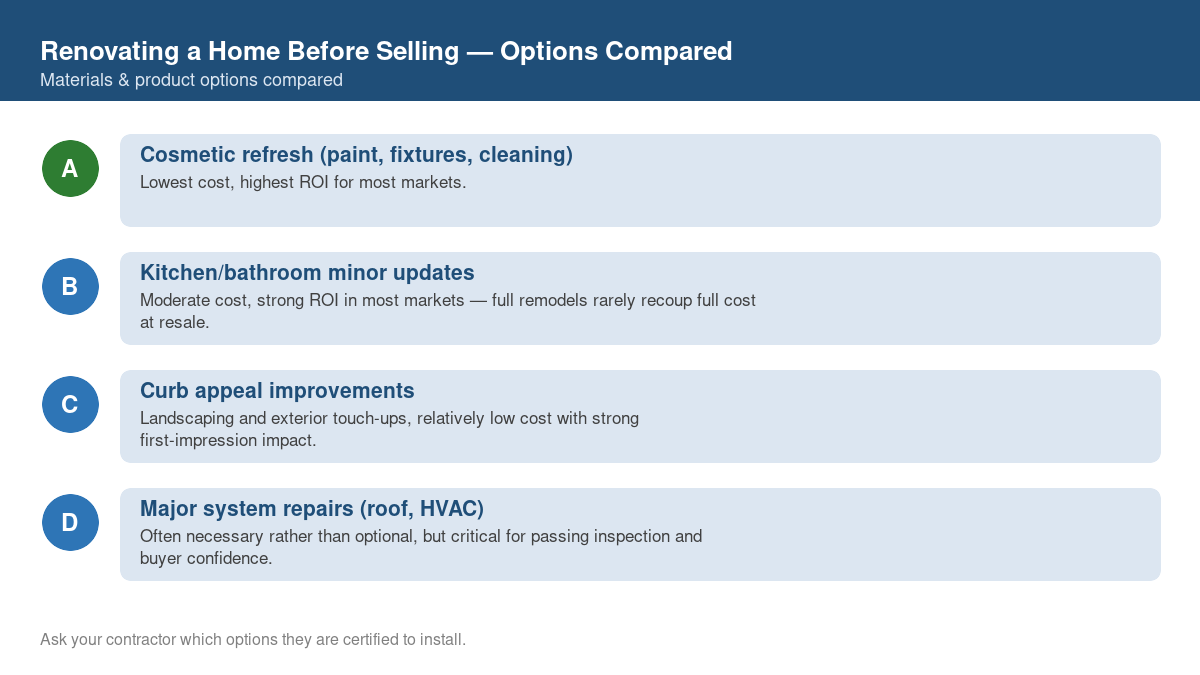
Related work may include curb appeal improvements, ROI of kitchen remodels, and pre-listing home inspection repairs. Ask whether any of these jobs need to be coordinated with this project. Have the contractor price combined and separate work if both are practical.
How should you plan project financing?
If you borrow to pay for the work, include interest and fees in the budget. Compare repayment terms before choosing a loan.
Which financing options should you compare?
- Cash or savings: No loan interest, but the payment reduces the cash available for other expenses.
- Home equity loan or HELOC: Your home secures the debt. Compare interest rates, fees, and repayment terms.
- Personal loan: Check whether the loan is secured or unsecured, then compare the rate, fees, and total repayment cost.
- Contractor or manufacturer financing: Check the promotional period, fees, and interest charged if you do not repay the balance by the deadline.
How do you compare borrowing costs?
Compare the interest rate, fees, repayment term, and total amount you will repay. A longer term can lower the monthly payment while increasing the total interest cost.
What should a complete estimate include?
- A detailed scope that identifies the work, quantities, and exclusions.
- Material brands, grades, and quantities, with substitutions agreed in writing.
- Who obtains any required permits and pays the fees.
- Cleanup and disposal work, including any separate charges.
- Deposit amount and later payments, with the work required for each payment.
- Written warranty terms, including coverage, exclusions, and duration for materials and labor.
What else should you ask before hiring?
- Can I negotiate the price on home staging renovations? Ask whether the price is negotiable. If the contractor offers a discount, confirm that the scope, materials, and warranty stay the same.
- What should I do if I'm unhappy with the finished work? Describe the problem to the contractor in writing and ask for a response by a stated date. Keep photographs and records. Check the contract's dispute process and the complaint options available in your state.
- How do I verify a contractor's license and insurance? Ask for the license number and check it with the agency responsible for that trade in your area. Verify insurance coverage separately with the insurer.
- Is it normal for a home staging renovations quote to change after the initial visit? Ask what changed after the inspection. Get the revised scope, price, and reason for the change in writing before agreeing to additional work.
How should you check insurance coverage?
Ask for evidence of the contractor's insurance and confirm coverage with the insurer. Check whether workers' compensation coverage is required for the crew. Ask your own insurer whether the planned work affects your policy.
What ongoing costs should you consider?
Include maintenance, repairs, and eventual replacement when comparing costs. Ask what upkeep the proposed materials or equipment need and which costs the warranty covers.
Ask each contractor for the maintenance schedule and expected service life of the proposed materials or equipment. Request the written product specifications and warranty terms.
How do you check the contractor's work history?
Read recent reviews and check how the contractor handled complaints. Contact references for similar work completed recently. Ask how the contractor records changes, prices extra work, and resolves disputes. Put those procedures in the contract.
Which contract terms should you understand?
Check these terms when reading the contract. Ask the contractor to explain any wording that leaves the scope, payment, or completion requirements unclear.
What do these contract terms mean?
- Change order: A written change to the contract. Agree on the additional or reduced work, price, and schedule before approving it.
- Punch list: Unfinished work or defects recorded during the walkthrough. Agree on when the contractor will resolve each item.
- Lien waiver: A document that waives lien rights under specified conditions. Check which payment it covers and whether it is conditional or unconditional.
- Retainage: Part of a payment held until the contract's release conditions are met. Specify the amount and conditions in the contract.
- Substantial completion: The stage when the work can be used for its intended purpose. Check the contract for the definition and any payment or warranty dates tied to it.
How should you plan for disruption?
Ask which rooms or services will be unavailable during the work and for how long. Confirm any planned utility interruptions, dust controls, and daily cleanup.
Keep children and pets away from the work area. If you will lose access to a kitchen, bathroom, or essential service, ask when it will be usable again and plan around that schedule.
Skip the guesswork on home staging renovations. Request free quotes from pre-screened, licensed contractors in your area.
Get Free QuotesProject planning
Check the scope, site conditions, and local requirements before setting the budget and schedule.
Project delivery options compared
| Approach | Best suited to | Primary trade-off |
|---|---|---|
| DIY or owner-managed | Low-risk cosmetic work within the homeowner’s skill level | Owner assumes safety, quality, scheduling, and code risks |
| Specialty contractor | A clearly defined trade-specific scope | May require the homeowner to coordinate other trades |
| General contractor or design-build team | Complex projects involving several trades or structural changes | Higher management cost, with centralized coordination |
Typical project timeline
| Phase | Typical planning window |
|---|---|
| Assessment and scope | 1-3 days |
| Selections and written quote | 2-14 days |
| Permits and scheduling | Varies by location |
| Active project work | 1 day to several weeks |
| Inspection, cleanup, and handoff | 1-3 days |
Benefits and limitations
Potential benefits
- Improves function, safety, or appearance
- Can address deferred maintenance before it spreads
- Creates an opportunity to document warranties and future upkeep
Potential trade-offs
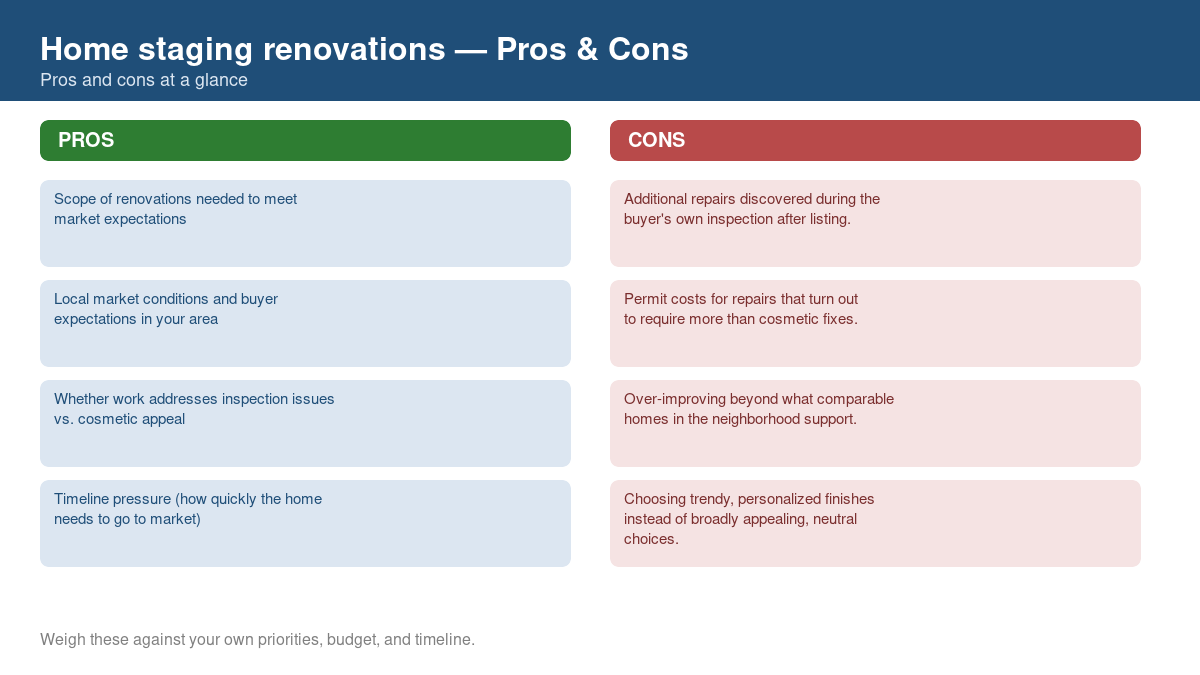
- Upfront cost may change when hidden conditions are found
- Work can disrupt normal use of the area
- Permits, inspections, and material lead times may affect scheduling
Project stages