
What happens if it rains during a roof replacement?
If rain interrupts a roof replacement, the immediate priorities are worker safety, protecting the open building, and assessing what became wet before construction resumes. A weather delay does not automatically mean the finished roof will fail, but neither should wet materials simply disappear beneath the next layer. Ask the contractor to document the protection, observations, and decision to restart.
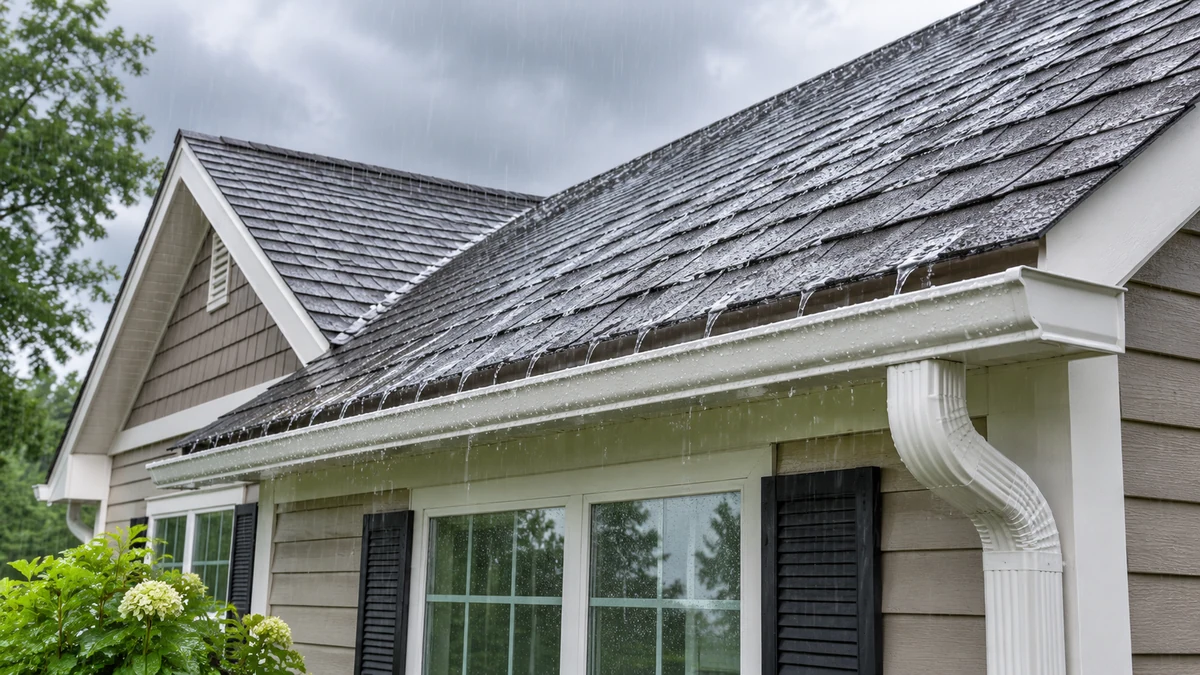
Separate the weather delay from water damage
Rain can affect a project in several ways. The crew may postpone removing the old covering, stop with part of the roof open, or discover moisture after a protective measure fails. Those situations need different responses. Establish which roof areas were stripped, which layers were installed, and whether water entered the building. A delay on an unopened roof is not the same event as water reaching insulation or finishes.
Write down when rain began and when the contractor attended. Keep observations factual. A ceiling mark identifies where water appeared; it does not establish the entry point, the extent of concealed wetting, or who is legally responsible. Those questions require investigation and the actual contract and circumstances.
Know who owns the temporary-protection plan
Before work starts, ask how the roofer decides how much covering to remove in a day and what happens if the forecast changes. Identify the person who can authorize stopping work, arrange protection, and respond outside normal hours. Request an ordinary and an emergency contact rather than relying on the sales representative to relay every site issue.
The roofer should select and install the temporary measures. Homeowners should not climb onto a wet roof, move tarps, or fasten coverings through an unfamiliar assembly. Ask what condition the roof will be left in overnight and how openings around chimneys, valleys, or equipment will be handled. Protection arrangements belong in the project discussion even when a contractor expects to finish quickly.
Do not treat underlayment as a universal temporary roof
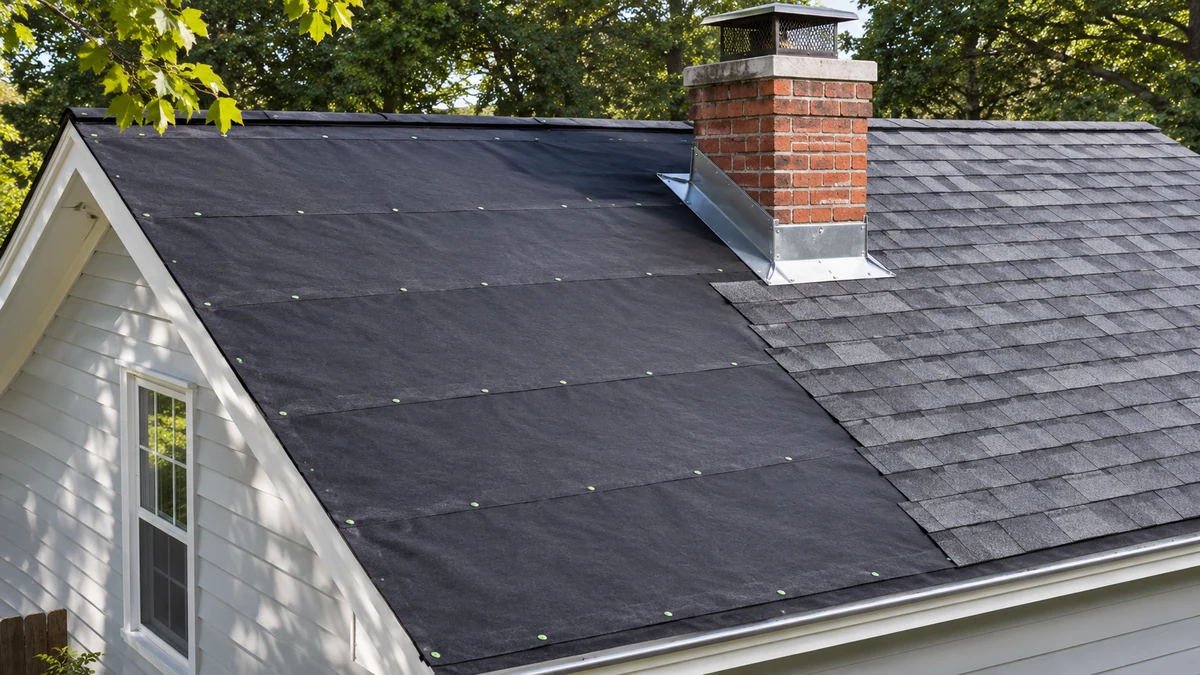
An underlayment's permitted exposure depends on the exact product and its installation. A stated ultraviolet exposure period does not necessarily promise a watertight temporary roof. Seams, fasteners, penetrations, roof geometry, and wind-driven rain all affect the installed condition. Ask the roofer to identify the product and explain what its current instructions allow.
Keep the product label and relevant instructions with the job record. Where the contractor says the roof is protected, ask what protection is actually in place and what limitations remain. Our separate underlayment article addresses that product-specific decision; this page focuses on managing a rain interruption and the resulting records, assessments, and coordination.
Report interior water without creating another hazard
Stay away from wet electrical fittings, unstable ceilings, damaged structures, and inaccessible roof spaces. If there is an immediate safety concern, obtain appropriate emergency help from a safe location. Protecting possessions is secondary to keeping people out of a potentially hazardous area. Do not open a bulging ceiling or touch wet electrical equipment to obtain photographs.
From a safe place, photograph the room, the affected location, and changes over time. Record whether water is active, spreading, or already dry. Move ordinary belongings only where it is safe. Tell the roofer about the observation promptly and retain the message. If another professional attends, record that provider's findings separately from your own assumptions.
Ask what needs assessment before covering resumes
A restart decision should account for the materials and conditions actually encountered. Ask whether the deck, underlayment, insulation, or other components were exposed and how their suitability will be checked. The appropriate criteria come from the selected system and the responsible professional; a universal number of dry hours cannot establish that every roof is ready.
Request documentation of any damaged material that is replaced and the reason for retaining material that became wet. Where a component is inaccessible or uncertain, ask how that uncertainty will be resolved. GAF's roof-system guidance illustrates the importance of deck condition, but the contractor must apply the instructions for the products on this particular job.
Keep roofing repairs and interior restoration coordinated
Stopping exterior water entry and restoring a ceiling are different tasks. Identify who will assess affected insulation, drying needs, electrical concerns, or concealed finishes. A roofer may not include all interior work in the original replacement contract. That boundary should be clarified without allowing responsibility for investigation to fall between separate providers.
Before closing an opened area, agree what evidence is required and who authorizes closure. Keep findings, photographs, material decisions, and any specialist reports together. A freshly painted ceiling cannot establish that concealed materials are suitable, and an exterior repair does not by itself complete interior restoration. Ask each provider to identify what remains for another trade.
Read the contract before agreeing to extra charges
Check the provisions for weather delays, temporary protection, concealed conditions, owner changes, and damage. Ask the contractor to distinguish an original obligation from proposed additional work. A weather event alone does not tell you whether an extra charge is justified. The written scope and circumstances matter, and disputes about liability may need local legal or insurance advice.
If additional work is proposed, request its boundaries, reason, price basis, schedule effect, and approval process. Do not sign an unclear completion statement while significant issues remain unresolved. Notify an insurer as required by your policy if a potential claim is involved, but keep the insurer's coverage decision separate from the contractor's description of work.
Make a short rain-event record
Use one dated entry for each event. Include the area being worked on, the stage of installation, observed weather, protection reported by the crew, interior symptoms, and people contacted. Attach original photographs and messages. Avoid editing a photo to imply a diagnosis or replacing a contractor's written findings with an informal summary.
A useful question for the roofer is: which observations support restarting this area, and which issues still need investigation? Record the answer alongside the product instructions or inspection information relied on. This creates a clearer handover than a verbal assurance that the roof looks dry, especially when several crews or supervisors work on different days.
Adjust expectations without losing the completion standard
Weather can alter crew availability, material handling, inspections, and the planned sequence. Ask for an updated schedule that identifies the next dependency rather than demanding a fixed finish date regardless of conditions. Clarify how the property remains protected during the delay and whether waste, access, or temporary arrangements need attention.
At handover, request the same completion evidence you would have expected without rain: agreed repairs, required inspection closeout, product identification, warranty information, and the list of unfinished items. Add the rain-event assessment and any interior follow-up. Monitor the original symptom during relevant later weather and report recurrence promptly; one dry afternoon is not a meaningful check of a leak that appeared only during wind-driven rain.
Example: a delay with and without interior water
Consider two hypothetical jobs. On the first, the crew sees worsening conditions and postpones stripping the old covering. The homeowner needs an updated schedule and confirmation that the retained roof has not been disturbed. There may be no exposed new material to assess at all. Treating that delay as evidence of a damaged new roof would confuse the sequence.
On the second job, a stripped area has underlayment installed when rain arrives, and a new ceiling mark appears. The relevant questions are now different: what protection was in place, what became wet, where did water travel, what investigation is needed, and what must happen before covering resumes? The contractor's response should address those facts rather than repeating the original completion date.
Neither example establishes legal responsibility. They show why the stage of work belongs in the event record. A statement that it rained during the replacement is not detailed enough to decide whether materials are suitable or whether additional work is justified.
What to include in the contractor's restart message
Request a short written update identifying the affected roof area, observations, protection provided, components assessed, findings, repairs or replacements, and remaining limitations. Ask who made the assessment and which product instructions or professional criteria were used. Where another inspection is needed, identify the appointment and the condition in which the building will remain until then.
If an interior issue is still being investigated, keep it on a separate open-item list even if another roof area can proceed. This prevents progress elsewhere from being interpreted as closure of the disputed condition. A factual restart record helps everyone understand what has been released for work and what has not.
Questions to settle before the next workday
Ask who will inspect the affected area, what must happen before it is covered, whether any material needs replacement, and how that decision will be recorded. Confirm the contact for renewed water entry and the person coordinating interior concerns. If the answers are unclear, request a written pause point for the disputed area while the issue is assessed.
The objective is a safe, suitable completed assembly with a record of how the interruption was handled. It is not to prove that any rain makes replacement unavoidable, or to accept that every wetting event is harmless. Keeping product requirements, observations, repair responsibilities, and approvals distinct makes the decision easier to review.
Related articles
Sources and further reading
These public resources explain relevant safety, consumer, or building considerations. They do not endorse this site or approve a particular project.
- GAF: Deck-Armor product instructions, including temporary-roof limitations (product-specific example)
- PNNL: asphalt-shingle roof assemblies
- PNNL: flashing penetrations in existing roofs
Revised November 24, 2026. Published by ContractorsFinder. Editorial standards and corrections.