
How do plumbing vents work, and which symptoms need investigation?
Plumbing vents help the drainage system manage air pressure so fixture traps can retain their water seals while wastewater flows. Gurgling, odors, or slow drainage can justify investigation, but they do not prove a blocked vent. A plumber needs to distinguish venting concerns from blockages, fixture defects, dry traps, leaks, and other causes before proposing a repair.
Understand the trap before the vent
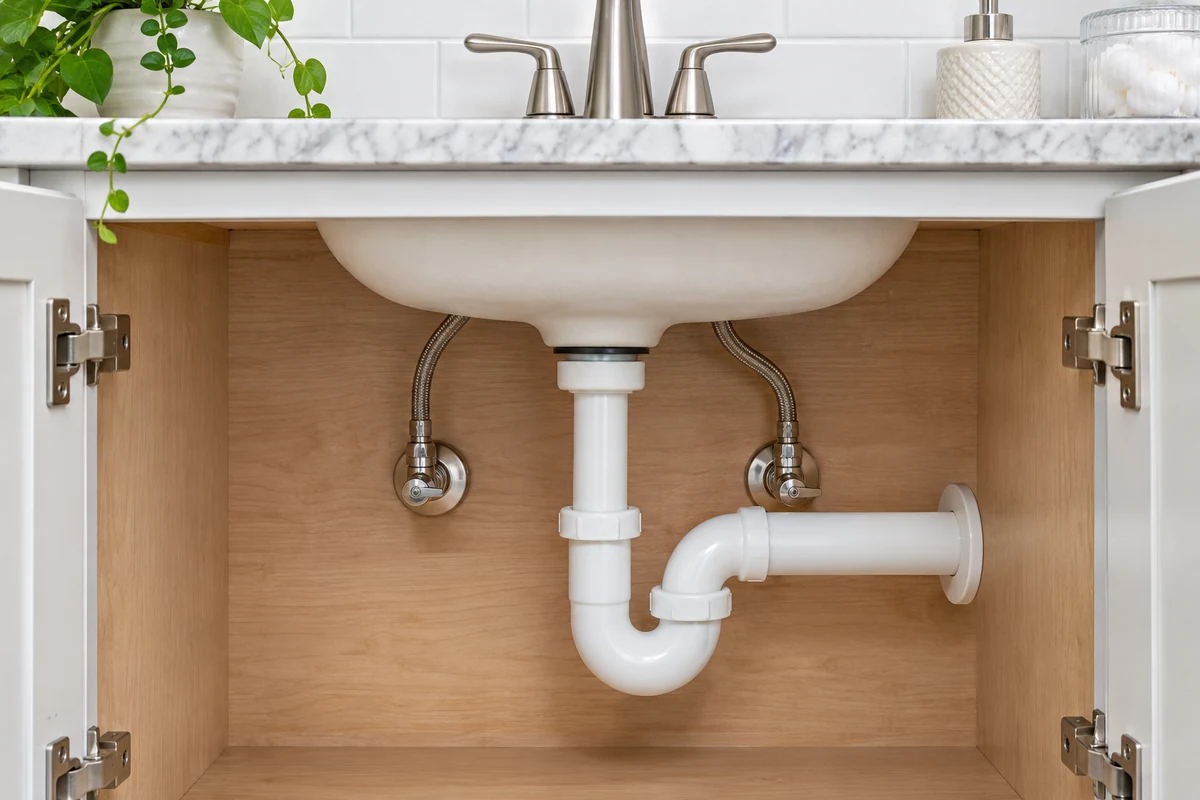
A fixture trap retains water that forms a barrier between the occupied room and the drainage system. The trap is part of the wider drain, waste, and vent arrangement. A visible bend beneath a basin is only one component; its appearance does not establish that the complete installation is correctly designed, connected, or maintained.
The International Code Council's trap and vent explanations describe the relationship between pressure and trap-seal protection. Their model-code context does not automatically determine the rules adopted for your address. Use the explanation to understand a plumber's findings, not to choose pipe sizes, distances, or alterations from an online diagram.
Keep the venting explanation practical
When wastewater moves, the system also needs to manage air movement and pressure. The vent arrangement helps maintain suitable conditions for the drainage and traps. That is a different role from supplying drinking water or mechanically exhausting a bathroom's humid air. A bathroom fan and a plumbing vent should not be treated as the same system.
Ask the plumber to identify the relevant arrangement and explain how the suspected defect relates to the reported symptom. Some approved systems use details or devices that may not resemble a simple roof-stack diagram. The actual installation, adopted requirements, and manufacturer's instructions where relevant must be assessed by the appropriate professional.
Describe the symptom without naming the cause
Record what you hear or smell, which fixture is involved, when it happens, and what else is operating. Note whether the issue began after a remodel, a blockage, a period of nonuse, or another change. Distinguish a repeated event from one isolated occurrence. A dated description is more useful than telling every provider that the vent must be blocked.
For example, record that a basin gurgles when another fixture drains, rather than treating the timing as a diagnosis. Tell the plumber about slow drainage, backups, leakage, and relevant service history. Several observations together can guide investigation, but no one symptom establishes a complete repair scope without assessment.
Separate urgent conditions from routine questions
Sewage backup, exposure to contaminated water, strong unexplained odors, or other safety concerns may require prompt professional help. Keep people away from affected areas and follow emergency or utility instructions where an immediate hazard is suspected. Do not enter a confined drainage space or open an unsafe access to investigate.
Avoid guessing the source of a hazardous odor from a website description. A suspected gas issue requires the appropriate response from a safe location. For a non-emergency plumbing concern, stop using affected fixtures as advised and arrange assessment. The objective is to communicate useful observations without exposing occupants to a condition whose cause has not been established.
Do not climb onto the roof to inspect a vent
A roof opening may look accessible in a photograph but still involve serious access and fall hazards. Do not climb onto the roof, reach into a vent, or attempt to clear it because an online list associates gurgling with vent blockage. The provider should select safe inspection methods and determine whether roof access is actually needed.
Ask what the diagnostic visit includes, which areas can be assessed, and what remains inaccessible. If another trade is needed for roof protection or restoration, identify that responsibility. A plumbing investigation that disturbs an opening should not leave the roof interface unassigned between the plumber and roofer.
Distinguish drain cleaning from vent correction
Cleaning a blocked drain and correcting a venting defect are different jobs. Ask the plumber what evidence supports the proposed work and whether the initial service is intended to diagnose, clear a restriction, or make a permanent alteration. A successful flow after cleaning does not automatically explain every recurring odor or pressure-related symptom.
If a camera survey or another test is proposed, ask what it can show and what it cannot establish. Request the findings, locations, and relevant recordings where provided. Keep the cost and authorization for further investigation separate from the first attendance charge. Do not approve extensive replacement simply because the initial symptom can have several possible causes.
Check the history of altered fixtures
A moved basin, new bathroom, relocated kitchen, or changed appliance arrangement can be relevant to a drainage complaint. Collect available drawings, permits, invoices, and photographs from earlier work. Tell the plumber what changed and when the symptom began, while avoiding assumptions that timing alone proves who caused it.
Ask whether the investigation needs to examine concealed routing, retained pipework, or connections changed during the remodel. Agree on access and restoration before walls or cabinets are opened. A neat visible connection does not establish the condition of the concealed system, and the absence of old drawings should be recorded as an uncertainty rather than filled with a guessed layout.
Require a written explanation before alteration
The repair proposal should connect the observed defect, proposed correction, and expected result. Identify removal, new components, access, protection, permits where required, testing, and finish restoration. Ask which local requirements and product instructions apply to any proposed device or revised arrangement.
Avoid selecting a replacement component solely from a shop description or assuming an apparently simple fitting can be added anywhere. The plumber should explain suitability for the actual location and system. If the quote leaves a cause unresolved, ask whether the work is a diagnostic stage or a completed remedy and what further approval would be needed.
Define the check after work
Ask the responsible professional how the result will be assessed under relevant operating conditions. Request required approval records, product information, photographs of concealed changes where available, and a description of any remaining limitation. The check should relate to the original complaint rather than simply show that one fixture can discharge once.
Keep a short follow-up log if the symptom is intermittent. Note the fixture, date, conditions, and recurrence, then report it with the earlier findings. Do not repeatedly add chemicals or modify components while another investigation is pending. Unrecorded changes can create new risks and make the original condition harder for the next provider to understand.
Example: a sound and an odor occur at different times
Suppose a homeowner hears a basin gurgle when another fixture drains but notices an odor only after the bathroom has been unused. Those observations may or may not share a cause. Giving the plumber both timelines is more useful than deciding that one blocked roof vent explains everything.
Ask the provider to identify the findings supporting each explanation and whether one repair is expected to address both symptoms. Keep unresolved symptoms on the report rather than treating a successful flow check as closure of the odor complaint. This is particularly useful when a problem is intermittent and cannot be reproduced during one visit.
Compare diagnostic deliverables before booking
Ask whether the quoted attendance includes observing the affected fixtures, reviewing the system history, inspecting accessible components, recording findings, and recommending the next step. Clarify which tests or access work are separate charges and who restores disturbed materials.
A provider cannot always promise a complete diagnosis before attending, but it can explain the service being purchased. Avoid comparing a basic clearing service with a broader investigation as though their prices buy identical information. The appropriate first step depends on the reported condition and any urgent concerns, not only the cheapest advertised callout.
Prepare an inspection handover sheet
Include fixture locations, symptoms, event dates, related operating fixtures, earlier work, prior cleaning or repairs, available records, and access restrictions. Ask the provider to separate confirmed defects, suspected explanations, inaccessible areas, and proposed next steps. This makes it easier to compare diagnostic services without asking a contractor to guarantee a cause before attending.
Understanding the purpose of vents helps you ask better questions, but it is not a substitute for assessing the installed system. Gurgling, odors, and slow drainage deserve an explanation connected to evidence. A useful plumbing visit should leave you knowing what was found, what remains uncertain, and why the recommended work addresses the actual problem rather than a symptom selected from an online checklist.
Related articles
Sources and further reading
These public resources explain relevant safety, consumer, or building considerations. They do not endorse this site or approve a particular project.
- ICC: trap function and model-code context
- ICC: 2024 International Plumbing Code vent provisions, subject to local adoption
- EPA WaterSense: identifying household leaks
Revised November 24, 2026. Published by ContractorsFinder. Editorial standards and corrections.