
How do you live through a kitchen remodel?
Living through a kitchen remodel is easier when you plan a temporary household routine before demolition. Decide where food will be stored, how meals and washing will work, which routes stay open, and when remaining at home is impractical. The temporary arrangement should be separate from the construction zone and suitable for the people who actually live there.
Start with the services you will lose
List the refrigerator, cooking equipment, sink, dishwasher, drinking-water access, pantry, and eating area. Ask the contractor which remain available at each stage and when power, water, or drainage will be interrupted. Do not assume the sink or refrigerator can stay connected simply because a drawing shows it in the same location afterward.
Build your household plan around the least convenient credible stage, not the easiest first day. Cabinet removal can happen quickly while inspections, fabrication, product delivery, or drying create later gaps. Identify the facilities you need continuously and the ones you can replace temporarily. A parent preparing infant food may have different needs from an adult who normally eats away from home.
Pick a temporary area that can stay clean
Choose a location outside the work boundary with a stable work surface, usable access, and suitable services. Consider deliveries, rubbish, pets, children, mobility needs, and the daily route to bedrooms and bathrooms. A crowded hallway that workers must use is usually a poor place to establish a household food station.
Ask the contractor how dust and other contaminants will be controlled and how occupants will be separated from work. EPA's remodeling guidance discusses indoor-air concerns; ordinary housekeeping does not replace required procedures for lead or other hazardous materials. If safe separation cannot be maintained during a particular activity, plan another place to stay rather than relying on a closed interior door alone.
Keep the appliance plan modest and specific
Decide what meals you realistically expect to prepare. A simple routine may require less equipment and storage than trying to recreate a full kitchen. Use appliances only in the locations and manner permitted by their instructions. Do not improvise electrical connections or assume several high-demand appliances can share an available outlet safely.
Discuss the temporary arrangement with the appropriate professional where power or services are uncertain. Outdoor cooking equipment must not be moved indoors or into unsuitable enclosed spaces to compensate for a missing range. Keep clear work areas and appliance access. The purpose is a manageable temporary routine, not a second construction project with undocumented utility changes.
Solve washing before relying on cooking
A food station becomes difficult to use if there is nowhere suitable to wash hands, dishes, and equipment. Ask whether a temporary sink is practical and who would install and remove it. Clarify water supply, wastewater disposal, cleaning, and any local requirements. Do not assume a bathroom basin is suitable for every kitchen washing task or that food waste should enter an improvised drain.
Adjust the meal plan to the washing arrangements available. Keep clean and used items separate and decide who handles the daily cleanup. Consider reusable containers, limited equipment, and the ordinary household food-safety guidance you already follow. A temporary arrangement should not require carrying hot water or heavy containers through an active worksite.
Plan refrigeration and food storage
Ask who moves the refrigerator, whether its intended temporary location is suitable, and how its power and water connections will be handled. Follow the appliance instructions and obtain qualified help for connection changes. Confirm access to doors, ventilation space, and the route for moving the unit without damaging finished floors.
Reduce stored food before the interruption where practical, and plan for outages or a move that takes longer than expected. Keep dry goods protected from construction dust, moisture, pests, and household traffic. Label the items you need frequently and place the rest in stable storage. Do not rely on a refrigerator sitting visibly in the house as evidence that it is connected, operating, and available throughout the project.
Agree on daily site boundaries
Ask the contractor to mark the work area, material-storage area, waste route, and household routes. Establish working hours, lockup, deliveries, noise expectations, and the contact for a breached barrier or unexpected service interruption. Children and pets need arrangements that do not depend on workers noticing them approaching a hazardous area.
Record what happens at the end of each day. Openings, tools, unfinished floors, cables, sharp materials, and disconnected services may affect the home even after the crew leaves. Decide who checks the boundary and communicates restrictions. Household convenience should not require stepping across demolition debris or entering an area the contractor has declared out of use.
Budget for the household costs separately
Temporary cooking equipment, alternative accommodation, extra meals away, storage, delivery charges, and additional travel can affect the household budget. These costs may not be in the construction quote. List the arrangements you choose, their price basis, and how a schedule extension changes them. Avoid treating a generic weekly allowance as a prediction for every family.
Ask the contractor which temporary provisions are included, such as protection, a temporary connection, or appliance moving. Keep these separate from your own purchases. For work changes, use the agreed contract process rather than allowing household expenses to become informal credits or deductions. A clear record makes later conversations less dependent on memory.
Use milestones rather than a single countdown
Request an outline of demolition, preparation, rough trades, inspections, cabinets, countertop measurement, fabrication, installation, final connections, and completion checks. Ask which milestones restore a useful facility and which only make the room look nearly finished. Installed cabinets do not necessarily mean the sink, outlets, or range can be used.
Reconfirm important dates before arranging a refrigerator move, buying perishable food, or ending alternative accommodation. The contractor should tell you what has changed and which next step remains uncertain. Keep one updated version of the schedule and household plan. A staged return of services can be helpful, but only where the responsible trades confirm that use is safe and will not interfere with unfinished work.
Prepare for the moments when staying home does not work
Identify the activities likely to create the greatest disruption and ask about occupant restrictions. Demolition, hazardous-material work, major service interruptions, and some product applications may require arrangements beyond an ordinary temporary kitchen. Use the instructions and professional advice relevant to the actual activity rather than assuming every household can remain in place.
Make a fallback plan with a realistic trigger: loss of essential washing, inability to maintain safe routes, or an extended interruption to refrigeration, for example. Discuss occupants' specific access needs in advance. You do not need to give a contractor private medical details to explain a practical requirement, but the project team needs to know which facilities and routes cannot simply disappear.
Build the temporary routine around an ordinary day
Walk through breakfast, school or work preparation, lunch, dinner, washing, rubbish, and the evening shutdown. Note each time you would ordinarily enter the kitchen. Then identify where that task will happen while the room is unavailable. This exercise can reveal a missing handwashing arrangement or an obstructed route before the contractor starts.
Keep frequently used food, utensils, medication-storage arrangements where applicable, and cleaning supplies accessible without entering the work boundary. Store knives and appliances securely, particularly where the temporary location is also a family room. Do not let a temporary counter become a pile of delivery boxes that makes routine tasks unsafe.
Agree who resets the area daily and who communicates the next day's interruption. A short evening check of food, power, clean items, and access is more practical than repeatedly searching packed cupboards while workers need the route. The arrangement can be modest as long as its functions are understood.
Example: cabinets arrive before the sink is usable
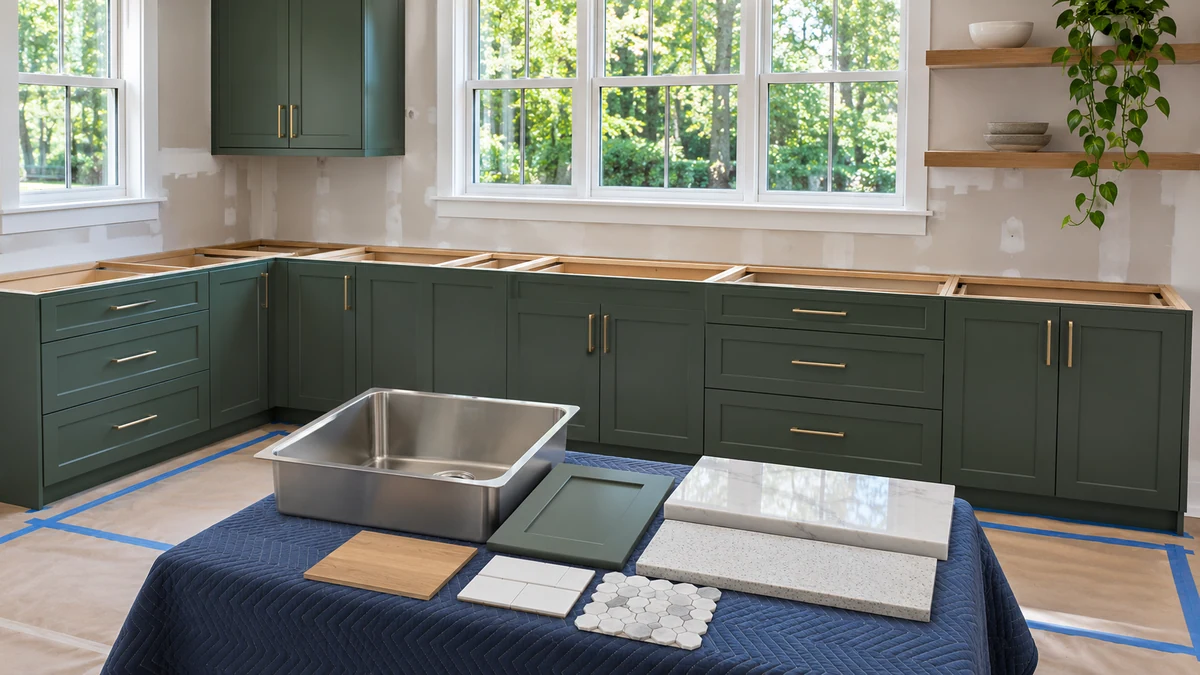
In a hypothetical remodel, the new cabinets are fitted but the countertop still needs final measurement and fabrication. The refrigerator may be working, yet food preparation and dishwashing remain limited. Ending the temporary arrangement when cabinets arrive would leave a gap between visible progress and restored function.
Ask the contractor which tasks remain before the sink, cooking equipment, and outlets are released for use. Keep the household schedule tied to those confirmations. If a countertop delay occurs, review temporary washing and meal arrangements rather than asking another trade to improvise a connection outside the approved plan.
This approach also helps with purchasing. There is little value in moving every kitchen item back into drawers that another installer must access or in filling a refrigerator before a scheduled power interruption. Stage the return of belongings around confirmed services, protection needs, and the contractor's access.
Move back by function, not appearance
Before returning food and equipment, ask which areas have been cleaned and released for use. Confirm that connected appliances and fixtures have been checked, required approvals are complete, and product waiting periods have been met. Do not use an unfinished surface or connection because it appears ready in a photograph.
Walk through storage, lighting, appliance operation, sink access, and cleaning responsibilities with the contractor. Keep manuals, warranty information, and the unfinished-item list accessible. Restock gradually so defects or adjustments are easier to address. Your temporary arrangement has done its job when the permanent kitchen can support ordinary routines safely, not merely when the last cabinet door has been fitted.
Related articles
Sources and further reading
These public resources explain relevant safety, consumer, or building considerations. They do not endorse this site or approve a particular project.
- EPA: indoor-air considerations during residential remodeling
- EPA: lead-safe renovation in older homes
- The Home Depot: kitchen-remodeling service FAQ and indicative timelines
Revised November 24, 2026. Published by ContractorsFinder. Editorial standards and corrections.